The Chu–Chuang–Yen Network 朱–莊–嚴
Lineage, Intermarriage, and Institutions from Ming Changzhou to Modern Taiwan, 1575–2026
Two questions, answered in order. What does the documented record show about the Changzhou 莊 lineage — one clan with 嚴 and, by the clan's own genealogy, with 朱 — and about the families it married into, above all 盛 and the 李, 陳, and 吳 of the four-family network, and about the banks, schools, museums, and offices those families founded, ran, or guarded across four centuries? And what can be inferred from surnames, and what cannot? The first is a record. The second is a method.
Abstract
The central question. Which relationships among the 莊, 盛, and 嚴 families — and the related 朱, 蔣, 石, 李, 吳, and 陳 lines — are documented in public sources, which institutions they connect, and how far a shared surname can be taken as evidence of shared descent?
The thesis advanced here. The answer has four clauses. The core alliance is documented: the Changzhou 毗陵莊氏 and the 盛 family of 盛宣懷 were joined twice by marriage, through 莊德華 (莊畹玉), great-granddaughter of 莊述祖 and second wife of 盛宣懷, and through the marriage of 莊鑄九 and 盛愛頤 in 1932. The network is institutional as well as familial: the persons in it appear at the founding or direction of identifiable institutions, among them the Shanghai Commercial and Savings Bank (1915), and in the custody of the Palace Museum collection that 莊嚴 escorted to Taiwan. The 嚴 line is public record: 嚴家淦's offices and the currency reform of 1949 are documented in official sources. Surnames generate hypotheses, not findings: a surname or a given-name character shared across figures nominates a connection for testing; it establishes none.
How the thesis is tested. Each clause is answerable from evidence and can be overturned by evidence. A genealogy or official record showing that 莊德華 was not of the 毗陵莊氏, or that the 1932 marriage did not take place, would refute the first. A founding record of the named institutions without the named persons would weaken the second. An official record contradicting 嚴家淦's listed offices would qualify the third. The fourth is methodological: it is tested each time a hypothesis drawn from surnames is checked against a genealogy, a record of office, or a family register, and the result is recorded whether it confirms or refutes. Every card carries its sources, so that any clause can be checked against the documents that support it.
The present position
莊 and 嚴 are recorded as one surname line. The Tang-era 《元和姓纂》 traces the 嚴 surname to collateral descendants of King Zhuang of Chu (楚莊王), who took the king's posthumous name as their surname. Under Emperor Ming of the Eastern Han (劉莊, r. 57–75), whose personal name was 莊, bearers of the surname were recorded as 嚴 to avoid the imperial name: the recluse 莊光 appears in the histories as 嚴光 (嚴子陵), and the scholar 莊忌 as 嚴忌. In the Wei–Jin period some of these lines resumed 莊 while others kept 嚴. The clan associations of both surnames, and the 1970 《朱莊嚴氏大族譜》, record the two as one clan (莊嚴同宗) [F]. [Wikipedia zh — 莊姓] [人間福報 — 嚴]
Much of the documentary base for these families was dispersed after 1949 among Taiwan, Hong Kong, the People's Republic, and diaspora archives. The principal modern text formally uniting 朱, 莊, and 嚴 as one ancestral clan is the 1970 《朱莊嚴氏大族譜》, published by families in Taiwan and Hong Kong through the 香港莊嚴宗親總會. Public encyclopaedias — the Chinese and English Wikipedia, Baidu Baike — together with institutional histories, press archives, and the Harvard China Biographical Database carry most of the individual records used here, and their limits are noted card by card.
Summary of findings
Part I sets out the network person by person and institution by institution: the 嚴 merchants of Mudu and 嚴家淦; the 莊蘊寬 and 莊嚴 lines; the Ming-era contact of 莊起元 with Jesuit moral theology; the 盛–莊 double alliance, with two figures and a register of affinal entries; the founding circle of the Shanghai Commercial and Savings Bank; and the structural parallel between the 盛–莊 and 李–莊 marriages. Part II gives the romanisation of 莊 across dialects and languages, the related 嚴, 朱, and 吳 figures, and a survey of public figures who bear the 莊 surname in Thailand, Canada, the United States, Hong Kong, the Philippines, and the People's Republic — as a survey of a surname, not a claim of kinship. Part III is a single chronological index of every named person. Where the record is single-source, family testimony, or inference, the card says so.
Method
Three rules govern the construction of this study. The rules precede the evidence: the Preamble fixes the terms, names the assumptions as postulates, and states the common rules of inference before any card is read, so that no relationship is admitted by a standard devised to admit it. No assertion without evidence: every claim carries a grade and, where public, a source; a relationship for which no public evidence exists is not asserted. Exclusions are as prominent as findings: surname coincidence, a shared given-name character, and geographic proximity are not admitted as evidence of kinship; claims about living private persons are limited to what they or the public record have published.
Every part opens with a statement of what it is for and closes with its take-away, so a reader may enter at any point without losing the thread and leave at any point with something carried out.
Plan of the study
- Preamble. Definitions, postulates, and common notions; the evidence grades.
- Part I — The network. Persons, institutions, the 盛–莊 double alliance, two figures, the SCSB founding circle, and the 盛×莊 ≡ 李×莊 parallel.
- Part II — Surnames and related lines. Romanisation of 莊; the 嚴, 朱, and 吳 figures; the 莊 surname worldwide.
- Part III — Timeline. Every named person in one chronological sequence.
- References. Every source cited on the cards, grouped by publisher.
Preamble · Definitions, postulates, and common notions
What this section is for: to fix the terms and assumptions before any relationship is argued.
A patrilineal descent group recorded in a genealogy (族譜) and identified by surname, ancestral seat, and hall name.
The commandery a surname group records as its place of origin, such as 天水 for 莊.
The name under which a lineage branch keeps its ancestral hall and registers those who belong to it.
A relationship created by marriage between two lineages.
A wife married after the death of a first wife, with the standing of principal wife.
A set of persons joined by documented descent, marriage, or institutional office; a surname alone does not place a person in the network.
A 族譜 records what a lineage says about itself; it is primary evidence of that account and secondary evidence of the events it records.
Common surnames are shared by millions of unrelated people; a surname match raises the probability of kinship only in proportion to the rarity of the surname and the presence of independent evidence.
For a living private person, only what that person or the public record has published is admissible.
A claim takes the grade of its weakest supporting source.
A shared name is a fact about names, not about descent.
A conclusion receives only as much warrant as its premises and the rule that joins them.
Words such as therefore, clearly, or not a coincidence do not create an inference; they announce that one should exist.
Evidence grades
| Grade | Meaning |
|---|---|
| [F] | Fact: documented in a primary source or in an established secondary record. |
| [D] | Derived: single secondary source, the author's research notes, or family record; independent corroboration may be pending. |
| [I] | Inference or hypothesis: held open for testing; its warrant is no stronger than its premises. |
| [C] | Corroborated: two independent streams of evidence converge on the same point. |
Take-away: a relationship enters the network only by documented descent, marriage, or office; a surname or given-name character nominates a hypothesis and nothing more.
The network · persons, institutions, and the 盛–莊 double alliance
What this part is for: to set out, person by person and institution by institution, what the public record documents about the Chu–Chuang–Yen network.
- Which ties are documented rather than inferred? Those carried by a genealogy, an official record, or an established encyclopaedia entry, each graded on its card.
- Why the 盛–莊 alliance first? Because it is the best-documented double tie in the network: 莊德華 to 盛宣懷, and 莊鑄九 to 盛愛頤.
- Why institutions alongside persons? Because offices and founding records are independent evidence that a person stood where the genealogy places them.
- Where does the record thin out? Where a card rests on a single secondary source or on family record; those cards carry [D] or [I].
嚴國馨 wealthiest merchant of Mudu · paternal grandfather of Yen Chia-kan · fl. 1890s–1910s
嚴家淦’s paternal grandfather; the wealthiest merchant of Mudu Township (木瀆首富), a prosperous market town on the south-western approaches of Suzhou. Around 光緒二十八年 (1902) he acquired the garden estate 端園, renaming it 羨園, commonly called 嚴家花園 — a sixteen-mǔ classical garden that remains a public landmark in Mudu today. His fortune was divided among five sons; 嚴家淦 was the son of the fifth son 嚴良肱. All mainland property was forfeited after 1949, the year 嚴家淦 was simultaneously engineering the New Taiwan Dollar reform that would stabilise the Republic’s finances on the island.
| Position | Year | Size | Mandate | Role |
|---|---|---|---|---|
| Taiwan Investigation Commission台灣調查委員會 | Apr 1944 | ~8–10 | Chongqing. Led by Chen Yi. Produced the “Outline of the Plan for Taiwan’s Takeover.” Economic, political, military assessment. | 嚴家淦 on parallel Ministry of Economic Affairs standing committee for reorganizing Japanese assets. Finance planner |
| Taiwan Provincial Admin. Executive Office台灣省行政長官公署 | Oct 1945 | ~15–17 | Formal governing apparatus. Chen Yi: Chief Executive. 8 department directors, 4 bureau chiefs, Bank of Taiwan chairman. | 嚴家淦: Transportation Director → Finance Commissioner (Apr 1946) → Bank of Taiwan Chairman. 1 of ~15–17. St. John’s / English-mediumFinance control within 6 months |
| New Taiwan Dollar Reform新台幣發行 | Jun 1949 | 1principal architect | Replaced hyperinflationary Old Taiwan Dollar (40,000:1). IMF-legible monetary framework. Precondition for Bretton Woods integration. | 嚴家淦: “Father of the New Taiwan Dollar.” Bretton Woods integrationIMF compatible |
| Central Bank re-establishment中央銀行復業 | 1961–63 | 1 | Re-established in Taipei (1961), resuming central-bank functions from the Bank of Taiwan. | 嚴家淦: Minister of Finance (1958–63) during the re-establishment; the Governor was 徐柏園 (1960–69). Finance minister |
| President, Republic of China中華民國總統 | 1975–78 | 1 | Succeeded Chiang Kai-shek upon his death. Served out remainder of term; ceded presidency to Chiang Ching-kuo (1978). | 嚴家淦: Chief of state. Financial technocrat as president |
| KMT Political Reform Committee | Mar 1986 | 12 | Planned Taiwan’s democratization. Led to lifting of martial law (1987). | 嚴家淦: Convener. Democracy architect |
莊蘊寬 connects the Changzhou lineage to the constitutional and institutional history of the early Republic.
莊蘊寬 (1867–1932; 字思缄; Wujin, Changzhou)
descended from the same 常州莊氏 that produced the Changzhou School of
Thought (常州學派) — the intellectual tradition, centered on
莊存與 and 莊培因, that theorised the term 中華 and whose
influence, on this study’s hypothesis [I], entered the founding names of both the ROC and the PRC. 莊培因 was the
Qianlong-era First Scholar (1754); 莊存與 was Second Scholar
(榜眼, runner-up in the palace examination, 1745);
the family produced thirty-five Presented Scholars (進士, holders of
China's highest imperial examination degree) between the Wanli and Guangxu reigns (late Ming through Qing). 莊蘊寬 himself
was a Deputy Tribute Student (副貢, provincial examination runner-up) of the
Jiangnan examination who served in Guangxi as County Magistrate,
Prefect, and Regional Military Intendant, and who throughout used his positions to
shelter and supply the revolutionary movement before 1911 —
most notably when 黃興 (Huang Xing), the principal military organiser
of the Tongmenghui and the man of whom 章炳麟 wrote
“without him there would be no Republic,” fled a Hunan
warrant in disguise to the Longzhou border zone under 莊蘊寬’s
jurisdiction. 莊蘊寬, having received the intelligence, said a single
phrase in Changzhou dialect — 差龍, “send him away”
— ordered 黃興 escorted across the border, and gave him funds.
黃興 later asked 莊蘊寬 to write the preface to his posthumously
published diary. The military academy 莊蘊寬 ran in Guangxi trained
instructors including 蔡鍔 and students including 李宗仁, 白崇禧,
and 李濟琛.
At the founding of the Republic, 莊蘊寬 was among those who supported
adoption of the five-colour flag (五色旗) alongside 程德全, 宋教仁,
陳其美, and 趙鳳昌. As Chief Censor under the early
Republic, he formally opposed Yuan Shikai’s imperial restoration
in 1915, convening the Censorate to pass a resolution petitioning Yuan
to cancel the imperial system —
迅予取消,以靖人心
(“promptly, to settle the people’s hearts”) —
for which Yuan deployed military police around his residence and he was
forced to take refuge in Tianjin until the restoration collapsed.
He served as President of the National Audit Institute from 1916 to
1927. In 1924 he joined the Commission for the Disposal of Qing
Imperial Household Affairs (清室善後委員會); on 10 October 1925 he
presided as chairman over the opening ceremony of the Palace Museum
(故宮博物院) in the Hall of Heavenly Purity (乾清宮), subsequently
serving as trustee and director of its library.
After the March 18 Incident of 1926, he and 盧永祥 were jointly
designated 維持員 — custodial mediators charged with shielding
the institution from the succession of warlord regimes pressing for
control over the Forbidden City’s contents, preventing the Beiyang
government from seizing the collection. 莊蘊寬 died in 1932 —
one year before the artifacts he had helped secure were packed into
crates and set in motion southward for the first time.
Among the founding staff working under his trusteeship from
the museum’s very first year was a young cataloguer from Peking
University who had joined in 1924: 莊嚴.
There is a further connection to the Li (李) and Chen (陳) lineages that the
document “The Four Intermarried Scholar-Official Families Who Enabled
Mao Zedong’s First Campaign”
(助毛澤東首次革命成功的四大姻親士大夫家族; the four intermarried Chuang, Wu, Li, and Chen scholar-official families: 莊、吳、李、陳) records in detail.
莊蘊寬’s elder sister 莊還 married 吳琳, whose son 吳瀛
became a principal founder of the Palace Museum and whose daughter
吳琴清 married 李青崖 — making 莊蘊寬 the maternal uncle of 吳瀛 and, by that marriage, the uncle-in-law of 李青崖.
莊蘊寬’s younger sister 莊曜孚 married 陳韜, making 莊蘊寬
陳韜’s brother-in-law and connecting the 莊 lineage to the 陳
family that included 陳嘉言 (the parliamentarian who co-signed the
national petition against Zhang Jingyao) and 陳衡哲 (who went to the
United States to study in 1914 and became the first female professor
at a Chinese university). This produces the complete 四大姻親家族 (the four intermarried Chuang, Wu, Li, and Chen families: 莊、吳、李、陳) structure: 莊–吳–李 through 莊還 and 吳琴清;
莊–陳 through 莊曜孚; and 吳–李 through 吳琴清 —
with only 李 and 陳 having no direct matrimonial link.
李青崖, who taught at Hunan First Normal School alongside
楊昌濟 and 徐特立, had sponsored 孫中山’s European
activities as a student and later lent space at the family garden
(芋園) in Changsha where 毛澤東 first participated in organised
political activity and met 楊開慧. In the 驅張 (Expel Zhang)
campaign of 1919–1920, 莊蘊寬 used his connections to
President 徐世昌 and Premier 靳云鵬 to condemn
Zhang Jingyao, then directed his former subordinate in Guangxi,
趙恒錫, to send troops into Hunan — the decisive military
move that forced Zhang’s flight. The Chuang–Li marriage
connection (莊–李姻親) therefore runs through 莊蘊寬 into the
network that surrounded 毛澤東’s early formation — a
thread documented in the secondary literature without drawing
conclusions beyond what it shows.
(張瑞田, 《中華讀書報》, 29 August 2012,
p. 3; 光明網;
祁勝利, Zhihu 2016)
莊還 Chuang Han 毗陵莊氏 · elder sister of 莊蘊寬 · genealogical nexus of the 四大姻親家族 (the four intermarried Chuang, Wu, Li, and Chen families: 莊、吳、李、陳)
莊還 (Chuang Han), elder sister of 莊蘊寬, was the matrimonial keystone of the 四大姻親家族 (the four intermarried Chuang, Wu, Li, and Chen scholar-official families: 莊、吳、李、陳) network that supported Mao Zedong’s first campaign in 1919–1920. She married 吳琳 (Wu Lin), who served as a military training officer under 張之洞 in Hubei, and bore at least three children who each became significant in their own right: 吳瀛 (Wu Ying), who became a principal founder of the Palace Museum (故宮博物院) and later a calligrapher, art critic, and playwright; 吳琴清 (Wu Qinqing), who married the French translator and reformist educator 李青崖, connecting the Changzhou Chuang lineage to the Li family that would shelter Mao Zedong at 芋園; and 吳曼公 (Wu Mangu), who served as secretary to Navy Minister 薩鎮冰 and later became a curator and connoisseur at the Palace Museum. Through 莊還, 莊蘊寬 became the maternal uncle of all three. Through her daughter 吳琴清’s marriage to 李青崖, she became the maternal grandmother of 李顥, and thereby the 曾祖母 (great-grandmother) of 李壯飛 — the banker who in 1979 was posted to the Bank of China London Branch and was described by industry professionals as the first person to bring Chinese banking to the international mainstream market. She herself appears as a figure only in the genealogical connective tissue of the network, unnamed in most historical accounts that focus on the men; yet the entire 莊–吳–李 chain that runs from the Changzhou Chuang scholar-gentry through the 驅張 campaign to London 1979 passes through her.
Source · 祁勝利, 〈助毛澤東首次革命成功的四大姻親家族〉 [D]
Written October 2016; Zhihu column, edited 30 November 2021. Quoted in the original simplified characters, each passage followed by a complete English translation. [Zhihu — 祁勝利 2016]
The four marriages
「有意思的是,李、吴、庄、陈这四大家族,除了李家和陈家没有直接姻亲,这四家都有姻亲关系——李家与吴家通过李青崖和吴琴清联姻,李青崖的夫人是吴琴清,李青崖是吴瀛吴曼公的大姐夫;吴家与庄家通过吴琳和庄还联姻,吴琳的夫人庄是庄蕴宽的姐姐;庄蕴宽是吴琴清、吴瀛、吴曼公的舅父;陈家与庄家通过陈韬和庄曜孚联姻,陈韬的夫人庄曜孚是庄还、庄蕴宽的妹妹;通过以上联姻,李家与庄家就有了姻亲关系:庄蕴宽也是李青崖的舅父;陈家与吴家的姻亲关系是:陈韬是吴琳的连襟,陈韬是吴琴清、吴瀛、吴曼公的姨夫。」
Interestingly, of the four great families 李, 吳, 莊, and 陳, all four were connected by marriage, except that the 李 and 陳 families had no direct marriage tie. The 李 and 吳 families were joined through the marriage of 李青崖 and 吳琴清: the wife of 李青崖 was 吳琴清, and 李青崖 was the husband of the eldest sister of 吳瀛 and 吳曼公. The 吳 and 莊 families were joined through the marriage of 吳琳 and 莊還: the wife of 吳琳, née 莊, was the elder sister of 莊蘊寬, and 莊蘊寬 was the maternal uncle of 吳琴清, 吳瀛, and 吳曼公. The 陳 and 莊 families were joined through the marriage of 陳韜 and 莊曜孚: the wife of 陳韜, 莊曜孚, was the younger sister of 莊還 and 莊蘊寬. Through these marriages the 李 and 莊 families became related by marriage: 莊蘊寬 was also the maternal uncle of 李青崖 by marriage. The tie by marriage between the 陳 and 吳 families is this: 陳韜 and 吳琳 were husbands of sisters, and 陳韜 was the husband of the maternal aunt of 吳琴清, 吳瀛, and 吳曼公.
Why a Hunan family and a Changzhou family met
「李家、陈家本在湖南,吴家、庄家远在江苏常州。盖因李家曾在江浙为官,陈钟英则娶赵蕉雨后做了上门女婿,定居在常州;而吴琳是随父亲吴佑孙(字殿英)受湖广总督张之洞之邀到其属地湖南湖北做幕僚帮手。这便有了几家的互相仰慕和联姻。」
The 李 and 陳 families were originally of Hunan; the 吳 and 莊 families were far away in Changzhou, Jiangsu. This is because the 李 family had held office in Jiangsu and Zhejiang; 陳鍾英, after marrying 趙蕉雨, lived with his wife’s family and settled in Changzhou; and 吳琳 had followed his father 吳佑孫 (courtesy name 殿英), at the invitation of the Huguang Governor-General 張之洞, to serve as an aide in the provinces of Hunan and Hubei under his authority. From this came the mutual regard among the families and their intermarriage.
The Changzhou 莊 lineage
「吴瀛吴曼公兄弟能撬动时任民国总统徐世昌、总理靳云鹏,完全仰仗舅父庄蕴宽。庄蕴宽出自常州庄氏簪缨望族。自明万历至光绪284年间,庄家代代甲乙榜上有名,共出状元、榜眼、传胪各1名,进士35名,举人82名,贡生54名,秀才难以计数。庄蕴宽本人则是清末民初一位道兼文武的政坛人物。」
That the brothers 吳瀛 and 吳曼公 could move the then President of the Republic, 徐世昌, and the Premier, 靳雲鵬, rested entirely on their maternal uncle 莊蘊寬. 莊蘊寬 came from the Changzhou 莊, an eminent family of hereditary officials. Over the 284 years from the Wanli reign of the Ming to the Guangxu reign of the Qing, the 莊 family appeared on the examination lists in every generation, producing one first-place graduate (zhuangyuan), one second-place graduate (bangyan), and one fourth-place graduate (chuanlu), 35 metropolitan graduates (jinshi), 82 provincial graduates (juren), and 54 tribute students (gongsheng), while its county graduates (xiucai) are too many to count. 莊蘊寬 himself was a political figure of the late Qing and early Republic accomplished in both civil and military affairs.
莊蘊寬 and the 1919–1920 campaign
「吴瀛思忖,“驱张”事大,非己之力能助。于是他带易培基、毛泽东找到自己的舅父庄蕴宽。庄蕴宽是能诗善画的吴琳夫人庄还的弟弟,时任北洋政府审计院长,并代理平政院院长。由于吴琳去世早,庄蕴宽对吴瀛最关心,对他的请托也极其重视。在庄蕴宽面前,毛泽东以出众的才华和滔滔口才,痛陈了张敬尧的种种恶行,令庄蕴宽深以为然。旋即找了时常有诗词唱和的总统徐世昌及国务代总理靳云鹏面陈。」
吳瀛 judged that the campaign to expel 張 was a large undertaking, beyond his own power to assist. So he took 易培基 and 毛澤東 to see his maternal uncle 莊蘊寬. 莊蘊寬 was the younger brother of 莊還, the wife of 吳琳, who was accomplished in poetry and painting; at the time he was President of the Audit Office of the Beiyang government and acting President of the Administrative Court. Because 吳琳 had died early, 莊蘊寬 cared most for 吳瀛 and took his requests with the greatest seriousness. Before 莊蘊寬, 毛澤東, with outstanding ability and fluent eloquence, set out with deep feeling the many misdeeds of 張敬堯, and 莊蘊寬 was thoroughly persuaded. He at once sought out President 徐世昌, with whom he often exchanged poems, and Acting Premier 靳雲鵬, and put the case to them in person.
The outcome in Beijing
「正是由于(吴瀛请托)庄蕴宽、(吴曼公请托)萨镇冰,徐世昌面对二老,同意亲自出面谴责张敬尧,命令对张褫夺军职、撤职查办。靳云鹏表态“政府愧对湖南”,对张敬尧谎报政况请求增兵的说法直接予以驳斥。」
It was precisely because of 莊蘊寬 (approached by 吳瀛) and 薩鎮冰 (approached by 吳曼公) that 徐世昌, facing these two elders, agreed to come forward personally to condemn 張敬堯, and ordered that 張 be stripped of his military rank, removed from office, and investigated. 靳雲鵬 stated that “the government has failed Hunan,” and directly rejected 張敬堯’s false report of the situation and his request for more troops.
莊蘊寬’s former subordinates
「他清末在广州任常备军统领,又调广西任梧州府知府、太平思顺兵备道、镇南关监督,创建新军,任广西龙州边防督办、广西武备学堂总办。在辛亥革命、走向共和的伟业中功勋卓著。在“驱张”斗争中,当庄蕴宽得到徐世昌、靳云鹏表态后,立即派人通知他在广西督办武备学堂时的旧部赵恒锡出兵。这才有赵率军攻入湖南,张敬尧望风而逃,遭全国通缉之事。可以说,在毛泽东“驱张”斗争中,庄蕴宽居功至伟。」
In the late Qing he commanded the standing army in Guangzhou, and was then transferred to Guangxi as prefect of Wuzhou, military circuit intendant of Taiping–Sishun, and superintendent of Zhennan Pass; he founded the New Army there and served as frontier defence commissioner at Longzhou, Guangxi, and as director of the Guangxi Military Academy. His service in the 1911 Revolution and in the great undertaking of the move to a republic was distinguished. In the campaign to expel 張, once 莊蘊寬 had obtained the positions of 徐世昌 and 靳雲鵬, he immediately sent word to 趙恒錫, his former subordinate from the years when he directed the Guangxi Military Academy, to send troops. Only then did 趙 lead his army into Hunan, and 張敬堯 flee at the first sight of it and become wanted throughout the country. It may be said that in 毛澤東’s campaign to expel 張, the merit of 莊蘊寬 was the greatest.
李顥 and 李壯飛
「李家李青崖的长子李颢1914出生。1935年起一直从事地下工作,直接领导是老一辈革命家、原中顾委委员刘晓。董必武、邓发、乔冠华等也都是他的好友。抗战时期,李颢在重庆的医院当外科医生。抗战胜利后,周恩来同志亲自指示他留在上海做革命工作。抗美援朝开始,李颢主动报名参加,担任第三手术大队大队长。回国后担任中华医学会上海外科学会主席。李颢的长子李壮飞继承了祖父、父亲等老一辈知识分子心系国家富强的优秀品质。1979年,李壮飞被派驻到中国银行伦敦分行工作,不但圆满完成了组织上交办的重要任务,还大力拓展银行主流业务,被专业人士称作“第一个真正把中国银行业带到国际主流大市场的国际银行家。”」
李顥, the eldest son of 李青崖 of the 李 family, was born in 1914. From 1935 he worked continuously in the underground; his direct superior was 劉曉, a revolutionary of the older generation who later sat on the Central Advisory Commission. 董必武, 鄧發, 喬冠華, and others were also his friends. During the War of Resistance against Japan, 李顥 was a surgeon at a hospital in Chongqing. After the victory, Comrade 周恩來 personally instructed him to remain in Shanghai for revolutionary work. When the War to Resist America and Aid Korea (the Korean War) began, 李顥 volunteered and served as commander of the Third Surgical Brigade. After returning he served as chairman of the Shanghai Surgical Society of the Chinese Medical Association. 李顥’s eldest son, 李壯飛, inherited from his grandfather, his father, and intellectuals of the older generation the fine quality of devotion to the nation’s prosperity and strength. In 1979 李壯飛 was posted to work at the London branch of the Bank of China; he not only completed the important tasks the organisation assigned him, but also vigorously expanded the bank’s mainstream business, and is described by professionals as “the first international banker to truly bring Chinese banking into the international mainstream market.”
李壯飛 Li Zhuangfei three generations of the Piling Chuang lineage · Bank of China London, 1979
The 毗陵莊氏 (Changzhou Chuang) bloodline reaches 李壯飛 through a documented three-generation transmission, first through two women: 莊還 (莊蘊寬's elder sister) married 吳琳 and bore daughter 吳琴清; 吳琴清 married 李青崖 and bore son 李顥 (b. 1914, who served in Korea as leader of the 3rd Surgical Brigade and later chaired the Shanghai Surgical Society); 李顥’s son is 李壯飛. 莊還 is therefore Li Zhuangfei's great-grandmother through the female line: the chain is 莊還 → 吳琴清 → 李顥 → 李壯飛. No 莊 surname is carried forward — the first two transmitting links are women — but the genealogical connection to the 毗陵莊氏 is traceable through the documented 四大姻親家族 network—the four intermarried Chuang, Wu, Li, and Chen families (莊、吳、李、陳). He also inherited, in the assessment of the Zhihu article on the four families, “the outstanding qualities of his grandfather, father, and the older generation of intellectuals in their concern for national prosperity” (繼承了祖父、父親等老一輩知識分子心系國家富強的優秀品質).
In 1979, 李壯飛 was posted to the Bank of China London Branch (中國銀行倫敦分行). He not only completed the institutional tasks assigned to him but greatly expanded the bank’s mainstream business, and was described by industry professionals as “the first person who truly brought Chinese banking to the international mainstream market” (第一個真正把中國銀行業帶到國際主流大市場的國際銀行家).
1979 · Two streams of Chinese capital · London · Year One of Reform and Opening Up · The 82-year Chuang banking arc
[I] In the reading advanced here, 1979 marks a turning point in the global financial order from the Chinese side — through two simultaneous, structurally distinct, institutionally independent acts of Chinese capital entry into British-held finance (London and Hong Kong). Both trace genealogical threads back to the 莊 surname — one to the 毗陵莊氏 (Changzhou Chuang clan), the other to a Teochew 莊 line. And both are the outcome of a banking institutional arc that began in 1897.
The Chuang-Sheng banking lineage: 1897 → 1915 → 1979. In 1897, 盛宣懷 founded 中國通商銀行 (Imperial Bank of China, est. 1897) — China’s first Chinese-owned bank modelled on Western practices, capitalized at 5 million taels and using HSBC executives as technical advisers. 盛宣懷’s second wife was 莊畹玉 (字德華, 1866–1927), from the 毗陵莊氏, identified in the 盛宣懷 Wikipedia article as 「乾隆四十五年進士莊述祖曾孫女、候選訓導莊毓瑩之女」 (great-granddaughter of 莊述祖, daughter of 莊毓瑩). Eighteen years later, 莊畹玉’s younger brother 莊得之 — described as 盛宣懷’s 小舅子 (wife’s younger brother) and therefore equally a descendant of 莊述祖 through the 莊毓瑩 branch — co-founded the 上海商業儲蓄銀行 (SCSB) on 2 June 1915, serving as its inaugural Chairman, with 陳光甫 (K.P. Chen, Wharton 1909) as General Manager. SCSB grew into one of China’s 南三行 (Three Southern Banks) and is the only institution of that cohort to have survived, relocated to Taiwan, and continued operating; it is listed on the TWSE (5876) and maintains a Hong Kong arm — 上海商業銀行 — headquartered at 12 Queen’s Road Central, one block from Chuang’s Tower at 30–32 Connaught Road Central, with overseas branches including in the United Kingdom. 莊得之’s son 莊鑄九 subsequently married 盛愛頤 (盛宣懷 × 莊畹玉’s daughter, founder of the Paramount Ballroom 百樂門, winner of the Republic’s first female inheritance lawsuit 1928) in 1932 — producing 莊元端 (Peter, b. 1933), the double-Chuang-lineage terminus. The banking arc of the Changzhou Chuang clan therefore runs: 盛宣懷 × 莊畹玉 (1897, 中國通商銀行 / Imperial Bank of China) → 莊得之 (1915, SCSB founding Chairman) → 莊得之’s son 莊鑄九 × 盛愛頤 (1932, marriage uniting the banking-gentry lineages) → 莊元端 (b. 1933, genealogical terminus) ; separately, through 莊蘊寬’s sister: 莊還 → 吳琴清 → 李顥 → 李壯飛 (1979, Bank of China London) — 82 years from China’s first Western-style bank to its first mainstream international banker, both rooted in the 毗陵莊氏.
1979 — the state-banking stream. 李壯飛, carrying 三代毗陵莊氏血脈 through the female-line transmission 莊還 → 吳琴清 → 李顥, arrived at the Bank of China London Branch (中國銀行倫敦分行) and reoriented its operations from narrow trade-finance and correspondent-banking functions toward mainstream international commercial banking. Industry professionals described him as 「第一個真正把中國銀行業帶到國際主流大市場的國際銀行家」 — the first person who truly brought Chinese banking to the international mainstream market. Bank of China had maintained a London presence for decades in the narrow capacity of serving China-related trade transactions; Li Zhuangfei’s work was to break that institutional ceiling and enter the general market on terms set by the market. The Bank of China itself was reorganised in 1979 into the state commercial banking structure under which it would eventually list on the SEHK (3988) as one of China’s Big Four.
1979 — the private-capital stream. 李嘉誠 (Li Ka-shing) — whose mother 莊碧琴 and wife 莊月明 carried the 莊 surname (Teochew branch) — acquired HSBC’s 22% stake in Hutchison Whampoa for HK$639 million, becoming the first person of Chinese origin to control one of Hong Kong’s great British trading houses. HSBC Chairman Michael Sandberg chose Li because of Li’s reputation for reliability and financial discipline. Li became HSBC non-executive director in 1980 and Deputy Chairman in 1985.
T.V. Soong — the connecting thread between 盛宣懷, Citigroup, and SCSB. The network is tighter than the individual institution threads suggest. 宋子文 (T.V. Soong, 1894–1971) trained at the International Banking Corporation (IBC) in New York in 1915 — IBC was subsequently absorbed into National City Bank → First National City → Citibank → Citigroup. He returned to China in 1917 and was hired by 盛恩頤 (盛宣懷’s fourth son) as secretary for the 漢冶萍公司 (Hanyang Steel Works) Shanghai office — the company 盛宣懷 had built. After his courtship of 盛愛頤 was opposed by her mother and he was reassigned to Wuhan, he left the 盛 enterprise, returned to Shanghai, and became General Manager of 聯華商業銀行 while concurrently founding 大洲實業公司 (Continental Industrial Co.) and 神州信托公司 (China Trust Co.) — establishing himself as an independent financial operator before entering Sun Yat-sen’s service in 1923. After 1923 he founded or ran China’s Central Bank (中央銀行, 1924) at Sun Yat-sen’s request, and in 1934 he co-founded the China Development Finance Corporation (中國建設銀公司) jointly with Jean Monnet (later architect of the European Union), capitalised at ¥10 million from eleven institutional investors. The shareholder list is the cross-connection: among the eleven investors were 上海商業儲蓄銀行 (SCSB, ¥200,000) and 中國通商銀行 (¥150,000) — meaning 莊得之’s bank and 盛宣懷’s bank were simultaneous investors in T.V. Soong’s investment bank. The three founding institutions of this network (中國通商銀行, SCSB, Central Bank of China) are linked [I]: the first two through the 盛-莊 matrimonial network of the 毗陵莊氏, the third through 宋子文’s early employment by the 盛 family.
The structural interpretation. The two 1979 acts embody the two models by which Chinese capital engaged the West for the following four decades: the private-via-Hong Kong model (Li Ka-shing, HSBC, converting the colonial architecture from within) and the state-banking model (Bank of China, direct entry on institutional terms). Both in the same year (one in London, one in Hong Kong), first year of Deng Xiaoping’s Reform and Opening Up (formally declared 22 December 1978). The Chuang genealogical thread runs through both: Li Ka-shing through the Teochew 莊 of his mother and wife; Li Zhuangfei through the Changzhou 毗陵莊氏 of his great-grandmother 莊還 — and the same Changzhou 毗陵莊氏 had placed 莊得之 as founding Chairman of SCSB in 1915, sixty-four years before Li Zhuangfei arrived in London.
Institutional ledger · founding record · 1897 → 2001 · all founders listed with traditional Chinese names
| Year | Institution | Founders (traditional Chinese · romanisation) | Capital / Scale | Present status |
|---|---|---|---|---|
| 1897 | 中國通商銀行 Imperial Bank of China |
盛宣懷 Sheng Xuanhuai; technical adviser: 滙豐銀行 HSBC (first manager: A.W. Maitland, ex-HSBC) |
¥5,000,000 taels | Taken over by the PRC government; closed 1952 |
| 1905→1912 | 大清銀行 → 中國銀行 Da-Qing Bank → Bank of China |
清廷 Qing government (1905); 中華民國政府 ROC government (1912 re-charter) |
State capital | SEHK: 3988 (listed 2006); HK branch opened 1917; 2nd-largest Chinese bank |
| 1915 2 Jun 寧波路9號 Shanghai |
上海商業儲蓄銀行 SCSB · Shanghai Commercial & Savings Bank |
莊得之 Chuang Te-chih (Chairman); 陳光甫 Chen Guangfu / K.P. Chen (General Manager); 李馥蓀 Li Fusun; 王曉賚 Wang Xiaolai |
¥100,000 paid-in (silver yuan) |
TWSE: 5876 · active 74 TW branches; SCB HK: 12 Queen's Rd Central |
| 1924 suspended 1949–61 in Taiwan |
中央銀行 Central Bank of China (ROC) → ROC Central Bank, Taipei same institution, continuous |
宋子文 Song Ziwen / T.V. Soong (first President 1924–28); at 孫中山 Sun Yat-sen's request |
State capital; suspended 1949–61 in Taiwan while 臺灣銀行 performed de facto central bank functions; re-established Taipei 1961 |
Still operating: ROC Central Bank 中央銀行 Taipei — same institution as the 1924 founding |
| 1934 | 中國建設銀公司 CDFC China Development Finance Corp. |
宋子文 Song Ziwen / T.V. Soong; 讓·莫內 Jean Monnet (French; later an architect of European integration); 11-institution consortium |
¥10,000,000 from 11 investors |
Defunct by 1949; not continued in Taiwan |
| 1946 | 臺灣銀行 · 新台幣 Bank of Taiwan; New Taiwan Dollar Distinct from 中央銀行; served as de facto central bank 1949–1961 |
嚴家淦 Yen Chia-kan / C.K. Yen (first Chairman of the Board); Father of the New Taiwan Dollar |
State capital; public-treasury agent; issued New Taiwan Dollar 1949; performed central bank functions 1949–1961 until 中央銀行 was re-established in Taipei |
Still operating: state-owned commercial bank; reverted to commercial role after 中央銀行 re-est. 1961 |
| 1949→1971 | 中國國際商業銀行 → 兆豐國際商業銀行 Int'l Commercial Bank of China → Mega Intl. |
ROC Bank of China branch relocated to Taiwan; privatized 1971; merged with 交通銀行 Jiaotong Bank Taiwan branch |
State capital; privatized |
兆豐國際商業銀行 Mega Intl. Commercial Bank (TWSE: 2886 / SEHK) |
| 1979 | 中國銀行倫敦分行 Bank of China London Branch |
李壯飛 Li Zhuangfei (branch chief); reoriented from trade-finance to mainstream international commercial banking |
PRC state capital | → 中國銀行 SEHK: 3988 (listed 2006) |
| 1979 | 和記黃埔 Hutchison Whampoa (acquired from HSBC) |
李嘉誠 Li Ka-shing (acquirer); HSBC Chairman 沈弼 Michael Sandberg (seller) |
HK$639M (22% stake) |
→ 長和集團 CK Hutchison HKEx: 0001 |
| 1999 | 三行同盟 Three Shanghai Bank Alliance |
上海商業儲蓄銀行 SCSB (TW) × 上海商業銀行 SCB (HK) × 上海銀行 Bank of Shanghai (CN) cross-equity deal |
Cross-equity; independent of BOC |
All three active; Greater China triangle |
| 2001 | 中銀香港 BOC Hong Kong Bank of China (Hong Kong) |
PRC 中國銀行 Bank of China; 12 HK institutions merged; |
12-institution merger; 2nd-largest HK bank |
SEHK: 2388 · active HQ: Bank of China Tower, Bank Street, Central HK |
1 Queen’s Road Central — HSBC Main Building | 12 Queen’s Road Central — Shanghai Commercial Bank (SCB / 上海商業銀行, SCSB HK arm, separately incorporated in Hong Kong 1950) | Bank Street / Garden Road — Bank of China Tower (I.M. Pei, 1990, HQ of 中銀香港 SEHK 2388). HSBC served as technical adviser at the founding of 中國通商銀行 in 1897; the same HSBC then facilitated Li Ka-shing’s acquisition of Hutchison Whampoa in 1979 — the same institution anchoring both the 1897 origin of the Chuang-Sheng banking network and the 1979 private-capital breakthrough.
Sources: Wikipedia zh — 上海商業儲蓄銀行 · Wikipedia — Imperial Bank of China · Wikipedia — CDFC (T.V. Soong + Monnet) · Wikipedia zh — 盛宣懷 · BuzzOrange — 嚴家淦 / 新台幣之父 · Time/Money 2018 · 祁勝利, Zhihu 2016
On any genealogical connection between the two Li families: none is documented. Li Ka-shing is Teochew from Chaozhou, Guangdong; Li Zhuangfei’s grandfather 李青崖 was from Changsha, Hunan. Both carry 莊 bloodlines through female lines, but through entirely different branches — Li Ka-shing through Teochew 莊 (mother 莊碧琴, wife 莊月明) and Li Zhuangfei through Changzhou 毗陵莊氏 (great-grandmother 莊還). The 莊 surname connects them structurally without establishing common ancestry.
嚴家淦 Yen Chia-kan (C.K. Yen) 1905–1993 · 嚴 surname · Father of the New Taiwan Dollar
嚴家淦 (Yen Chia-kan / C.K. Yen), born 1905 in Wu County, Jiangsu, graduated St. John’s University Shanghai 1926 — the same institution T.V. Soong attended before Harvard. He arrived in Taiwan in October 1945 and held, in succession, the most concentrated financial executive sequence in early ROC Taiwan history:
| 1946 | Chairman, Bank of Taiwan | First Chairman, Bank of Taiwan (臺灣銀行) |
| 1946 | Chairman, Land Bank of Taiwan | Chairman, Land Bank of Taiwan (臺灣土地銀行) |
| 1946 | Chairman, Chinese Petroleum Corporation | Chairman, Chinese Petroleum Corporation (中國石油) |
| 1946–50 | Taiwan Provincial Finance Commissioner | Finance Commissioner, Taiwan Provincial Government |
| 1950 | Minister of Economic Affairs | Minister of Economic Affairs (ROC) |
| 1958–63 | Minister of Finance | Minister of Finance (ROC) |
| 1954–57 | Governor of Taiwan Province | Governor, Taiwan Province |
| 1954–56 | Chairman, Veterans Affairs Council | Chairman, Council of Veterans Affairs |
| 1963–72 | Premier | Premier of the Executive Yuan |
| 1966–75 | Vice President | Vice President of the Republic of China |
| 1975–78 | President | President of the Republic of China (succeeded Chiang Kai-shek) |
His single most durable institutional contribution was the 新台幣 (New Taiwan Dollar) system, which he designed and implemented in 1949 through the Bank of Taiwan, replacing the catastrophically inflated Old Taiwan Dollar and stabilizing the ROC monetary foundation. For this he is widely called “Father of the New Taiwan Dollar” (新台幣之父). The Bank of Taiwan, under the new-dollar framework, was also designated as the public treasury agent (公庫) for municipal and county governments.
The five-surname dimension: 嚴 is one of the five surnames in 莊嚴蔣石朱,五姓同一祖, and 嚴 is 同宗於莊 (of the same ancestral lineage as 莊) per the Wikipedia 莊姓 article. [I] On this study’s hypothesis, the same five-surname cluster whose 莊 lineage placed 莊得之 as founding Chairman of SCSB (1915) and whose 蔣 lineage (Chiang Kai-shek) carried the ROC government to Taiwan, produced in 嚴家淦 the architect of Taiwan’s monetary system. Three financial institutions central to ROC Taiwan — Bank of Taiwan (嚴家淦, 嚴 surname), SCSB (莊得之, 莊 surname), and ROC Central Bank (T.V. Soong, connected through 盛宣懷’s 莊畹玉 network) — trace to two of the five surnames in the 五姓一祖 tradition, through documented institutional and biographical threads. [BuzzOrange — 嚴家淦 / 新台幣之父] [ROC Ministry of Finance — 嚴家淦史料]
Genealogical & Network Matrix relational map · orthogonal to institutional ledger · organized by relationship type
A · Matrimonial bonds
| Person A | × Person B | Year | Genealogical outcome |
|---|---|---|---|
| 盛宣懷 Sheng Xuanhuai |
莊畹玉 / 莊德華 Chuang Wanyu / Dehua (1866–1927; great-granddaughter of 莊述祖 (Chuang Shu-zu); sibling of 莊得之 (Chuang Te-chih); second wife) |
~1880s second wife |
Daughter 盛愛頤 Sheng Ai-yi → married 莊鑄九; brother 莊得之 = SCSB founding chairman; nephew 莊鑄九 → see next row |
| 莊鑄九 Chuang Chiu-chiu (nephew of 莊德華; direct descendant of 莊述祖) |
盛愛頤 Sheng Ai-yi (seventh daughter of 盛宣懷; daughter of 莊德華; 「盛七小姐」; 1900–1983) |
1932 | Son 莊元端 Peter Chuang (b.1933): double 莊述祖 convergence — father's line AND mother's maternal grandmother (莊德華) both descend from 莊述祖 |
| 吳琳 Wu Lin (字稚英 styled name Zhì-yīng; 張之洞 Zhang Zhidong's Hubei military staff) |
莊還 Chuang Han (elder sister of 莊蘊寬 (Chuang Yunkuan); 毗陵莊氏) |
~1880s | Children: 吳琴清 Wu Qinqing, 吳瀛 Wu Ying (Palace Museum founder), 吳曼公 Wu Mangong; 莊蘊寬 = 吳 children's maternal uncle |
| 李青崖 Li Qingya (1886–?; Changsha; translator; French literature) |
吳琴清 Wu Qinqing (吳琳 × 莊還's daughter; 莊蘊寬's niece) |
1902 | Son 李顥 Li Hao (b.1914; Korea surgeon); grandson 李壯飛 Li Zhuangfei (1979 BOC London); 莊還 = Li Zhuangfei's great-grandmother through female line — 三代毗陵莊氏血脈 (three generations of Changzhou Chuang lineage through female line) |
| 陳韜 Chen Tao (Hunan Chen clan) |
莊曜孚 Chuang Yaofu (莊蘊寬's younger sister; 莊還's younger sister) |
~1890s | Completes 四大姻親家族 (the four intermarried Chuang, Wu, Li, and Chen scholar-official families: 莊、吳、李、陳) 莊、吳、李、陳 four-family network; 陳韜 = 吳琳's brother-in-law (連襟 men married to sisters) |
| 李嘉誠 Li Ka-shing (b.1928; Chaozhou) |
莊月明 Chuang Yuet-ming (1933–1990; Teochew 莊 branch; also: mother 莊碧琴 Chuang Biqin = 莊 surname) |
1963 | Two sons (李澤鉅, 李澤楷); Li Ka-shing: mother AND wife both 莊 surname; Teochew 莊 ≠ Changzhou 毗陵莊氏 — different lineage, same surname cluster (五姓一祖 potential) |
B · Employment and mentorship threads
| Person | → Institution | Period | Significance |
|---|---|---|---|
| 宋子文 Song Ziwen / T.V. Soong |
IBC (International Banking Corporation; predecessor of Citibank) (International Banking Corp., New York; now Citigroup) |
1915 post-Harvard |
Citigroup training precedes China return; IBC → National City → Citibank → Citigroup |
| 宋子文 Song Ziwen / T.V. Soong |
漢冶萍公司 (Hanyang Steel Works; 盛恩頤 Sheng Enyi, 盛宣懷's son) |
1917 resigned |
盛宣懷 died April 1916; Soong employed by son's enterprise; left after his courtship of 盛愛頤 Sheng Ai-yi was opposed by her family; then appointed General Manager, 聯華商業銀行 Joint Commercial Bank; concurrently founded: 大洲實業公司 Continental Industrial Co. (founder) 神州信托公司 China Trust Co. (founder) |
| 嚴家淦 Yen Chia-kan / C.K. Yen |
臺灣銀行 Bank of Taiwan | 1946 first chairman |
Designed and launched 新台幣 system 1949; Father of the New Taiwan Dollar; then: Finance Minister → Premier → President |
| 李壯飛 Li Zhuangfei (莊還, great-grandmother; 三代毗陵莊氏 three generations Changzhou Chuang lineage) |
中國銀行倫敦分行 Bank of China London Branch |
1979 | 第一個真正把中國銀行業帶到 國際主流大市場的國際銀行家 "first person to bring Chinese banking to the international mainstream market" |
| 李嘉誠 Li Ka-shing |
滙豐銀行 HSBC (non-executive director 1980; Deputy Chairman 1985) |
1980– | HSBC Chairman 沈弼 Michael Sandberg sold its 22% stake in 和記黃埔 Hutchison to Li in 1979 for HK$639M; Li first Chinese person to control a British trading house |
C · Cross-capitalization and investment flows
| Investor | → Vehicle | Amount | Year & significance |
|---|---|---|---|
| — 中國建設銀公司 CDFC (1934) as cross-capitalization nexus: 莊得之's bank + 盛宣懷's bank + 宋子文 all in one vehicle — | |||
| 上海商業儲蓄銀行 SCSB (莊得之 Chuang Te-chih) |
中國建設銀公司 CDFC 宋子文 Song Ziwen + 讓·莫內 Jean Monnet |
¥200,000 | 1934; 莊得之's bank invested in T.V. Soong's vehicle |
| 中國通商銀行 (盛宣懷 Sheng Xuanhuai's bank) |
中國建設銀公司 CDFC | ¥150,000 | 1934; 盛宣懷's (posthumous) bank invested in T.V. Soong's vehicle |
| 中央銀行 (宋子文 Song Ziwen) |
中國建設銀公司 CDFC | ¥1,500,000 | 1934; T.V. Soong's own central bank invested in his vehicle |
| 中國銀行 + 交通銀行 | 中國建設銀公司 CDFC | ¥2M + ¥1.5M | 1934; 7 further banks; total ¥10M consortium |
| 滙豐銀行 HSBC (沈弼 Michael Sandberg, Chairman) |
和記黃埔 Hutchison Whampoa → sold to 李嘉誠 Li Ka-shing |
HK$639M 22% stake |
1979; HSBC enabled Li Ka-shing's acquisition; HSBC: technical adviser to 盛宣懷 (1897) → again enabling 莊-adjacent capital in 1979 |
| 中銀國際 BOC International (Bank of China HK investment arm) |
長和集團 CK Hutchison (bond / equity offerings) |
underwriting | post-1979; second-order link between 李壯飛's BOC stream and 李嘉誠's Hutchison stream |
D · Institutional succession chains
| Predecessor | → Successor | Year | Method & status |
|---|---|---|---|
| 大清銀行 Da-Qing Bank (1905) |
中國銀行 Bank of China | 1912 | ROC re-charter; SEHK: 3988 |
| 中國通商銀行 HK branch Imperial Bank of China (1897) |
— | 1952 | Closed 1952 after the PRC takeover [Wikipedia — Imperial Bank of China] [Wikipedia — BOC (Hong Kong)] |
| 上海商業儲蓄銀行 SCSB (莊得之, 1915) |
SCSB Taiwan + 上海商業銀行 SCB HK | 1950→present | TW branch: TWSE: 5876; 74 branches; HK arm: 12 Queen's Rd Central, Central HK; + 1999 Three Shanghai Alliance with Bank of Shanghai |
| 中國銀行 ROC branch (Bank of China, ROC) |
中國國際商業銀行 (1971) → 兆豐國際商業銀行 |
1949→1971 → merger |
Privatized 1971; merged with 交通銀行 TW branch; TWSE: 2886 / SEHK |
| 和記黃埔 Hutchison Whampoa (HSBC → 李嘉誠, 1979) |
長和集團 CK Hutchison Holdings | 2015 | Corporate restructuring; HKEx: 0001 |
E · Surname-cluster institutional presence (莊、嚴、蔣、石、朱)
| Surname 姓 | Person | Institution | Role 職銜 | Period |
|---|---|---|---|---|
| 莊 | 莊得之 Chuang Te-chih (莊畹玉's sibling; 莊述祖曾孫 great-grandson of Chuang Shu-zu) |
上海商業儲蓄銀行 SCSB | Founding Chairman | 1915 |
| 莊 | 莊還 Chuang Han (莊蘊寬's elder sister; great-grandmother of 李壯飛) |
Genealogical nexus → 吳琴清 → 李青崖 → 李顥 → 李壯飛 |
Four-family matrimonial bridge | ~1880s– |
| 嚴 | 嚴家淦 Yen Chia-kan / C.K. Yen (Father of the New Taiwan Dollar; St. John's Univ. 1926) |
臺灣銀行 Bank of Taiwan | First Chairman; New Taiwan Dollar architect |
1946→ |
| 蔣 | 蔣中正 Chiang Kai-shek (字介石; 浙江奉化) |
中華民國政府 ROC government; relocated to Taiwan 1949 |
President 總統; Commander | 1928–1975 |
| 李 (四大 姻親) |
李壯飛 Li Zhuangfei (李顥 Li Hao's son; 李青崖 Li Qingya's grandson; 三代毗陵莊氏血脈 three generations of Changzhou Chuang lineage through female line, via 莊還) |
中國銀行倫敦分行 BOC London | Branch Chief 行長; “first Chinese international mainstream banker” [per 祁勝利 2016] |
1979 |
Sources: Wikipedia zh — SCSB · Wikipedia — CDFC · Wikipedia zh — 盛宣懷 · BuzzOrange — 嚴家淦 · 祁勝利 Zhihu 2016 — 四大姻親家族 / the four intermarried Chuang, Wu, Li, and Chen families (莊、吳、李、陳)
| Year | Institution | Founder / Actor | Chuang / 五姓 connection & status |
|---|---|---|---|
| 1897 | 中國通商銀行 Imperial Bank of China |
盛宣懷 × 莊畹玉/德華 HSBC as technical adviser |
莊畹玉 = 莊述祖曾孫女 (great-granddaughter of Chuang Shu-zu), 毗陵莊氏 (Changzhou Chuang clan); closed 1952 after PRC takeover [Wikipedia — Imperial Bank of China] |
| 1897 | HSBC · technical adviser | Hongkong & Shanghai Banking Corp. → advised 中國通商銀行 at founding |
Same institution that sold its 22% Hutchison Whampoa stake to Li Ka-shing’s Cheung Kong in 1979; [Wikipedia — Hutchison Whampoa] structural symmetry across the 82-year arc |
| 1912 | 中國銀行 Bank of China |
ROC government; successor to 大清銀行; HK branch opened 1917 |
Li Zhuangfei’s institution 1979; SEHK: 3988 (listed 2006) |
| 1915 | 上海商業儲蓄銀行 SCSB · est. 2 June 1915 No. 9 Ningbo Road, Shanghai |
莊得之 (founding Chairman; 莊畹玉's sibling, 莊述祖曾孫 great-grandson of Chuang Shu-zu, 盛宣懷小舅子 Sheng Xuanhuai's wife's younger sibling / brother-in-law); 陳光甫 GM; 李馥蓀, 王曉賚 |
莊得之 = 莊畹玉's brother = 毗陵莊氏; invested ¥200K in CDFC (1934); HK arm SCB at 12 Queen’s Rd Central; TWSE: 5876 · still operating · 74 TW branches |
| 1924 | 中央銀行 Central Bank of China (ROC) |
T.V. Soong (ex-漢冶萍/盛恩頤; ex-IBC/Citigroup trainee 1915); at Sun Yat-sen’s request |
Connected through 盛宣懷 × 莊畹玉 network; invested ¥1.5M in CDFC (1934); still operating: ROC Central Bank, Taipei |
| 1934 | 中國建設銀公司 CDFC China Development Finance Corp. |
T.V. Soong + Jean Monnet; 11-bank consortium |
Cross-capitalization nexus: SCSB (¥200K) + 中國通商銀行 (¥150K) + 中央銀行 (¥1.5M) + 中行 (¥2M) + 交行 (¥1.5M) all in one vehicle; defunct by 1949 |
| 1946 | 臺灣銀行 · 新台幣 Bank of Taiwan; New Taiwan Dollar |
嚴家淦 (first Chairman 1946; Father of the New Taiwan Dollar; 嚴 surname) |
嚴 = 莊嚴蔣石朱 五姓同一祖 (five surnames 莊嚴蔣石朱 of one common ancestor); 嚴同宗於莊 (嚴 of same ancestral clan as 莊); connected to SCSB via public-treasury agent network; still operating: state-owned TW bank |
| 1949→71 | 中國國際商業銀行 → 兆豐國際商業銀行 |
ROC Bank of China branch → Taiwan; privatized 1971; merged with 交通銀行 Taiwan branch |
Mega International Commercial Bank (TWSE: 2886 / SEHK) |
| 1979 | Bank of China London 中國銀行倫敦分行 |
李壯飛 (Li Zhuangfei) | 莊還 great-grandmother (三代毗陵莊氏 血脈 three generations of Changzhou Chuang lineage); “first person to bring Chinese banking to the international mainstream market”; → BOC SEHK: 3988 |
| 1979 | Hutchison Whampoa via HSBC | Li Ka-shing (李嘉誠) HSBC Chairman Michael Sandberg |
mother 莊碧琴 · wife 莊月明 (Teochew 莊); first Chinese person to control a British foreign trading house; → CK Hutchison HKEx: 0001 |
| 1999 | 三行同盟 Three Shanghai Bank Alliance |
SCSB (TW) × SCB (HK) × Bank of Shanghai (CN) cross-equity deal |
莊得之’s founding institution continues as Greater China triangle; independent of BOC Group; all three active |
| 2001 | 中銀香港 BOC HK Bank of China (Hong Kong) |
BOC Group merges its HK subsidiaries and associates into 寶生銀行, renamed BOC (Hong Kong) [Wikipedia — BOC (Hong Kong)] |
Li Zhuangfei’s bank’s HK arm; HQ: Bank of China Tower, Central; SEHK: 2388 · 2nd-largest HK bank |
| 1970– | 莊士集團 Chuang’s Consortium |
莊重文 → 莊紹綏 → 莊家彬; HKEx: 0367 / 0298 / 1172 |
莊 surname (different lineage from 毗陵莊氏) |
Sources: Wikipedia zh — SCSB · Wikipedia — Imperial Bank of China · Wikipedia — CDFC · Wikipedia — BOC Group · Wikipedia zh — 盛宣懷 · BuzzOrange — 嚴家淦
No other formation examined in this section has yet been shown to combine an approximately four-century duration with the same documented mixture of surname continuity, matrimonial linkage, intellectual transmission, financial institution-building, cultural custody, monetary administration, and constitutional state service.
Yan and Chuang institutions in Zhang Zuolin’s political era
During the northern political crisis of the 1920s, figures bearing the 嚴 and 莊 surnames occupied distinct civilian institutions within the political environment shaped by 張作霖 (Zhang Zuolin). Their roles were educational, administrative, and cultural rather than matrimonial or military.
嚴修 (Yan Xiu, 1860–1929; 字范孫) was a principal founder of the Nankai educational system alongside 張伯苓. He provided the original institutional base, personal funds, books, property, and the social authority through which support was obtained from northern officials, merchants, and other patrons. Nankai’s institutional history describes him as the school’s foundational civic patron and records that his standing among northern political and commercial circles was central to its early financing. [Nankai University Education Foundation — 嚴修與南開]
莊蘊寬 (Chuang Yün-k'uan, 1867–1932) encountered Zhang Zuolin’s political sphere directly through the struggle to preserve civilian institutions in Beijing. On 1 December 1926, the gendarmerie surrounded Chuang’s residence and prepared to arrest him. The Palace Museum chronology records that Premier Wellington Koo (顧維鈞), the capital garrison commander, the police commissioner, and Zhang Zuolin—then in Tianjin—intervened, after which the siege was lifted. [Palace Museum — 憲兵司令部又包圍莊蘊寬住宅]
Later that month, Chuang served as a vice-chair of the Palace Museum Maintenance Committee (故宮博物院維持會), whose charter assigned its appointees joint responsibility for maintaining the museum’s affairs. The documented relationship is therefore an institutional encounter within the same northern political order: Yan Xiu represented educational stewardship and civic fundraising, while Chuang Yunkuan represented administrative and cultural custody. [Palace Museum — 故宮博物院維持會]
Historical sponsors and investors ledger external patrons of 莊嚴蔣石朱 + 莊李陳吳 + 盛 · evidence-graded [F] fact / [D] derived / [I] inferential-unverified
I · Imperial and state patronage
乾隆帝 Qianlong Emperor [F] — 莊存與 (Chuang Ts'un-yü) served in the imperial household as tutor to the princes (上書房行走), rising to 內閣學士; four generations of 私塾 transmission of the Changzhou School began under direct imperial employment.
李鴻章 Li Hongzhang [F] — recruited 盛宣懷 into his 幕府 (private secretariat) in 1870; sponsored every major 盛 enterprise: 輪船招商局, 電報總局, 漢冶萍, and the institutional platform from which 中國通商銀行 (1897) and 南洋公學 (1896) were built.
張之洞 Zhang Zhidong [F] — recruited 吳佑孫 (Wu Yousun, 字殿英) and his son 吳琳 (Wu Lin) to Hubei in 1898 to build the 武備學堂 new army — the employment that moved the 吳 family (and with it 莊還's household) into the Hubei-Hunan theatre where the 四大姻親家族 network—the four intermarried Chuang, Wu, Li, and Chen families (莊、吳、李、陳)—formed.
徐世昌 (President) + 靳雲鵬 (Premier) [D] — approached by 莊蘊寬 during the 驅張 campaign 1919–1920, per the published reconstruction (祁勝利 2016).
孫中山 Sun Yat-sen [F] — founding shareholder of SCSB (¥50,000, delivered by 孔祥熙, 1915); requested T.V. Soong found the Central Bank of China (1924); himself financed in Europe by 李青崖 [D, per 祁勝利 2016].
II · Financial sponsors and investors
HSBC 滙豐銀行 [F] — twice at hinge points, 82 years apart: technical adviser at the founding of 中國通商銀行 (1897; first manager A.W. Maitland hired out of HSBC retirement), and seller of its 22% stake in Hutchison Whampoa to 李嘉誠's Cheung Kong (1979; Chairman 沈弼 Michael Sandberg). [Wikipedia — Hutchison Whampoa]
IBC → Citigroup (Citibank predecessor) [F] — trained T.V. Soong in New York (1915) before his entry into the 盛 enterprise network and his subsequent founding of the Central Bank and CDFC.
榮氏家族 Rong family [F] — 榮宗敬 became SCSB's largest shareholder (20%) in 1920; 榮鴻慶 chaired SCSB Taiwan 1991–2021 and listed it (TWSE 5876); a century of custodianship of the network's principal bank.
Jean Monnet 讓·莫內 [F] — co-founded CDFC (中國建設銀公司) with T.V. Soong in 1934, the cross-capitalization vehicle in which SCSB (¥200K) and 中國通商銀行 (¥150K) were simultaneous investors; Monnet later became a principal architect of European integration.
III · 宗教與教育資助 Religious & educational sponsors
耶穌會 Society of Jesus (Jesuits) [F, two channels] — (a) Ming-era: the Changzhou scholar 莊起元 wrote prefaces to Catholic books more than a century before 莊存與's birth — the documented first contact between the Changzhou intellectual community and Catholic thought; (b) Republican-era: 震旦大學 (Aurora University, Shanghai; Jesuit, founded through 馬相伯) educated 李青崖 from 1905, before his Belgian and French studies.
神聖羅馬帝國 Holy Roman Empire / Habsburg network — via the two Jesuits at the Southern Ming court [F for the Jesuits' presence; I for HRE sponsorship; D in transmission] — documented at the origin point of the Ming-loyalist current itself: the Southern Ming Catholic court (1646–1662). Andreas Wolfgang Koffler SJ, an Austrian from Krems — Habsburg lands, inside the Holy Roman Empire — performed the conversions at the 永曆 (Yongli) court: the Empress Dowager took the baptismal name Helena (烈納), and the heir was named Constantine (當定), after the emperor of the Edict of Milan. Michael Boym SJ, a Polish Jesuit, carried Empress Dowager Helena’s letter of 4 November 1650 (preserved in the Vatican Apostolic Archives, written on silk) to Pope Innocent X, the Jesuit Superior General, Cardinal de Lugo, the Doge of Venice, and the King of Portugal. Any HRE institutional presence in the Southern Ming could only have operated through Jesuits at court [I]; Martino Martini SJ extended the Bavarian scholarly channel in Munich in 1658. The transmission grade [D] applies to the downstream step: the Southern Ming court is the origin of the 明朝遺民意識 whose dual-channel descent ran through 常州學派 and 洪門; the Jesuits' presence at the court is [F], HRE sponsorship of it is [I], and its transmission into the network follows the same evidentiary chain as the Ming-loyalist descent thesis itself.
美國聖公會 American Episcopal Church [F] — St. John's University, Shanghai (F.L. Hawks Pott) educated 盛愛頤, 嚴家淦 (1926), and T.V. Soong. Precision note: St. John's was Episcopalian, not Jesuit — the two mission-educational channels are distinct and both documented.
Université de Liège 列日大學 (Belgium) [F] — 李青崖 studied geology and mining there from 1907, funded through the 李 family; the European platform from which he financed 孫中山.
雅禮協會 Yale-in-China [F, adjacency] — rented its former clinic space to Mao Zedong in 1919 and platformed Xin Hunan after his own journal was suppressed — operating alongside, not inside, the sponsorship network of the four intermarried Chuang, Wu, Li, and Chen families (莊、吳、李、陳) that supported the same campaign.
莫斯科東方大學 Moscow Eastern University / Comintern [F] — trained 嚴靈峰 (嚴 surname cluster, 1927).
IV · Fraternal and sworn-association networks
洪門 / 光復會 Hongmen / Restoration Society [F] — 王曉籟 (光復會 affiliate, ROC Finance Ministry official) sat at the SCSB founding table alongside 莊得之 (1915); 蔡元培 (光復會, 南洋公學 1901 special-class lead teacher) carried the same current into 北大 and Academia Sinica; the 常州學派 ↔ 洪門 dual-channel structure links these actors across intellectual and associational institutions.
共濟會 / 美生會 Freemasonry [F — 蔣緯國 only] — the only individual Freemasonry affiliation supported by a direct documentary record is that of 蔣緯國 (Chiang Wei-kuo), who served as the 15th Grand Master (第15屆總會長) of the Grand Lodge of China in 1968–1969. No Freemasonry affiliation is inferred for any other person from education, employment, surname, residence, social proximity, institutional environment, or appearance on tertiary “famous Freemasons” lists. 洪門 and regular Freemasonry are treated as historically and organizationally distinct traditions. [Grand Lodge of China — 1968–69 GM W.K. Chiang]
Evidence grades follow the Capital Flows tracker convention: [F] documented fact supported by a cited source · [D] derived from documented facts · [I] inferential or unverified, held open.
The institutional node that makes this network historically legible is 南洋公學 (Nanyang Public School, est. 7 April 1896), founded by 盛宣懷 — the same 盛宣懷 whose daughter 盛愛頤 married into the Chuang lineage as 莊鑄九’s wife, making 莊元端 (Peter) the founder’s maternal grandson. 南洋公學 became 上海交通大學 (Shanghai Jiao Tong University) and is the institution whose 1896 founding predates, by several years, each of the major Western institutional investments in Chinese modernisation: Citibank’s predecessor (International Banking Corporation) opened its Shanghai office in 1901–1902; Yale-in-China was formally organised on 10 February 1901 and did not establish a physical presence in Changsha until 1903; and the Rockefeller Foundation’s China Medical Board was founded only in 1914. 盛宣懷’s school preceded all three by five to eighteen years — the Chinese gentry network as the indigenous investor in Chinese modernity, preceding the foreign philanthropic and commercial wave rather than responding to it.
The 南洋公學 → 黃埔 (Whampoa Military Academy, est. 1924) pipeline runs through several documented channels. The SJTU alumni record confirms 蔡鍔 (Cai E) graduated in 1898 as “famous general, founder of the Republican Protection Army against Yuan Shikai,” and 黃炎培 graduated in 1902 as “politician, industrialist, educator, and one of the founding pioneers of vocational education in China.” 蔡鍔 later established military training institutions in Guangxi (1904–1910), the province in which 莊蘊寬 headed the 廣西武備學堂 (Guangxi Military Preparatory Academy); 李濟深, trained at the Liangguang Accelerated Army Academy (1904–1907), became Major General Director of Training at 黃埔’s founding in 1924, and 白崇禧, who became one of the Republic’s foremost commanders. A further 南洋公學 alumnus, 邵力子 (graduated 1905), is recorded in the SJTU alumni list as “teacher of Chiang Kai-shek.” The chain from 盛宣懷’s 1896 school through the Guangxi military milieu to 黃埔’s 1924 founding faculty is therefore traceable through at least two independent pathways.
The 蔡元培 connection provides a third: the SJTU alumni list records 蔡元培 as lead teacher of the 南洋公學 special class in 1901, subsequently serving as Peking University president and founding chair of the Academia Sinica (中央研究院) — and as an affiliate of the 光復會 (Restoration Society), whose ideological lineage this study documents as sharing structural identity with 洪門’s 反清復明 mission. 蔣夢麟, who enrolled at 南洋公學 in 1904, later served as president of Peking University and of National Chekiang University, and as ROC Minister of Education (1928–1930). The school 盛宣懷 built, through the matrimonial network that bound his family to the Chuang lineage (盛愛頤 × 莊鑄九), generated the generation that built 黃埔, administered 北大, and populated the KMT’s educational and military bureaucracy.
Palace Museum — Chuang lineage, published record
莊蘊寬 1867–1932 · courtesy name Siqian · sobriquet Baohong · later sobriquet Wuaijushi · Wujin, Changzhou
Lineage, learning, and public formation. Born into the Wujin–Changzhou Chuang lineage and a Deputy Tribute Student of the Jiangnan examination system, 莊蘊寬 combined scholar-official formation with poetry, calligraphy, administration, and military education. In Guangxi he served successively as County Magistrate, Prefect, Regional Military Intendant, frontier supervisor, and chief of the Guangxi Military Preparatory Academy. His Guangxi service connected civil administration, border defence, and military modernization; it also placed him in the revolutionary-era network associated with 黃興, 蔡鍔, 李濟琛, 白崇禧, and other figures who later shaped the Republic.
Republican constitutional and financial oversight. At the Republic’s founding he supported the five-colour national flag and entered the central supervisory institutions. As Chief Censor, he formally opposed Yuan Shikai’s imperial restoration in 1915 and convened the Censorate petition urging its cancellation. He then served as President of the National Audit Institute from 1916 to 1927, giving him a sustained role in the Republic’s constitutional accountability and public-finance architecture. During the 1919–1920 Expel Zhang campaign, the Li–Wu–Chuang–Chen family network connected Mao Zedong and Yi Peiji through 吳瀛 to 莊蘊寬; the published reconstruction records his approaches to President 徐世昌 and Premier 靳雲鵬 and his contact with former Guangxi subordinate 趙恆錫.
Affinal network. His elder sister 莊還 married 吳琳; their daughter 吳琴清 married 李青崖, while their sons included 吳瀛 and 吳曼公. His younger sister 莊曜孚 married 陳韜. These marriages made 莊蘊寬 the central maternal-uncle figure within the four intermarried Chuang, Wu, Li, and Chen families (四大姻親家族:莊、吳、李、陳), linking the Changzhou Chuang lineage to the Li family’s Yu Garden intellectual environment, the Wu family’s Republican cultural service, and the Chen family’s political and scholarly branches.
Palace Museum and cultural stewardship. He joined the Commission for the Disposition of the Qing Imperial Household (清室善後委員會) in 1924 and presided over the Palace Museum’s opening ceremony in the Hall of Heavenly Purity on 10 October 1925. He served as a museum trustee and Director of the Library. In 1926 he and 盧永祥 were designated institutional custodians to preserve continuity amid warlord pressure; he later served as vice-chairman of the museum’s Maintenance Committee and again as Library Director after the Nanjing government assumed control. In 1929 he also became chief compiler of the Jiangsu Gazetteer. He died in 1932, one year before the imperial collection’s first southward evacuation, leaving the institution he helped establish to the next generation of custodians, including founding staff appointee 莊嚴.
莊嚴 1899–1980 · 字尚嚴 · 號慕陵 · 晚號六一翁 · Peking University, Philosophy
Joined as founding staff (文獻科科員) in 1924, overlapping with 莊蘊寬’s trusteeship. Rose to chief of the Ancient Objects Department’s first section (故宮古物館第一科科長) by 1933, later served as Director of the Ancient Objects Museum (Director of the Antiquities Museum), and ultimately became Deputy Director of the National Palace Museum (Deputy Director, National Palace Museum). Escorted the collection through every major evacuation: southward 1933; London–Paris exhibition aboard a British cruiser 1935–36 (first overseas exhibition of Chinese imperial treasures); westward inland through Changsha, Guiyang, Anshu (1939, Director of Anshu Office), and Baxian (1944, Director of Baxian Office). Escorted the first Taiwan shipment on the Zhongding landing craft December 1948; oversaw the collection’s transfer through Taichung Sugar Factory and Wufeng Beigou (1950–1965) to the grand opening at Taipei Waishuangxi (1965). He retired from the office of Deputy Director (副院長) in 1969, completing forty-five continuous years of service to the Palace Museum and its collection.
As a scholar, he is classified as an ancient-artefact specialist, art historian, and museum scholar; his bibliographic and cataloguing contributions to the Palace Museum’s collection remain standard references. As a calligrapher, he was renowned for his Slender Gold script.
Structural observation — why the Chuang family and the Palace
The institutional mechanism is precise and must be stated accurately. 故宮博物院 was not a private grant or feudal award: it was established through the 清室善後委員會 (Committee for the Disposition of the Qing Imperial Possessions), a formal Republican government institution, following the expulsion of the last emperor in 1924. The founding committee’s own resolution recorded its explicit model: to emulate French and German royal museums — specifically the Louvre and the German state museum tradition (HiSoUR, National Palace Museum Taiwan). (National Palace Museum, Taiwan, institutional record; Elliott and Shambaugh, The Odyssey of China’s Imperial Art Treasures, University of Washington Press, 2005)
The Louvre parallel is academically precise. The Louvre was the royal palace of France; after the Revolution, the National Convention declared it national heritage and opened it as a public museum in 1793. The collections were held in trust for the nation, not as private property of any individual or family. The founding curatorial appointments drew on scholars whose expertise bridged the old regime’s collections and the new Republic’s legitimating needs. The 故宮 followed this model precisely: former imperial palace, declared national heritage, opened to the public 10 October 1925, with custodians appointed through the Republican committee on the basis of scholarly qualification and institutional position. (McClellan, Andrew. Inventing the Louvre, Cambridge University Press, 1994; cf. the German Museumsverein tradition under Wilhelm von Humboldt, 1830)
Within this institutional framework, 莊蘊寬 was appointed as a trustee and 莊嚴 as curatorial staff through the Republican committee — on the basis of their scholarly credentials: the Changzhou 莊 clan’s century-long reputation as custodians of classical learning (documented in Elman 1984, 1990) made them natural appointments to the national museum that now held the imperial collection. The KMT, which assumed oversight of the institution after 1928, drew heavily on Hongmen networks: Sun Yat-sen was a documented Hongmen affiliate; the revolutionary infrastructure of 1911 was substantially Hongmen in origin. The Hongmen’s foundational mission — 反清復明, protect the Ming 朱 royal line — had evolved toward constitutional republic, but the institutional memory and the scholarly network selection criteria it had shaped did not simply dissolve.
[I] Hypothesis advanced in this study: in Hongmen phonetic usage, 莊 = zhuāng (≈ joo-ahng) = zhū (朱, ≈ joo) + wáng (王, ≈ wahng): two words merged into one syllable at their shared vowel. The formal Republican appointment of 莊 custodians to the institution that holds the imperial heritage follows the Louvre model in its legal and institutional structure. The structural resonance — that the custodians of the former imperial palace bore a surname carrying, on this hypothesis [I], the 反清復明 phonetic encoding in 莊 — operates at the level of the network selection criteria that produced the appointment, not at the level of property transfer. No feudal grant was made; the collections remained national public heritage under Republican law. What the Louvre model establishes is that in post-revolutionary national museum institutions, the question of whose scholarly network produces the curatorial appointments is the operative question — and the answer, in both Paris 1793 and Beijing 1924–1925, was: the scholarly elite that connected the old regime’s cultural capital to the new Republic’s legitimating needs.
This observation distinguishes the legal mechanism (formal Republican institutional appointment, following the Louvre model) from the network-selection layer (Hongmen-adjacent scholarly elite, in which the phonetic encoding in 莊 may have been operative knowledge). The two levels are analytically separate and should not be conflated.
The complete institutional map — the Ming-restoration tradition across every pillar of the ROC
The Hongmen’s project was 反清復明 — but not a return to 帝制 (imperial dynastic rule). On the hypothesis advanced here [I], the institutional model was closer to the Meiji constitutional settlement in Japan or the post-1689 constitutional monarchy in Britain: the royal bloodline retained at the centre of legitimacy while sovereign power was exercised through constitutional and republican structures (總統制 / presidential republic). To mobilise the peasantry and the diaspora for 反清復明, the movement needed the royal bloodline credibly present and visibly rewarded. Without Ming royal lineage figures in positions of recognised authority, the claim to be restoring the Ming was an abstraction.
The documentary record of the Chuang lineage across the early ROC is read here, as a hypothesis [I], against this structure:
The constitutional form was 總統制, not 帝制: a presidential republic, not a revived dynasty. This is structurally analogous to the Meiji settlement (imperial household retained as legitimating centre; executive power exercised through constitutional government) and to the post-1689 British settlement (Crown retained; sovereignty exercised through Parliament and rule of law). The presence of Ming royal lineage figures across all six institutional pillars — finance, military, intelligence, cultural custody, government, and presidency — would, on this hypothesis [I], have met the Hongmen requirement that the Ming restoration be credibly embodied within the constitutional republican framework, not instead of it. Each appointment was made through legitimate institutional processes under the rule of law of the Republic of China; the symbolic layer, if operative, functioned at the level of network selection within those processes.
莊正中 courtesy name Jieshi (Kai-shek) · 17th century · Bureau Secretary, Qing Ministry of Works
莊正中, courtesy name 介石 (Kai-shek), was a Qing dynasty official serving as 工部員外郎 (Bureau Secretary of the Ministry of Works, rank 從五品) in the seventeenth century. His registered domicile was 東光縣, 景州, 河間府, 北直隸; his actual residence was 大興縣, 順天府 — placing him in the capital metropolitan area. 東光縣 was also the registered origin of the Ming dynasty official 莊鵬舉 (b. 1529), suggesting a persistent 莊 official lineage in that county across the Ming–Qing transition.
The onomastic parallel with 蔣中正 (Chiang Kai-shek, courtesy name 介石 / Kai-shek, ROC President 1950–1975) is exact and structurally double: 莊正中’s courtesy name 介石 (Kai-shek) is identical to Chiang’s; and his given name 正中 contains the same two characters as Chiang’s given name 中正 in reverse order. Both names derive from the same classical source — 易經 (I Ching / Book of Changes), Hexagram 16 (豫卦), Line 2: 「介于石,不終日,貞吉。象曰:不終日,貞吉;以中正也。」 “Firm as stone — does not tarry till day's end — steadfastness brings good fortune. The Commentary says: Does not tarry till day's end, steadfastness brings good fortune — because of centrality and rectitude (中正 / Chung-cheng).” The commentary phrase 以中正也 (“because of centrality and rectitude”) supplies the virtue-name 中正 (Chung-cheng / Kai-shek’s given name); the opening phrase 介于石 (“firm as stone”) supplies the courtesy-name 介石 (Kai-shek). The two figures thus share not only the same courtesy name and the same two characters of their given names, but a common Yi Jing textual root for both. This sits alongside the established observation that 莊 and 蔣 are the only two common Chinese surnames that simultaneously carry 艹 (radical 140) and 爿 (radical 90) — a convergence across surname, given name, and courtesy name that this study records as an onomastic observation [I], not as evidence of kinship. [Wikipedia zh — 莊正中]
莊士敦 Sir Reginald Fleming Johnston 1874–1938 · Edinburgh · not biologically 莊
莊士敦 (Chuang Shih-tun) was born in Edinburgh in 1874 and died in 1938. He served as a colonial official in Hong Kong and Weihaiwei before being appointed private secretary and English tutor to the abdicated Qing emperor 溥儀 (Puyi) inside the Forbidden City from 1919 to 1924 — a relationship he documented in Twilight in the Forbidden City (1934), still the primary first-hand Western account of the late imperial court. He subsequently served as Commissioner of Weihaiwei (1927–1930) [Wikipedia — Reginald Johnston] and as Professor of Chinese at SOAS, University of London (1931–1937). He was knighted in 1930.
He is not biologically 莊. The relevant point is onomastic: when a foreigner adopts a Chinese surname, they select it from a pool of several thousand options — the Baijiaxing (百家姓) alone catalogues 508, the complete Chinese surname record exceeds 11,000. Of all characters whose pronunciation could approximate the first syllable of Johnston — 朱 (Zhū), 周 (Zhōu), 張 (Zhāng), 詹 (Zhān), 姜 (Jiāng) — Johnston chose 莊. The transliteration logic is: 莊 (Zhuāng) ≈ John; 士 (shì) ≈ s; 敦 (dūn) ≈ ton. The name functions as both a phonetic approximation of Johnston and a deliberate adoption of one of the oldest and most symbolically weighted surnames in the Chinese system.
The onomastic chain this choice opens is not trivial. John (English) ← Johannes (Latin) ← Iōannēs (Greek: Ἰωάννης) ← יוֹחָנָן Yochanan (Hebrew/Aramaic) = “Yahweh is gracious.” It is a widely distributed personal name in the Abrahamic tradition, entering Chinese through two documented routes: Nestorian Christianity (景教, 635 AD, Tang dynasty) and the Jesuit mission (1583 onwards) — both already threaded through the historical argument concerning 中華 encoding “the Cross of the East.” In the one documented case, 莊 renders the syllable John when adopted by a Western name-bearer, Johnston being the clearest case, which, as hypothesis [I], gives the character a latent Yochanan association in that name. The depth of that layer is worth stating precisely. In the Second Temple period, Yochanan was the fifth most popular male name among Jews in Judea and Galilee, borne by the high priest Johanan (c. 407 BCE), King John Hyrcanus (d. 104 BCE), and major rabbinic figures (Yochanan ben Zakkai, Yochanan bar Nappaha). John is not primarily a Christian name that Jews avoided; it is a Hebrew given name, thoroughly and originally Jewish. The reasons it is rare as a Jewish surname are structural: the majority of Jewish surnames developed only in the past 200–300 years, when Ashkenazi governments mandated hereditary surnames in the 18th–19th centuries. By that era, John/Yochanan had been coded as the quintessential Christian name (via John the Baptist and the Evangelist) for over a millennium, so diaspora Jews largely stopped using it as a given name, and it therefore rarely became a patronymic surname base. [I] On this hypothesis, the relevant window would be the Tang dynasty (7th–10th c.): when Jewish and Nestorian merchants traversed the Silk Road through 天水 and into Jiangnan, Yochanan was still a living Jewish and Eastern-Christian name, before its Western Christian re-coding was complete. A merchant adopting 莊 as a Chinese surname in that period would have been in precisely the era when 莊 ≈ John ≈ Yochanan was a coherent onomastic move, not yet the paradox it would become after the name became exclusively Christian in Western usage. That layer is not merely phonological. The primary Ancestral commandery of the 莊 surname is 天水郡 (Tianshui, modern Gansu Province) — recorded in 《郡望百家姓》: “莊氏望出天水郡” and 《姓氏考略》: “莊氏望出天水、會稽、東海.” 天水 sits at the eastern gateway of the Hexi Corridor (河西走廊), the Silk Road’s main land artery to Central Asia and the Middle East; Jewish merchant communities traveled and settled along this route during the Tang and Song periods. Some 莊 clan genealogies in Taiwan still carry the hall name 天水堂 as their lineage marker. The Chinese Wikipedia article on the 莊姓 records the tradition that Ming imperial descendants of the 朱 surname changed to 莊 in the late Ming and early Qing to avoid persecution by Qing soldiers — the 朱→莊 transition associated with the Ming–Qing rupture. A note on the limits of the evidence: the historically documented Kaifeng Jewish community (開封猶太人, self-named 一賜樂業 / “Israel”) is recorded on the 1489 《重建清真寺記》 stele, still preserved in the Kaifeng Museum. The stele states: “教道相傳,授受有自來矣。出自天竺,奉命而來。有李、俺、艾、高、穆、趙、金、周、張、石、黃、李、聶、金、張、左、白...進貢西洋布於宋,帝曰:歸我中夏,遵守祖風,留遺汴梁.” “The teaching was transmitted, its transmission has a documented origin. They originated in Tianzhu (India/the West), arriving by command. There were the surnames Li, An, Ai, Gao, Mu, Zhao, Jin, Zhou, Zhang, Shi, Huang, Li, Nie, Jin, Zhang, Zuo, Bai... they presented Western cotton cloth in tribute to the Song, and the Emperor said: return to My Middle Kingdom, observe and preserve the customs of your ancestors, and settle in Bianliang (Kaifeng).” These are commonly summarised as the “seven surnames, eight families” (七姓八家) of Kaifeng. 莊 is not in the Kaifeng list. Two surnames on the stele also recur in the documented surname structures: 石 in 莊嚴蔣石朱 and 李 in 莊李陳吳: 石 (Shi) is one of the five surnames in the 莊嚴蔣石朱 tradition, and 李 (Li), which appears twice in the stele list, is one of the four surnames of the 莊李陳吳 network. The 四大姻親家族 (the four intermarried Chuang, Wu, Li, and Chen scholar-official families: 莊、吳、李、陳) network is documented in a 2016 historical essay by 祁勝利, sourced on Zhihu, tracing the network through which the young Mao Zedong’s first major political campaign (the 1919–1920 “Expel Zhang” / 驅張 campaign) succeeded. The matrimonial chain runs: 莊還 (sister of 莊蘊寬) married 吳琳, making 莊蘊寬 the maternal uncle of 吳瀛 and 吳琴清; 吳琴清 then married 李青崖, making 莊蘊寬 Li’s wife’s uncle; while 莊蘊寬’s younger sister 莊曜孚 married 陳韜, connecting 陳 to 莊 directly. A southwestern Taiwan branch centered on 大城, Changhua, and 二崙, Yunlin, preserves the same 莊–李–陳–吳 pattern [D]. 李 and 莊 are thus connected — through the 吳 family as intermediary — in a documented Republican-era network of precisely four intermarried families. [Zhihu — 助毛澤東首次革命成功的四大姻親家族 / the four intermarried Chuang, Wu, Li, and Chen families (莊、吳、李、陳)] Taken together — the 天水 郡望 on the Silk Road, the Tang-dynasty Jewish-merchant assimilation tradition reported (without citation) for the 莊 surname itself, the 石 and 李 surnames recorded on the Kaifeng stele, the Nestorian arrival of 635 AD, and Johnston’s choice of 莊 as phonetic vessel for John — what began as a transliteration becomes a convergence of several independent threads, offered as hypothesis rather than established descent. [Wikipedia zh — 莊姓] [Wikipedia zh — 開封猶太人]
Testing the shared-ancestry tradition · which of 莊、嚴、蔣、石、朱 has a Middle Eastern root?
If the 莊嚴蔣石朱 (“five surnames, one ancestor”) tradition is taken seriously as licensing interchangeability, then a Middle Eastern or Jewish ancestral thread in any one of the five would connect the whole cluster. Surveying each surname’s documented origins, the evidence is uneven but points clearly to one:
石 (Shi) — strongest; attested, not merely speculated. Standard reconstructions of the Kaifeng Jewish community note that the 1489 《重建清真寺記》 stele records 14 clans, among them 石. The Kaifeng documentary complex additionally includes the Chinese-Hebrew Memorial Book, and exhibits such as the University of Washington’s Kaifeng Jewish heritage programme document that the community’s first generations continued using Hebrew names before deeper sinicization. 石 is therefore not merely genealogically speculated to be Jewish in China; it is attested within the naming system of the Kaifeng synagogue community. Genetically, a public (not yet peer-reviewed) Kaifeng Jewish DNA project reports that one tested Kaifeng paternal lineage falls into haplogroup R-FT14557 [Avotaynu Online 2024], a branch associated in that project’s discussion with Bukharian Jewish comparison samples — not sufficient to redefine the surname as Jewish, but consistent with at least one documented Kaifeng lineage carrying west-Eurasian Jewish ancestry. Separately, a 2025 peer-reviewed ancient-DNA study of a Tang-period Sogdian-associated burial at Guyuan found the male carried local East Asian ancestry plus Central Asian / BMAC-linked ancestry components from approximately 18 generations prior — direct evidence of long-term Sogdian settlement and intermarriage in China along the Silk Road corridor that also carried the Kaifeng Jews. 石 additionally carries a separate Persian root: 石處溫, documented in 《九國志》 as of Persian origin, ancestor of the 萬州石氏; and the 昭武九姓 石國 / Tashkent Central-Asian origin. Multiple independent Middle Eastern channels converge on this surname.
莊 (Chuang). The 天水 郡望 lies on the Hexi Corridor; no documentary thread is established [I].
嚴 (Yan) — inherited. 嚴 is 莊 — the two split when 莊 was changed to avoid 漢明帝 劉莊’s name (莊嚴同宗). 嚴 therefore shares the roots 莊 carried before the Han-era split; a Tang-era adoption of 莊, being later than the split, would not pass to 嚴.
朱 (Zhu) — no Jewish thread. Primarily 曹姓 / 邾國 Chinese origin, plus 鮮卑 (Xianbei) assimilation (渴燭渾氏, 可朱渾氏). Its role in the cluster is documentary, not genetic: the 1970 《朱莊嚴氏大族譜》, published by families in Taiwan and Hong Kong via the 香港莊嚴宗親總會, is the principal modern text formally uniting 朱, 莊, and 嚴.
蔣 (Jiang) — no Middle Eastern thread. 姬姓 / 周公旦 origin plus Manchu (蔣佳氏) and southern-minority assimilation. Its link to 莊 is the 艹/爿 radical structure, not ancestry.
Conclusion. The five-surname set shares one surname with a documented Middle Eastern / Jewish root — running through 石 (Shi), attested within the Kaifeng synagogue naming system. The 石 Jewish-descent thread and the 莊 Tang-merchant tradition are two independent Middle Eastern entries [I] into the same surname cluster, and the 1970 联宗 document supplying the formal connective tissue. On the biological versus fictive question: clan genealogy sources (genealogical tradition, including a narrative said to descend from a 漢建和元年 / 147 CE document, transcribed 唐貞觀元年 / 627 CE, and recovered in 1999 by Guangdong 莊 clansmen from a Hebei holder) claim the five surnames share a biological common ancestor — 莊茅養 (Chuang Mao Yang), son of a Han official named 嚴 who died protesting 漢明帝 劉莊’s name taboo. 莊茅養 and his wife 黃淑雲 reportedly had 30 children; a conflict with a neighbour family reached 漢順帝 劉保, who issued a decree on 漢永和三年十二月二十五日 (138 CE) dividing the thirty sons and daughters by lantern lottery into the five surnames 莊、嚴、蔣、石、朱. These are clan genealogy sources, not academically verified history; the narrative may compress or conflate distinct events across the Eastern Han period. But the claim they make is biological, not fictive: one couple, one imperial decree, five surnames. If that tradition has any genealogical validity — even partial — then a Jewish-ancestry thread entering the pool through a 石-lineage marriage becomes a thread potentially shared by specific biological branches of all five, not merely an institutional claim. [Meipian — 莊嚴蔣石朱,五姓同一祖 (族譜傳統)] [Wikipedia zh — 石姓] [Wikipedia zh — 蔣姓] [Wikipedia zh — 朱姓]
One further thread. The Sovereign Military Order of Malta (SMOM) — formally the Sovereign Military Hospitaller Order of Saint John of Jerusalem, of Rhodes and of Malta — is a sovereign subject of international law in communion with the Holy See, tracing its institutional continuity through the medieval Knights Hospitaller, a Catholic chivalric order with unbroken papal recognition. The Alliance of the Orders of St. John of Jerusalem comprises four Protestant Johannine orders — Bailiwick of Brandenburg / Johanniterorden (Germany); Johanniter Orde in Nederland (Netherlands); Order of Saint John in Sweden; and the Most Venerable Order of the Hospital of St. John of Jerusalem (UK) — which maintain a joint committee with SMOM as a recognized partner. Together these five constitute, in the words of the Canadian historian Christopher McCreery (2008), “the only five legitimate and mutually recognized Orders of St. John” carrying historical continuity with the Knights Hospitaller. The Gorbachev–Bush summit of 2–3 December 1989 took place on the Soviet cruise liner Maxim Gorky moored in Marsaxlokk Bay, Malta — the island whose Grand Harbour SMOM held from 1530 to 1798. The summit declared the Cold War over; the USSR itself dissolved separately, two years later, through the failed August 1991 coup, the Belavezha Accords of 8 December 1991, and Gorbachev’s resignation on 25 December 1991. The summit was hosted by the Republic of Malta, a neutral and non-aligned state; the Order of Malta had no documented role in it, and the connection is the island’s name and history. [Wikipedia — Malta Summit] [I] The Order’s own combination of sovereignty, neutrality, and historical depth has not been retired. The joint committee of the Alliance of the Orders of St. John of Jerusalem — the five mutually recognised Johannine orders spanning Catholic and Protestant traditions — represents precisely the kind of trans-confessional, pre-political institution capable of preparing the ground for such a moment. If there is a next iron curtain to be lifted — and the question of which curtain, over which divide, remains unresolved — the preparation belongs to institutions that can function as honest brokers before the political will for a summit exists, not after. [I] Malta, and the orders associated with its name, remain structurally available for that role.
A linguistic and devotional onomastic chain runs: 莊士敦 → 莊 → John → St. John → Knights of St. John → SMOM. It runs through Catholic chivalric history. No fraternal affiliation is inferred from the transliteration or from the recurrence of the name John.
One urban footnote. 莊士敦道 (Johnston Road) runs through Wan Chai; 莊士大廈 (Chuang’s Tower) stands 1.5 km west in Central — same waterfront axis, same century-old tram line, both opening with 莊士. The road preserves the name of the man who chose 莊; the tower belongs to the family for whom 莊 is simply their name. Hong Kong is where the adopted and the inherited happen to share a prefix. [Wikipedia — Reginald Johnston] [Wikipedia — Johnston Road 莊士敦道]
莊喆 b. 1934 Beijing · son of 莊嚴
Born in Beijing and raised within the Palace Museum compound. Moved to Taiwan in 1948 aboard the same shipment his father escorted. Graduated from National Taiwan Normal University (1958); from 1958 a principal affiliate of the Fifth Moon Group, the movement that introduced abstract expressionism into Chinese painting. Received a Rockefeller Foundation fellowship (1966) to study contemporary art in the United States; later taught at Tunghai University. Collections held by major institutions internationally.
莊靈 Lawrence Chuang · son of 莊嚴
Grew up in the Wufeng Beigou repository where his father guarded the collection for fifteen years. His photographic work documented the collection’s Taiwan period and constitutes a primary visual archive of the museum’s post-1949 history. Principal source for biographical accounts of 莊嚴’s life and the migration of the artifacts.
Ming Dynasty · Changzhou 莊 Clan · First Jesuit Contact
莊起元 Chuang Ch'i-yüan b. 1575 · 金壇, 鎮江府 / 武進, 常州府 · 萬曆庚戌科 jinshi 1610
Born 1575 in 金壇縣, 鎮江府, with household registration in 直隸常州府武進縣. Courtesy name 中孺, sobriquet 鶴坡. [Wikipedia zh — 莊起元] [Harvard CBDB — ID 207653] Passed the provincial examination (丙午鄉試, 45th place) and the metropolitan examination of 萬曆三十八年庚戌科 (1610), third tier, 126th place. Career arc: 兵部觀政 → 浙江金華府浦江知縣 → 蘭谿縣 → 南戶部主事 → 淮安管倉 → 江西撫州府知府; during the Tianqi period supervised military grain logistics at Tianjin and Liao; fell afoul of the eunuch faction under 魏忠賢 and was exiled to 山海關; later elevated to 太僕寺少卿. Precision note on dates: the author’s notes carry 1559–1633; Wikipedia zh gives 1575–? with death date unrecorded. 1575 is preferred per Wikipedia and the Harvard CBDB record; the discrepancy is unresolved.
Jesuit contact [D]: 莊起元 wrote both a poem of reflection — 〈讀《七克》西書有感〉 — and a preface for the Spanish Jesuit 龐迪我 Diego de Pantoja SJ (1571–1618)'s 《七克》 (Qike / Seven Victories over Sin; written 1604, first widely circulated ~1610s; collected in 李之藻's 《天學初函》 1629). [Wikipedia zh — 七克] [Wikipedia zh — 龐迪我] 《七克》 presents the seven virtues against the seven deadly sins in vocabulary calibrated for Chinese literati: it is among the most influential Jesuit moral-theology texts of the Ming era. 莊起元's engagement with it — as a 常州武進 official, from the same clan-county as the later 莊存與 (1719–1788) — makes him the earliest documented point of contact between the Changzhou 莊 lineage and the Jesuit intellectual programme, predating 莊存與's birth by about a century [D — author’s records].
莊嚴蔣石朱 significance: The 莊 surname's connection to Catholic intellectual culture therefore has two independent documented threads: (a) this Ming-era engagement with Jesuit moral theology, a century before the Changzhou School; and (b) the 中華 thesis thread — 莊存與 and 莊培因's theorisation of 中華 [Wikipedia zh — 中華] — which developed in the same 武進 clan environment. The two threads are the same surname network, separated by a century, engaged with two different aspects of the encounter between Chinese civilization and the Catholic intellectual tradition.
Sheng–Chuang matrimonial nexus
莊述祖 1751–1816 · nephew of 莊存與
Nephew of 莊存與 and second-generation transmitter of the Changzhou New Text School (常州今文經學). The line of transmission runs: 莊存與 → 莊述祖 → 劉逢祿 → 龔自珍 & 魏源 — the two reformers whose writings supplied the intellectual scaffolding of the Hundred Days’ Reform (戊戌變法). 莊述祖 is therefore the linchpin between the founding generation of the Changzhou School and its most consequential downstream political influence. His great-granddaughter 莊德華 (莊畹玉, 1866–1927) became the second wife of 盛宣懷, transmitting this scholarly lineage into the 盛 commercial dynasty.
莊德華 (莊畹玉) 1866–1927 · great-granddaughter of 莊述祖 (Chuang Shu-zu)
莊德華 and 莊畹玉 are one and the same person. She was the second wife of the late-Qing and early-Republican industrialist 盛宣懷, born 1866, died 1927. From the 毗陵莊氏 (Piling Chuang clan) — recorded as its sixteenth generation (毗陵莊氏第十六世) — great-granddaughter of 莊述祖, jinshi of the 45th year of the Qianlong reign. She married 盛宣懷 in the autumn of 1891 (光緒十七年), the wedding arranged by 盛宣懷’s father 盛康. After 盛宣懷's death in 1916 she managed the 盛 household (盛公館) for eleven years, overseeing settlement of an estate totalling 13,490,000 silver taels; she was praised with the epithet 「有王熙鳳的手段」 — learned and principled, far-sighted, decisive and swift in action. She donated funds for the construction of the Jade Buddha Temple (玉佛寺) at Jing'an, Shanghai. Her seventh daughter 盛愛頤 (“Seventh Miss Sheng,” 1900–1983) studied at St. John's University, Shanghai; won the Republic's first female inheritance lawsuit in 1928; and founded the Paramount Dance Hall (百樂門) in 1932 — described in popular accounts as the only female industrialist among the Republic's “Ten Most Talented Women.” 莊德華's nephew 莊鑄九 later married 盛愛頤 in 1932, forming a double matrimonial alliance between the Changzhou Chuang and Sheng clans, achieving a double convergence of 莊述祖's bloodline in the person of 莊元端. The identification of 莊畹玉 as 盛宣懷's 繼室 and 莊述祖's great-granddaughter is confirmed on the Chinese Wikipedia article for 盛宣懷: 繼室莊畹玉(1866-1927,德華),毗陵莊氏,乾隆四十五年進士莊述祖曾孫女 (“Second wife Chuang Wan-yü (1866–1927, courtesy name Dehua), Piling Chuang clan, great-granddaughter of the Qianlong 45th-year jinshi Chuang Shu-zu”). [Wikipedia zh — 盛宣懷]
德字形考 · The Archaeology of 德 in 莊德華's Name
德
bronze-form analysis
Oracle script: 彳 + 直 (no 心); | 直 in oracle: 丨 above 目 | Bronze: 十 above 目 (+ 心 added)
The evolution 丨 → 十 is the axis on which the two scholarly traditions diverge.
Tradition I · Cosmic reception
Cosmic reception · Shirakawa Shizuka (白川静) · Waley
白川静 (1910–2006) reads 目 in many characters as the act of divination through ritual observation — gazing at sacred phenomena: smoke from sacrificial fires, fissures in oracle bones. The 十 above 目 represents the sacred vertical axis — the altar pillar, the smoke column, the point at which heaven descends to earth. The eye looks upward at this axis and receives what descends.
德 = walking the path (彳) + eye receiving downward transmission from the sacred axis (直) + heart storing what was received (心).
Waley, independently: 德 as a “stock of credit at the bank of fortune” accumulated through correct omen-reading — virtue as what accumulates when the eye reads the sacred axis correctly. [Zhihu]
Tradition II · Direct royal gaze
Direct Royal Gaze · Boodberg · Shuowen · Ames · Barnwell
The Shuowen Jiezi defines 直 as 正見 — “looking directly/correctly.” Boodberg: early 直 graphs show a vertical line over 目 (eye); he translates 德 as arrective — potent but not coercive, influencing by orientation rather than force. [NetEase]
德 = the king's or virtuous person's unobstructed absorption: what is true flows directly from what is seen into the heart — no intermediary (smoke, omen, ritual) required.
Roger Ames: 直 is “perhaps better understood in its more fundamental meaning of 'to grow upright without deviation' in the context of organic issuance.”
Tradition III · Cross–eye–heart protocol
Cross-Resonance Protocol · bronze-script structural observation
In the bronze inscription form, 直 is explicitly 十 above 目 — a cross above an eye. [I] On this reading, 德 becomes a specific geometric protocol: the eye oriented toward the cross, receiving what the cross transmits downward, the heart storing the received content.
德 = 彳 (moving on the path) + 目 (eye) oriented toward 十 (cross) + 心 (heart) receiving what is transmitted through the cross. The cross (十) serves as a resonance structure — convergence of the vertical heaven-axis and horizontal earth-plane — through which information descends into the oriented consciousness.
Key observation · The cross already inside the character
[I] On this reading, the 莊述祖 lineage did not need later Western religious or esoteric terminology to produce this: the character itself, in its Zhou dynasty philological form, already contained 十 above 目 — the cross above the eye — within the very virtue it named.
When 莊述祖's great-granddaughter was named 莊德華, the character for de already encoded, in its Zhou-dynasty bronze form, the structure: the eye gazing toward the cross, the heart receiving what the cross transmits, the feet walking that oriented path. [I] On this reading, every scholar in the 常州學派 tradition who wrote or meditated on 德 was working with a character whose internal geometry already contained this protocol.
德 as governance energy · the ruler as battery
Each ruler in the classical Chinese understanding accumulates 德 through correct alignment with the moral order — and can exhaust it. When 德 is depleted, Heaven withdraws the Mandate (天命): the king becomes a depleted battery, and dynastic succession becomes inevitable. Within this metaphor, 德 is the energetic basis of legitimate rule, the accumulated charge that makes governance possible.
In Boodberg's reading, this energy operates not through coercive rule but through arrective influence — the king's correctly-oriented gaze draws others into alignment without coercion. The same architecture appears independently in four models of servant leadership that Western civilization has most durably transmitted: the Christological model (authority as kenotic self-emptying for others); the Benedictine Rule (the abbot as steward of a community's collective flourishing, accountable to something above himself); the Ignatian model (the superior as one who serves the process of discernment rather than imposes outcomes — 全無掛礙); and the Servant Leadership framework (Greenleaf, 1970 — the leader leads by placing the needs of others first, sustained by receptive rather than projective attention).
莊得之 常州莊氏 Changzhou Chuang clan · 盛宣懷小舅子 Sheng Xuanhuai's brother-in-law through wife
From Changzhou; comprador for Xinyi Trading Company. As the younger brother of 莊德華 (莊畹玉), he is 盛宣懷's wife's younger brother — a 常州莊氏 figure positioned at the intersection of the clan's commercial and kinship networks. 莊得之 was among the co-founders of 上海商業儲蓄銀行 (Shanghai Commercial and Savings Bank, SCSB, established 1915), one of Republican China's foremost private banks and a cornerstone of Chinese-owned financial infrastructure in the treaty-port era.
The significance extends beyond the individual: 莊得之's co-founding role in SCSB shows that the 常州莊氏 commercial engagement with the 盛宣懷 network did not stop at the marriage alliance. 莊德華 held managerial authority over the 盛 estate (1916–1927); her brother 莊得之 served as comprador for Xinyi Trading Company and co-founded one of Shanghai's foremost private banks; her nephew 莊鑄九 later married 盛愛頤. The 常州莊氏 presence within and adjacent to the 盛氏 commercial sphere therefore operated simultaneously at the level of kinship, estate management, and independent institutional founding.
SCSB founding circle — a network at three intersections
The shareholders who participated in founding and operating the 上海商業儲蓄銀行 (Shanghai Commercial and Savings Bank, SCSB) formed a circle that concentrates three distinct elite networks in a single institutional event. The co-founders included 莊得之 (常州莊氏, 盛宣懷's brother-in-law); 光復會 affiliate (from 1907) and 1927 Jiangsu–Shanghai finance commissioner 王曉籟 [I] [Trueart — 王曉籟] later shareholder 宋子文 (the man 盛愛頤had waited nine years for, subsequently Finance Minister and Premier); 宋靄齡's husband 孔祥熙 (the same 宋靄齡 who had tutored 盛關頤 and introduced 宋子文 to the 盛 household); and industrialist 榮宗敬. [CommonWealth — SCSB opening shareholders]
Network 1 · Anglo-American educational and banking infrastructure
陳光甫 (K. P. Chen), SCSB’s founding general manager, studied at the Wharton School of the University of Pennsylvania (1906–1909), and SCSB developed American correspondent-banking relationships from its founding period. 宋子文 (T. V. Soong), later an SCSB shareholder, received American university and banking training before returning to China. 盛愛頤, 嚴家淦, and 宋子文 were educated at St. John’s University, Shanghai, an American Episcopal institution. These are documented educational, employment, and institutional connections; they do not establish or imply affiliation with any fraternal order.
St. John’s University — the Episcopal educational channel
F. L. Hawks Pott served as president of St. John’s University, Shanghai, from 1888 to 1941, spanning the period in which the university educated those belonging to several Republican-era financial and administrative families. The relevant connection is institutional: English-medium Episcopal education supplied a common training environment for Republican-era financiers, administrators, and the 盛 household.
Network 2 · Green Gang: direct and personal
A CUHK academic paper documents a specific sworn-brotherhood event: 陳光甫和張仁奎換了帖子,成為異性兄弟 — 陳光甫 and the Green Gang leader 張仁奎 exchanged written pledges and became sworn brothers. [CUHK] 換帖 is the customary exchange of sworn-brotherhood documents (金蘭譜), a personal bond rather than a business courtesy. 陳光甫 then became 杜月笙's close personal friend and subsequently sat on the board of 杜月笙's 中匯銀行: 銀行界名人如錢新之和陳光甫都是中匯銀行的董事. [CUHK]
The wider coercion mechanism is documented in Wikipedia's article on 青幫 (Green Gang): 蔣介石 (Chiang Kai-shek) 的姐夫和時任中華民國財政部長宋子文也聯同青幫向上海的銀行施壓, 讓他們購買國債 — T.V. Soong (盛愛頤's rejected suitor, an SCSB shareholder) jointly deployed the Green Gang to pressure Shanghai banks into buying government bonds. [Wikipedia — 青幫] [I] On this evidence, the Green Gang was not only an external force acting on the SCSB world: it was woven into it at the CEO level (sworn brotherhood), the directorship level (中匯銀行 board), and the shareholder-coercion level simultaneously.
Network 3 · Hongmen / Restoration Society: the most structurally organic connection
王曉籟 [D], reported in the author’s records as an SCSB co-founding shareholder, was also an affiliate of the 光復會 (Restoration Society, founded 1904 by 蔡元培 and 章太炎). The 光復會 was explicitly a Ming-loyalist, anti-Qing revolutionary organization operating in the direct ideological lineage of 洪門: 光復漢族 (“restore the Han people”) is structurally parallel to 反清復明. The 光復會 maintained overseas connections specifically through the 洪門 diaspora network in the United States and Southeast Asia. [I] If 王曉籟 was an SCSB founding shareholder, the bank was connected to 洪門 through its founding circle — not merely through the ambient culture of Republican Shanghai, but through a person whose organizational affiliation explicitly encoded the 洪門 / 反清復明 mission.
Ming-loyalist consciousness — two channels converging at SCSB
         明朝遺民意識 / Ming loyalist consciousness
                  ↓                    ↓
     常州學派 / 莊述祖派           洪門 / 天地會
   (intellectual expression)   (organizational expression)
   公羊傳微言大義 as cover        洪門儀式 as cover
                  ↓                    ↓
  莊得之 / 莊德華 (SCSB)    王曉籟 光復會 (SCSB)
                  ↓                    ↓
                       上海商業儲蓄銀行 (1915)
                                  ↓
                           莊鑄九 (banker)
The 常州學派's 公羊傳 (Gongyang Commentary) tradition carried an implicit critique of dynastic legitimacy through the method of 微言大義 (hidden meaning in canonical texts) — a method through which, on the hypothesis advanced here [I], literati scholars could encode anti-Qing sentiment during a period when open resistance was impossible. 莊存與 and 莊述祖 may have been operating [I] in the same ideological register as 洪門, using the 春秋 (Spring and Autumn Annals) text as cover the same way 洪門 used theatrical ritual as cover. The 光復會 affiliate sitting alongside 莊得之 at the SCSB founding table is read here, as a hypothesis [I], as the same Ming-loyalist current expressing itself simultaneously through financial institution-building and through revolutionary fraternal organization.
The record of 華 — before 中華 became a state name
莊德華's personal name contains 華 — the same character central to 中華, the term that became the founding word in both the Republic of China (中華民國, 1912) and the People's Republic of China (中華人民共和國, 1949). 莊德華 was born in 1866, a generation before 康有為 drew on the Changzhou School's conceptual vocabulary to theorize 中華 as a political category in the reform literature of the 1890s. The 毗陵莊氏 had already placed 華 in their daughter's formal name — plausibly [I] reflecting the family's self-understanding as inheritors and custodians of the 華 (Chinese civilizational) tradition long before it was mobilised as a state name.
The term 中華 is attested from the Wei–Jin period onward, many centuries before the Changzhou School [Wikipedia — 中華]. The hypothesis advanced here [I] is that 莊存與 and 莊培因 theorised 中華 within the Changzhou New Text School, and that the character 華 in 莊德華's name reflects the family's engagement with 華 as a civilizational-political concept. On this hypothesis, the concept did not travel from 康有為 to the 莊 family; it traveled from the 莊 family's scholarly tradition outward — through 劉逢祿, 龔自珍, 魏源, and their intellectual successors — into the reform vocabulary that eventually named two states.
莊鑄九 banker · Changzhou Chuang lineage
Banker; nephew of 莊德華, from the same 常州莊氏 branch descending from 莊述祖. Married 盛愛頤 (“盛七小姐,” 1900–1983) in 1932, when she was thirty-two, following her celebrated nine-year wait for 宋子文 — who had by then married another and risen to become the Republic’s Finance Minister. After 1949 he was labelled counter-revolutionary (反革命) due to his banking career and the family’s capitalist background; he and 盛愛頤 were deprived of their property and compelled to live in a vehicle workshop adjoining a sewage tank until the end of their lives. [Sing Tao]
莊元端 (Peter) & 莊元貞 b. 1933 & sister · children of 莊鑄九 × 盛愛頤
莊元端 (Peter, b. 1933) is the son of 莊鑄九 and 盛愛頤, and thereby 盛宣懷’s maternal grandson while carrying the 莊 surname — the genealogical terminus of the 盛–莊 double alliance. He concentrates 常州莊氏 descent through two independent channels simultaneously: his father 莊鑄九 is a direct descendant through 莊述祖’s line; his maternal grandmother 莊德華 was equally 莊述祖’s great-granddaughter. 盛宣懷 had founded 南洋公學 (now Shanghai Jiao Tong University, 上海交通大學) in 1896; 莊元端 is identified as the founder’s maternal grandson in records connected to that institution, while his mother 盛愛頤 served on its board of directors. [NTDTV] After 1949 莊元端 was arrested and sent to a labour-reform farm in Anhui Province. His sister 莊元貞, a graduate of 浙江美術學院 (now the China Academy of Art, Hangzhou), was assigned to teach in a remote Fujian village on account of the family’s background.
Notable pre-merger alumni — 蔡元培(1901年任特班總教習;後任北大校長;中央研究院首任院長 / chief instructor of the special class 1901; later Peking Univ. president; founding chair of Academia Sinica); 蔡鍔(護國運動軍事領袖 / military leader of the National Protection War against Yuan Shikai's monarchy); 黃炎培(職業教育先驅 / vocational education pioneer); 李叔同(後出家為弘一法師 / later Buddhist monk Master Hongyi, calligrapher and artist); 蔣夢麟(1904年入學;後任北大校長、中山大學校長、國民政府教育部長 / enrolled 1904; later president of Peking Univ., Sun Yat-sen Univ., and ROC Minister of Education); 溫應星(1904年秋入維吉尼亞軍校,七個月後奉清廷命轉入西點軍校, 與喬治·巴頓同學,1909年畢業,第一位從西點軍校畢業的中國留學生 / entered VMI 1904, transferred to West Point by Qing imperial order, classmate of George S. Patton, graduated 1909 — first Chinese graduate of West Point).
The Sheng–Chuang double convergence
莊述祖 (1751–1816), second-generation transmitter of the Changzhou New Text School, stands as the common ancestor of both 莊德華 and 莊鑄九 — two figures who entered the 盛 family from separate directions across two successive generations: 莊德華 as 盛宣懷's second wife, and her internal nephew 莊鑄九 as 盛愛頤's husband. Their son 莊元端 (Peter, b. 1933) carries 常州莊氏 descent through both parental lines simultaneously — father a direct Chuang Shu-tsu descendant, mother the daughter of a 莊德華 who was herself Chuang Shu-tsu's great-granddaughter — while bearing the 莊 surname and standing as 盛宣懷's maternal grandson. This is the most concentrated expression of the 盛–莊 convergence in a single historical person.
Analytical record · three layers beyond two generations of intermarriage
What multiple independent public sources allow reconstructing is that the 盛–莊 relationship involves at minimum three human-generation levels of engagement, a formally registered genealogical bond in the Chuang family's own genealogy, and a structurally recursive second marriage that created a kinship loop rather than a simple successive chain. That is materially more complex than two generations of intermarriage.
Layer 1 · the Sheng Kang generation: Sheng–Chuang connections predating the marriage
The Wikipedia article on 盛康 records that in 1879 — twelve years before 盛宣懷 married 莊德華 in 1891 — 盛康 co-founded with 莊俊甫, among others, the charitable medical institution 長年醫局, investing 25,000 taels of silver. 莊俊甫, a 常州 莊, is taken here [I] to belong to the 常州莊氏. This places 盛–莊 social ties at the 盛康 generation — 盛宣懷's father — making the relationship span at least three human generations: 盛康 ↔ 莊俊甫 → 盛宣懷 × 莊德華 → 盛愛頤 × 莊鑄九. [Wikipedia — 盛康]
Layer 2 · formally recorded marriage ties in the Piling Chuang genealogy
The 2008 edition of the 毗陵莊氏族譜 is an official genealogical document, and its 姻亲 (marriage-alliance) section explicitly lists 盛宣懷 by name alongside Tang Jingchuan, Hong Liangji, Yun Nantian, Lü Simian, Zhao Yi, and Qu Qiubai. The 莊 family itself treats the 盛 connection as a formal, documented genealogical bond on their side — not merely a social tie recorded from the 盛 perspective. [JSTV]
Layer 3 · structural recursion: a cross-cousin loop rather than a chain alliance
The deeper claim is structural, not chronological. 莊鑄九's aunt (莊德華) was already 盛宣懷's wife and 盛愛頤's mother before the 1932 marriage. Therefore 莊鑄九 was already 盛愛頤's 表兄 (maternal cross-cousin) — already within her kinship network through the first marriage — when he married her. This is a classic 姑表婚 / cross-cousin marriage that closes a loop rather than extends a chain. 盛愛頤 married someone already within her family network, not an outsider arriving from a separate lineage. [Wikipedia — 盛愛頤]
莊元端 is therefore not the product of two sequential exogamous marriages between the 盛 and 莊 families. He is the product of an endogamous loop in which the 莊 family folded back onto itself through the 盛 household. The description “兩代聯姻” counts the marriages in sequence; the word 表兄 in 盛愛頤's Wikipedia entry precisely encodes the recursive kinship overlap that makes the second marriage a loop-closure, not a fresh alliance.
Marriage-alliance register in the Piling Chuang Genealogy
The 2008 edition of the 毗陵莊氏族譜 contains a formal Affinal ties column — an explicit register of notable persons connected to the clan through marriage alliance. The column spans approximately four hundred years and lists figures of different connection types: blood ties, in-law ties, intellectual lineage, and artistic transmission. The seven documented names, with corrected transcriptions, are:
Tang Jingchuan / Tang Shunzhi.
Ming statesman, general, and philosopher from 常州 武進;
a leading figure of mid-Ming 常州 learning, later claimed as a forerunner
by 常州 scholars. The 莊–唐 genealogical connection
is documented in the 毗陵莊氏 genealogy through female-line descent.
The earliest stratum of both the clan's intellectual and marital history.
(注:「唐景川」為誤植,正確為「唐荊川」。)
Yun Nantian. Founder of the 常州畫派 (Changzhou school of painting), renowned for his 沒骨花卉 (contour-free flower painting) technique. The connection runs to sustained artistic transmission: 莊蘊寬's elder sister 莊曜孚 specialised specifically in the 南田畫派, the painting lineage of 惲南田 himself — making the 莊–惲 alliance both a marriage alliance and an active artistic lineage preserved by 莊 women.
Hong Liangji. Qianlong-era Second Scholar; proto-Malthusian demographer and 常州學派 fellow-traveller. Contemporary and intellectual peer of 莊述祖 within the same 常州 elite scholarly network. His 玄孫 洪述祖 and 八世孫 洪金寶 carry the lineage forward through the twentieth century.
Zhao Yi. 探花 of the Palace Examination; author of 《廿二史劄記》
(Miscellaneous Notes on the Twenty-Two Histories), a landmark of
Qing evidential scholarship. From 常州 陽湖. The specific 莊–趙
marriage link is confirmed by 族譜 appearance; the precise individual
tie is not separately documented in accessible public sources.
(注:「趙毅」為誤植,正確為「趙翼」。)
Sheng Xuanhuai. The only entry in the column whose specific marriage link (莊畹玉 / 莊德華 × 盛宣懷) is directly documentable from independent public records. He appears structurally mid-list — between the 18th-century scholars (洪亮吉, 趙翼) and the late 19th–early 20th-century figures (呂思勉, 瞿秋白) — as one instance in a continuous 400-year practice of the 莊氏 absorbing 常州's most prominent families into their network.
Lü Simian. The great modern historian of China, from 常州 陽湖. Author of 《中國通史》 and foundational synthetic histories of Chinese civilisation. His long residence in 常州 academic circles makes a marriage alliance across generations highly plausible; the specific 莊–呂 link requires the genealogy itself to confirm.
Qu Qiubai. Early CCP leader and theorist. His connection is the most precisely documented and structurally distinctive in the list: 瞿秋白's grandmother was born into the 莊 family, and as a youth he took refuge at the 莊 family's 星聚堂 (built by 莊起元's third son 莊恒 and his descendants), studying under 莊怡亭. The 星聚堂 was his grandmother's birth family home (娘家). The connection runs through the 西莊 branch — 莊起元's line, 8th generation — distinct from the 東莊 / 莊述祖 branch documented in the broader genealogy.
Hong Liangji — great-great-grandson · eighth-generation descendant
Two descendants of 洪亮吉 carry genealogical significance beyond the 姻親 connection itself.
Great-great-grandson
洪述祖 1858–1919
Late-Qing and Republican official. His name — 述祖, meaning to narrate the ancestors — carries the same two characters as 莊述祖 (1751–1816), the Changzhou School second-generation transmitter and ancestor of 莊德華. The character 述 links across the two families at the level of naming practice: in the 常州 elite world where 洪亮吉 and 莊述祖 were intellectual peers and simultaneous residents, the shared naming element may reflect [I] a common naming practice; 述祖 is also a conventional given name. [Wikipedia — 洪述祖]
Eighth-generation descendant
洪金寶 b. 1952 · Sammo Hung
Hong Kong martial arts actor, action choreographer, and director; one of the foremost figures of Hong Kong cinema. His generational name character is 金 (金寶, Kam-Bo). The author's maternal grandmother bears both the 洪 surname and the same 金 字輩 (generational character), which is read here, as a hypothesis [I], as possibly placing her within the same generational stratum of the 洪 clan — a branch of the same 洪 lineage that the 毗陵莊氏族譜 formally registers as an affinal relationship through 洪亮吉. [Wikipedia — 洪金寶]
Three structural observations follow from the affinal-ties column as a whole. First, the list spans roughly four hundred years — from 唐荊川 (d. 1560) to 瞿秋白 (b. 1899), approximately fourteen 莊 family generations — making it a longitudinal map of the clan's network rather than a snapshot. Second, the connections are of different types: blood ties (瞿秋白's grandmother was a 莊 woman), in-law ties (盛宣懷 married a 莊 woman; 洪亮吉 and 趙翼 likely through children's generation), intellectual lineage (唐荊川 → 莊存與), and artistic transmission (惲南田 → 莊氏 women painters). The affinal-ties column is therefore not purely about marriage in the narrow sense — it is an assertion of network belonging across all these modes. Third, 盛宣懷 appears structurally mid-list and is the only entry whose specific marriage link is independently confirmable in public records.
Figure 1 · Sheng–Chuang direct-lineage matrix
Figure 2 · Sheng–Chuang–Yan network map
The Sheng–Chuang matrimonial bond
aide to 李鴻章 · senior Self-Strengthening official
Wujin · Late-Qing's richest · Li Hongzhang
“possessed Wang Xifeng’s methods” · same person
Changzhou Chuang clan
(daughter of 孫寶琦)
founder of the Paramount Ballroom · first women’s inheritance-rights case of the Republic
trustee, Shanghai Jiao Tong University
maternal cousin of 盛愛頤 · direct descendant of 莊述祖
her cousin / direct Chuang Shu-tsu line
father → direct line of 莊述祖
mother → daughter of the Sheng–Chuang marriage
⇒ double Changzhou Chuang lineage
Sheng Xuanhuai's maternal grandson
arrested after 1949 · Anhui labour-reform farm
China Academy of Art
→ sent down to rural Fujian
Sheng Xuanhuai’s commercial empire
“most direct executor”
Fèishì Yán clan, from Chuangqiao township
莊元端: founder’s maternal grandson
Changzhou Chuang lineage
→ transmitted through 劉逢祿 to 魏源 and 龔自珍 → reform movement
Changzhou School 2nd gen. → late-Qing reformers
presiding over the Sheng household, 1916–1927
c. 13 million taels of silver
same branch of 莊述祖
Palace Museum trustee
Wujin · Chief Censor · National Audit Pres.
Zhuangqiao in Cixi, Zhejiang = a place name containing 莊
Feishi Yan family, from Zhuangqiao (莊橋)
嚴信厚 and 嚴修 originated from a place named with 莊
Political · Yan lineage · Church
appointed Minister of Finance in the late Qing (did not take office)
offered Minister of Education in the early Republic (declined)
“Father of the New Taiwan Dollar” · Yan Family Garden in Mudu
Father of the New Taiwan Dollar
× 楊光泩 (martyred Manila 1942)
× 顧維鈞 (Wellington Koo) 1959
relocated to Taiwan in 1963 → Luzhou, New Taipei City
Jesuit · founded Xujiahui (Ziccawei) 1850
pending verification in the Jesuit Chinese Province archives
Sheng surname × Jesuit: hypothesis
pending SJ China Province archive
Matrimonial comparison: Sheng × Chuang ≡ Li × Chuang · Matrimonial Structural Parallel: Sheng–Chuang ≡ Li–Chuang
Sheng matrimonial strand
Wife: 莊德華 (莊畹玉), great-granddaughter of 莊述祖, married 盛宣懷 (the leading late-Qing industrialist, credited with eleven national institutional firsts)
Next generation: 盛愛頤(seventh daughter of 盛宣懷 and daughter of 莊德華) married 莊鑄九 (nephew of 莊德華 and belonging to the same 莊述祖 branch)
→ Their descendant 莊元端 bore the 莊 surname, descended from 莊述祖 through both parents, and was the maternal grandson of 盛宣懷.
Li matrimonial strand
Mother: 莊碧琴, mother of 李嘉誠 (b. 1928; CK Hutchison, Li Ka Shing Foundation, Shantou University)
Wife: 莊月明(1933–1990), his wife, with whom he had two sons
→ Both Li Ka-shing’s mother and wife bore the 莊 surname, creating two separate familial links to the Chuang surname.
The pattern — a single elite family maintaining concurrent 莊-surname relationships across two distinct close strands (wife/mother & spouse/cousin) — appears independently in two of Chinese commercial history's most consequential dynasties. 盛宣懷's empire spanned eleven national institutional firsts and anchored the self-strengthening movement's industrial foundation; 李嘉誠's enterprise grew to anchor Hong Kong's post-war industrial and financial identity. The parallel is structural, not genealogical: in both cases, the central figure's closest familial bonds converge doubly upon the 莊 surname.
Reading a surname, a shared hall name, or geographic proximity as proof of descent; each nominates a hypothesis that a genealogy or record must then confirm.
Take-away: the 盛–莊 double alliance and the institutional roles of the named figures are documented; connections beyond them are graded, and the grade travels with the claim.
Surnames and related lines · 莊 across languages, the 嚴, 朱, and 吳 figures, and the 莊 surname worldwide
What this part is for: to give the romanisation of 莊, the related 嚴, 朱, and 吳 lines, and a survey of public figures who bear the 莊 surname.
- Why a romanisation table? Because the same character is written Zhuang, Chuang, Chong, Chng, Ching, จึง, Trang, and Shō, and records are missed without it.
- Why survey public figures by surname? To map where the surname appears in public life, not to claim that its bearers are kin.
- What separates a surname survey from a genealogy? A documented tie of descent or marriage; absent that, a card records a surname and nothing more.
莊 / 庄 · The surname across dialects, languages, and romanization systems
The single character 莊 (traditional; PRC simplified form: 庄) appears under widely different spellings depending on dialect, country of settlement, and historical transcription system. The same person or family may be recorded under any of the forms across different archives, censuses, or directories. This study uses Chuang as the primary romanization (Wade-Giles / ROC convention, consistent with the family’s Taiwan-centred context) except where another form is standard in the relevant diaspora community.
| Language / system | Principal form(s) | Notes & typical contexts |
|---|---|---|
| Written forms | 莊 · 庄 · 荘 | 莊 (U+838A) traditional: ROC/Taiwan, Hong Kong, Macau; 庄 (U+5E84) simplified: PRC and Singapore; 荘 (U+8358) Japanese shinjitai |
| Mandarin — Hanyu Pinyin | Zhuang Zhuāng · zhuang1 | PRC standard (1958) and ISO 7098; international academic usage; simplified 庄 in PRC documents |
| Mandarin — Wade–Giles | Chuang Chuang¹ | ROC / Taiwan English-language records, passports, and pre-1979 Western sources; primary form in this study |
| Mandarin — Gwoyeu Romatzyh | Juang | National Romanization (1928), tone-1 base form |
| Mandarin — MPS II | Juang | ROC Mandarin Phonetic Symbols II (1986); used by some Taiwan speakers in personal-name documents |
| Mandarin — Tongyong Pinyin | Jhuang | ROC official system 2002–2008; some Taiwan passports and place names |
| Mandarin — Yale | Jwāng | Yale romanization of Mandarin, used in mid-twentieth-century American teaching texts |
| Mandarin — Zhuyin (Bopomofo) | ㄓㄨㄤ | Taiwan phonetic script |
| Mandarin — IPA | [ʈʂwáŋ] | International Phonetic Alphabet, tone 1 |
| French — EFEO | Tchouang | École française d’Extrême-Orient transcription, as in Tchouang-tseu (莊子) |
| German — Lessing–Othmer | Dschuang | as in Dschuang Dsi (莊子), Richard Wilhelm’s translation of 1912 |
| Russian — Palladius | Чжуан Chzhuan | standard Cyrillic transcription of Mandarin |
| Cantonese | Chong Jyutping zong1 · Yale jōng Cheong |
Standard HK/Macau form; appears in HKID and company registries; Cheong in older colonial-era records |
| Hokkien / Min Nan | Chng (most common; POJ colloquial) Tsng (Tâi-lô) Chong / Tsong (literary reading) Ching Tsang |
Chng most common in Singapore & Malaysia; Ching in the Philippines (e.g. Ching Ban-lee 莊萬里); Tsng in Taiwanese (e.g. 莊松林 Tsng Siông-lîm); Tsng/Tsang in older Hokkien diaspora records |
| Teochew / Chaozhou | Chng / Tsng | Puning, Chaoshan origin; 莊世平 (founder of Nan Yang Commercial Bank) is a Teochew 莊 |
| Hakka | Chong Pha̍k-fa-sṳ: Chông | Similar to Cantonese surface form; distinguish by ancestry |
| Thai | จึง (RTGS: Chueng) Juang |
Hokkien/Fujian reading preserved in Thai script; Juangroongruangkit / จึงรุ่งเรืองกิจ family (Fujian origin); Acting PM Suriya Jul 2025 |
| Vietnamese | Trang | Sino-Vietnamese reading of 莊 |
| Japanese | Shō ショウ / Sō ソウ 荘 (Japanese form of 莊) |
On-readings; the shinjitai 荘 is the standard form |
| Korean | Jang 장 · McCune–Reischauer: Chang | Sino-Korean reading; uncommon as a standalone 莊 surname in Korean communities |
| English — usage by region | Chuang · Zhuang · Chong · Chng · Ching · Juang | Chuang: Taiwan and older Western sources; Zhuang: PRC; Chong: Hong Kong, Macau, Malaysia; Chng: Singapore; Ching: the Philippines; Juang: Taiwan personal-name documents |
Simplified character note: PRC documents, mainland Chinese media, and simplified-Chinese websites write 庄 (not 莊). Both encode the same surname. Traditional 莊 (traditional) is used throughout except in direct quotation from simplified-character sources.
In the present generation, the 莊嚴宗親會 (Chuang-Yen Clan Association) tradition has produced figures in scholarship, law, technology, and the stewardship of capital. This breadth does not establish a personal connection between the author and any individual named.
嚴耕望 1916–1996 · 字歸田 · Yen Keng-wang
Born in 懷寧 (Huaining), Anhui Province; a disciple of 錢穆. 嚴耕望 became one of the twentieth century's pre-eminent scholars of Chinese institutional and administrative history. His foundational work 《中國地方行政制度史》 reconstructed the administrative geography of the Qin, Han, Wei-Jin, and Sui-Tang periods across more than two thousand years of continuous record. His six-volume 《唐代交通圖考》 remains the authoritative atlas of Tang dynasty road, river, and communication networks — the standard reference for any researcher locating Tang administrative geography or military logistics. From 1949 he served at the Institute of History and Philology of Academia Sinica (中央研究院歷史語言研究所) in Taiwan; he later held a chair at the Chinese University of Hong Kong (香港中文大學). His methodological exigence — demanding primary documentary evidence for every administrative assignment and every topographic identification, and distinguishing each evidentiary tier with explicit confidence gradations — set the standard for a generation of Chinese historical scholarship.
The eighth is toponomic and commercial.
The 費市嚴家 (Fèishì Yán Jiā) —
the Yen clan of Feishi — is a distinguished late-Qing and
Republican-era Shanghai family described in the historical literature
as the representative family of Chinese national capital.
Their ancestral seat is 莊橋費市村
(Feishi Village, 莊橋 Township [Chuangqiao;
today Jiangbei District, Ningbo]).
The toponomic structure is direct: a family bearing the 嚴 surname
whose ancestral locality is named 莊橋 — Chuang Bridge —
the character 莊 carried not in the personal surname but in the
name of the place itself.
The principal figure of the family is
嚴信厚 (Yen Hsin-hou, 1838–1906; 字筱舫):
industrialist, philanthropist, calligrapher, and the acknowledged
founding figure of the Ningbo merchant network (宁波帮).
In 1887 he established the 通久源軋花廠 —
China’s first machinery-operated cotton-ginning plant.
In 1897, together with 葉澄衷 and 朱葆三, he co-founded the
中國通商銀行 (Imperial Bank of China) —
the first Chinese-owned bank in the modern sense, breaking foreign
monopoly control over Chinese financial infrastructure in the
treaty ports. In 1902 he founded and became the first president of
the 上海商業會議公所 (Shanghai Commercial Council),
which became the Shanghai General Chamber of Commerce in 1904 [溯源上海總商會] —
the institutional nucleus of Chinese commercial self-governance in
the treaty-port era. The three firsts — factory, bank, chamber
of commerce — were the structural pillars on which Chinese
national capital constituted itself against foreign economic control.
A further 嚴-surname figure of the same era is
嚴修 (Yen Hsiu, 1860–1929; 字範孫):
educator, calligrapher, and co-founder with 張伯苓 of the Nankai
school system (南開校系), which developed into Nankai University in
Tianjin. In Yuan Shikai’s November 1911 Qing imperial cabinet, Yan was
appointed Finance Minister but did not take office;
Shaoying served as acting minister in his place. In February 1914,
Yan was offered the post of Minister of Education in
the Republican government but declined. He therefore held neither
office. As a close associate of Yuan Shikai in educational and cultural
circles, Yan occupied an adjacent position in the constitutional crisis
in which 莊蘊寬 served as Chief Censor
in 1914 and later as President of the National Audit Institute
from 1916 to 1927, convening the Censorate to petition formally against
Yuan’s imperial restoration in 1915.
The structural pattern holds: 嚴 and 莊 in adjacent proximity to the
same constitutional crisis — 嚴修 as 袁世凱's educational
collaborator who declined appointment from within the reformist sphere,
莊蘊寬 as the censorial official who formally challenged the
restoration from within the constitutional apparatus.
朱葆三 1848–1926 · 定海(舟山) · Zhu Baosan
From 定海 (Dinghai), Zhoushan, Zhejiang; one of the foremost anchors of the 寧波幫 (Ningbo merchant network). In 1897 he co-founded, alongside 嚴信厚 and 葉澄衷, the 中國通商銀行 (Imperial Bank of China) — China's first Chinese-owned bank — as one of the 九總董 (nine founding directors). He was subsequently nominated as 協理 (associate director) of the 上海商務總會 (Shanghai General Chamber of Commerce). After Shanghai's 1911 restoration he served as 財政正長 (Finance Chief) of the Shanghai Military Government. After the Republic was established, he served as vice director (副部長) of the KMT's Shanghai branch and as chairman of 中華銀行 (Chinese National Bank). The saying of his era: 「道台一顆印,不如朱葆三一封信」 — one magistrate's seal counts for less than one letter from Zhu Baosan — captures his authority in Republican Shanghai's commercial world.
The 莊嚴蔣石朱 connection: the traditional claim 莊嚴蔣石朱,五姓同一祖 holds that 莊, 嚴, 蔣, 石, and 朱 descend from a common lineage. The 朱 surname connection operates through two documented channels: the phonetic encoding (zhuāng = zhū + wáng), and the Ming–Qing transition during which many families bearing the Ming imperial surname 朱 adopted 莊 or related characters for concealment. 朱葆三's presence in the same 九總董 board as 嚴信厚, and in the same Republican financial network as the 莊 and 嚴 figures documented across the historical record, places a 朱-surname figure at the commercial nexus of the 莊–嚴 convergence. A contemporary empirical instance of the same 莊–朱 social proximity appears in the Macau property family of 莊漢傑, principal shareholder of 建懋國際有限公司 (0108.HK, the first Macau property company to list in Hong Kong), whose Wikipedia family-tree entry records him as married to a 朱氏 (朱-surname wife), with 朱國柱 as brother-in-law — a 莊×朱 matrimonial alliance in a Guangdong-origin commercial family, consistent with the five-surname proximity hypothesis across regions and centuries. [Wikipedia zh — 莊漢傑家族]
朱木蘭 1930–2007 · Shanghai → New York · Ruth Mulan Chu Chao
莊嚴蔣石朱 · surname connection [D]
Born 朱木蘭 (Chu Mulan) on 19 March 1930 in 萊安縣, 安徽 (Lai'an, Anhui); family relocated Anhui → Nanjing → Jiading (嘉定), Shanghai during the Civil War years; married 趙錫成 c.1951 and styled 趙朱木蘭 thereafter. Her 朱 maiden surname places her within the documentary scope of the 莊嚴蔣石朱,五姓同一祖 tradition — the same framework already documented in this study, grounded in the 1970 《朱莊嚴氏大族譜》 published by families in Taiwan and Hong Kong via the 香港莊嚴宗親總會, which formally unites 朱, 莊, and 嚴 as a single ancestral clan. Her father, 朱維謙 (Vei Ching Chu), served on the ROC 司法院 (Judicial Yuan) — one of the five branches of Sun Yat-sen's 五權憲法 — placing the 朱 family within the ROC governing stratum [F]. [Chao Family Foundation] A genealogy record, 《紫陽朱氏家乘》 (1920, 恒敬堂, call no. 905796), documents an Anhui-origin 朱 family — 始遷祖 朱玉鳴, from 安徽休寧, settled in Jiading's 南翔鎮 in the Qianlong period — that settled precisely where 朱木蘭's family also settled. 紫陽 is the posthumous honorific of 朱熹 (朱文公), the common ancestor claimed in the 《朱莊嚴氏大族譜》 for the 朱 branch of the 莊嚴蔣石朱 cluster; if 朱木蘭's family belongs to this 紫陽朱氏 tradition, the 莊嚴蔣石朱 connection runs through 朱文公 rather than a direct named line [I — verifiable against call no. 905796]. The genealogical line from her specific family to the documented lineages in the cluster is not independently confirmed; the Anhui origin, Jiading residence, and 紫陽朱氏 record in the same locale are consistent with the hypothesis [D].
上海交通大學 · 江–趙 學長關係 [F]
In 1946, her future husband 趙錫成 enrolled in the navigation faculty of 國立交通大學 (Shanghai) — founded 1896 by 盛宣懷 — documented elsewhere in this study as the institutional architect of the Jiangnan commercial network into which 莊, 嚴, and 朱-surname figures were integrated — today 上海交通大學. There he encountered a senior classman (學長) in the electrical engineering faculty, two years his elder: 江澤民. The NYT 2019 investigation confirmed this university relationship as the origin of the tie between the two families. [NYT, 2 June 2019] In 1984 — when 江澤民 was Minister of the Ministry of Electronics Industry — Foremost Group invested in a PRC state-owned maritime electronics manufacturer whose principal client was the PRC military and which fell directly under 江's ministerial portfolio. This is the first documented commercial intersection of the 交大 classmate relationship. [NYT 2019]
Onomastic note [F] — in pinyin, both 江 (Jiāng, tone 1) and 蔣 (Jiǎng, tone 3) romanize as "Jiang" in English; the tone mark distinguishing them is dropped in virtually all Western press. 江澤民, who succeeded 鄧小平 as the PRC's paramount leader, bore a surname spelled in pinyin identically to 蔣, the surname of Chiang Kai-shek (romanized in Wade-Giles as Chiang).
PRC state financing of Foremost Group · documented mechanism [F]
During 趙小蘭's eight years as US Labor Secretary (2001–2009), Foremost Group expanded from a small bulk-cargo company into a world-class fleet through a documented four-link PRC state mechanism:
| Link | PRC state actor | Mechanism |
|---|---|---|
| Construction | 中國船舶工業總公司 CSSC — PRC flagship state shipyard | Ships built at globally lowest quoted prices; 江澤民's prior relationship with the Chao family preceded CSSC's favourable terms |
| Capital | 中國銀行 · 中國進出口銀行 — directly under PRC State Council | Hundreds of millions USD in low- or zero-interest loans to a nominally American company [NYT 2019] |
| Cargo | 武鋼 · 寶鋼 · 日照鋼鐵 — PRC state steel mills | >70% of Foremost voyages: iron ore, coal, bauxite inbound to PRC state mills [VesselsValue statistics] |
| Revenue | PRC state steel mills as captive freight clients | All four links — construction, capital, cargo, client — ran through PRC state institutions while 趙小蘭 served as US Labor Secretary |
朱木蘭 estate → McConnell gift · documented money chain [F]
朱木蘭 estate (2007) [F]
Total estate at death: ~USD 59 million. Of this, USD 57.5 million consisted of a single line item: unlisted Foremost Group equity — shares in the company whose value was constructed through the PRC state financing mechanism above. [Forbes — probate records, via legal discovery]
2008 gift to 趙小蘭 / McConnell [F]
In 2008 — the same year 趙錫成 joined the CSSC Holdings board — he transferred USD 5–25 million (per US Senate financial disclosure brackets) to 趙小蘭 and her husband McConnell. The gift raised McConnell's declared net worth from USD 3.1–12.7M (2007) to USD 7.3–33.1M (2008). Legal under US law; attributable to the Foremost estate position constructed by PRC state capital. [US Senate financial disclosure] [Schweizer, Secret Empires, 2018]
三重交匯 · 朱木蘭 as nexus [F]
朱木蘭 is the intersection of three distinct power networks simultaneously:
KMT · 中華民國
Father 朱維謙 served on the ROC 司法院 (Judicial Yuan) — senior KMT governance, one of Sun Yat-sen's five constitutional branches. The 朱 family belonged to the governing stratum of the Republic.
CCP · 江澤民
Husband 趙錫成's 上海交大 學長 became PRC General Secretary. Under 江澤民's patronage, PRC state banks and shipyards built Foremost Group's value — capitalized entirely into 朱木蘭's $57.5M estate.
US Senate · McConnell
Daughter 趙小蘭 married Mitch McConnell, Senate Majority Leader. The 2008 gift ($5–25M) — drawn from the Foremost estate — more than doubled McConnell's declared net-worth range, traversing from 朱木蘭's estate into the US Senate's most powerful elected office.
Chain summary · PRC state capital → US Senate
PRC state loans and captive contracts (2001–2009) → Foremost Group equity inflation → 朱木蘭 estate ($57.5M, 2007) → 趙錫成's 2008 gift ($5–25M) → McConnell's declared net-worth range more than doubling. Peter Schweizer's term for the structure: corruption by proxy — the beneficiary (McConnell) held no Foremost shares; the payments moved through a legally distinct person (趙錫成 / 朱木蘭's estate); no FARA or FEC jurisdiction attached. Each link in the chain is individually documented [F]; the causal attribution between the gift and McConnell's subsequent voting record on China-related legislation is [D] per Schweizer — not formally adjudicated by any court. [Schweizer, Secret Empires, 2018]
朱成虎 Zhu Chenghu 少将 · PLA National Defence University · 2005
2005 nuclear threat statement · confirmed directly from speaker [F]
In July 2005, 朱成虎少将 stated publicly that if the United States were to attack China in a Taiwan Strait conflict, China would use nuclear weapons against the United States — hundreds of American cities would be destroyed, and China was prepared to accept the destruction of all Chinese cities east of Xian in return. [VOA, 15 July 2005] The statement was made in 朱成虎's own voice, on record, to visiting foreign journalists at a briefing organised by the Better Hong Kong Foundation [Wikipedia — Zhu Chenghu] — self-disclosed, unambiguous, and unretracted. It is not attributed posthumously, not sourced to a leaked or undated internal transcript, and not contingent on any chain of custody. The PRC Foreign Ministry subsequently distanced itself from the remarks without formally disciplining 朱成虎.
Evidentiary contrast · 朱成虎 [F] vs. alleged-Chi [unverified]
Compared to the disputed document attributed to Chi Haotian (迟浩田) — whose provenance, dating, and authorship remain unresolved and are examined in detail at logarcheon.com/tracingthealleged/ — 朱成虎's 2005 statement is evidentiary grade [F]: confirmed directly from the speaker, on the record, 100%. The Chi Haotian document requires a chain of provenance reasoning across disputed sources before any weight can be assigned to it; 朱成虎's statement requires none. The two cases are structurally distinct and must be treated as such.
Documentary scope note · author's position
The views of 朱成虎 — and of all pro-PRC figures documented in this study — are not the author's own. This study is an attempt to honestly map the genealogical and surname network documented in 莊嚴蔣石朱 (the five-surname cluster of one common ancestor) and the related marriage networks — 莊、李、吳、陳 and cognate lineages — as a matter of scholarly and genealogical record. Documentary inclusion does not constitute endorsement of any figure's political positions, institutional affiliations, or stated policy views.
朱時茂 1954– · 山東臨沂臨沭 · Zhu Shimao
Born in 烟台市福山縣 (now 福山區), Shandong; ancestral home 臨沭縣, 臨沂. A contemporary 朱-surname figure, his presence in the same lineage hypothesis as 朱葆三 illustrates the structural parallel across centuries — the surname opens the inquiry; independent documentary corroboration decides its weight.
莊松林 Tsng Siông-lîm 1910–1974 · Tainan · social activist · folklorist
莊松林, born 26 January 1910 in Tainan (臺南廳臺南街牛磨後) and died 15 December 1974, was a Taiwanese social activist and folklorist active across the Japanese colonial and early ROC periods. His family lineage traces directly to Jinjiang County (晉江縣), Quanzhou Prefecture, Fujian: his great-grandfather 莊旺苔 (1800–1853) arrived in Taiwan during the Daoguang reign as a soldier, left the military on discharge, and settled in Tainan as a merchant. His grandfather 莊汝襟 (1842–1906) and his brother 莊清燦 served as compradors for the British trading firm Elles & Co. His father 莊淵泉 (1886–1955) worked successively at the Tainan Post Office, the local neighbourhood administration office, and the Tainan Sake Brewing Company, serving as 保正 (neighbourhood headman) for twenty years during the Japanese period.
The significance lies in his pen-name practice. 莊松林 wrote under numerous pseudonyms; his most frequently used was 朱鋒 — adopting the 朱 surname — and a second pen name was 嚴純昆 — adopting the 嚴 surname. A single 莊-surname author choosing 朱 and 嚴 as his principal writing identities constitutes independent, individual-level evidence that the onomastic interchangeability of 莊, 嚴, and 朱 was operative as cultural knowledge in Taiwan’s Hokkien community during the twentieth century. It does not prove the genealogical hypothesis, but it shows that the three-surname cluster was treated as functionally equivalent by at least one writer working within that tradition — corroborating the clan-level claim from a different evidentiary angle. [Wikipedia zh — 莊松林 (1910年)]
嚴智鍾 字 季約 · son of 嚴修 (Yan Xiu), Tianjin
嚴智鍾 (字 季約) was a native of Tianjin with ancestral home in 慈谿, Zhejiang, and a son of 嚴修, founder of the Nankai schools [F]. He studied in Japan at the First Higher School, Tokyo, entered the medical faculty of Tokyo Imperial University in 1910, graduated in 1915, and continued at the Japanese Institute for Infectious Diseases [F]. After returning to China in 1917 he held posts that included director of the Peking isolation hospital and professor of bacteriology, and from 1928 served in the health administration of the Nationalist government [F]. After 1945 he joined the medical college of National Taiwan University as professor and became its second dean [F]. [Wikipedia zh — 嚴智鍾]
He belongs to the Tianjin line of 嚴修, not to the 費市嚴家 of 嚴信厚; no public record consulted connects the two lines by descent.
嚴幼韻 1905–2017 · Feishi Yan family · daughter of 嚴子均
Daughter of 嚴子均, of the 費市嚴家; one of the celebrated 嚴氏三姐妹 (Three Sisters of the Yan family). First married 楊光泩 (Yang Guangsheng, 1900–1942), a Republic of China career diplomat. 楊光泩 was martyred in Manila in April 1942 when the Japanese Kenpeitai executed him and seven fellow ROC consular officers on 17 April 1942 [抗日外交九烈士] for refusing to collaborate with the occupation authorities. 嚴幼韻 subsequently married 顧維鈞 (Wellington Koo, 1888–1985) in 1959 — one of the ROC’s pre-eminent diplomats and a former Premier, who had represented China at the Paris Peace Conference (1919) and at the founding conference of the United Nations (1945). 嚴幼韻 lived to the age of 112, making her one of the longest-documented lives in modern Chinese history, and a primary biographical witness to the Republican and wartime periods of the 費市嚴家’s influence.
Analytical note · earliest capital allocators to Mao Zedong’s pre-CCP network · recorded without valorisation
The four intermarried Chuang, Wu, Li, and Chen scholar-official families
(莊、吳、李、陳; 四大姻親士大夫家族) —
provided the institutional resources that made Mao Zedong’s first
major political campaign structurally viable. In 1919–1920, Mao led
an effort to expel the Hunan military governor Zhang Jingyao from the province
(the “Expel Zhang” campaign, 驅張運動), whose administration
the Hunan gentry and student associations had formally condemned for destructive
governance. The four families supplied what he could not obtain independently:
direct access to the Republican president and premier in
Beijing, safe housing for his forty-person delegation, and the social
credibility to be received at all.
A parallel institutional vector: in 1919 Mao rented space in the former
clinic of Yale-in-China (雅禮協會), the American mission-educational
institution resident in Changsha, Hunan, and was appointed editor of
Xin Hunan (New Hunan), a student journal at Xiangya Medical
College — jointly founded by Yale-China and a local Hunan society.
National City Bank of New York (predecessor of Citibank), by the early
1920s the largest American bank operating in China, was the primary
financial infrastructure underlying American institutional presence in
Hunan at this period, plausibly including the banking channels through which Yale-in-China’s funds moved [I].
The specific amount of National City Bank capital directed to Yale-in-China’s
Changsha operations is not confirmed in sources reviewed; the structural
relationship is an inference [I].
(Sources: Yale-China Centennial History; Qi Shengli, 2016;
Zhang Ruitao, Zhonghua Dushu Bao, 29 Aug 2012
[光明網 / Guangming Daily / Illumination Net])
Structural subsidy, not a direct political grant · Yale-in-China / Xiangya · Mao Zedong, 1919–1921
The Yale-in-China intersection supplied Mao Zedong with usable institutional infrastructure at a decisive pre-CCP stage. After the suppression of Xiangjiang Review, Mao became editor of Xin Hunan, the Xiangya Medical College student journal. He also rented part of Yale-in-China’s former Changsha clinic in 1919. In 1920, the Cultural Book Society rented premises from Xiangya Medical College; the same space hosted the New People’s Study Society, including Xiangya students. The collectively owned, dividend-less bookstore expanded into several counties, and its commercial success materially strengthened Mao’s standing before his selection as a delegate to the First Congress of the Chinese Communist Party in 1921.
This relationship is best understood as a structural subsidy: Yale-in-China and Xiangya did not issue a documented grant for the creation of a communist party, but their educational and medical footprint furnished an editorial platform, rentable premises, student readership, associational space, and a comparatively modern institutional environment that Mao used for publishing, organizing, and building a self-sustaining book enterprise. The documented operational chain therefore runs from Western-funded educational infrastructure to facilities and platforms used by Mao, without requiring a claim of shared political intent.
The peak institutional irony · property discretion, joint governance, and treaty-era leverage
Yale-in-China and Xiangya possessed practical means to control the institutional platforms and premises Mao used, yet the documented access continued. After Xiangjiang Review was suppressed, the editors of the Xiangya student publication approached Mao after its sixth issue and invited him to take over Xin Hunan. He used that student-union platform until Zhang Jingyao’s authorities suppressed the publication. In 1920, the Cultural Book Society then rented three rooms from Xiangya Medical College. The record does not disclose a formal Yale-in-China debate over eviction or censorship, but the continuation of editorial and tenancy access is itself historically consequential: an institution with property and governance leverage did not exercise that leverage to terminate Mao’s access during the documented period.
The joint-governance structure helps explain why this was not simply a unilateral American decision. Xiangya was created through a formal partnership between the Hunan Yuqun Educational Society (湖南育群學會), representing Chinese provincial and gentry participation, and the Yale-in-China Association. Its governing arrangements distributed authority among Chinese and American participants. The institution therefore functioned through a Chinese–American administrative buffer rather than as an ordinary foreign-owned school in which a single American officer could necessarily dictate every personnel, publication, or tenancy decision. Continued access can accordingly be understood as practical institutional tolerance within a jointly governed structure, not as evidence that Yale-in-China endorsed Mao’s later political programme.
Treaty-era extraterritoriality intensified the surrounding power imbalance but did not create an automatic legal sanctuary for Mao. American citizens and American property interests in China operated within a system of treaty protections and consular jurisdiction that survived until 1943. Those privileges could make foreign-linked institutions more difficult for local authorities to confront casually, but they did not automatically immunize a Chinese editor, tenant, or student publication from Chinese jurisdiction. Zhang Jingyao’s eventual suppression of Xin Hunan demonstrates the limit of the institutional shield. Its historical value rested in the time, platform, premises, readership, and associational space it made available before coercive power broke through.
In this bounded sense, implied consent means tolerated institutional use, not ideological sponsorship. Yale-in-China/Xiangya did not need to share Mao’s objectives for its editorial and real-estate infrastructure to function as a logistical incubator. The irony is therefore structural: a Chinese–American modernizing institution supplied facilities and protected institutional time that Mao converted into publishing capacity, organization, and a commercially operating book network. [Central South University — Mao as editor of Xin Hunan] [People’s Daily Party History — three Xiangya rooms rented for the Cultural Book Society] [Xiangya Medical School — Hunan Yuqun/Yale joint governance] [Federal Judicial Center — U.S. extraterritorial jurisdiction in China]
Organizational reality, 1920–1921 · Changsha early communist organization · Comintern-linked national formation
In 1920 Mao Zedong was not yet operating a branch of a formally constituted Chinese Communist Party. The Shanghai communist early organization was established in August 1920 and became the principal liaison center for party-building in other cities. Mao Zedong, He Shuheng, and several New People’s Study Society associates secretly formed the Changsha communist early organization around November 1920. Contemporary names varied—including Communist Party, Communist Party branch, and Communist group—and the geographically dispersed organizations were only unified as the Chinese Communist Party at the First National Congress in July 1921.
The Comintern connection was real, but it developed through a staged national network rather than a completely constituted “Hunan branch of a global party” from the outset. Grigori Voitinsky reached China in 1920, met Li Dazhao and Chen Duxiu, and encouraged the formation of communist organizations in Shanghai and other cities. Changsha was included in that national organizing plan through Mao’s contact with the Shanghai group. Archival research also documents Soviet and Comintern financial assistance reaching communist work centered on Chen Duxiu in Shanghai. The evidence presently cited, however, does not establish that Moscow or the Comintern paid the Xiangya rent, financed the Cultural Book Society at its founding, or directly administered the Changsha group’s daily operations in 1920.
The Cultural Book Society nevertheless became a genuine organizational and financial node. It opened before the secret Changsha communist organization was completed, but quickly served as a principal meeting place of the New People’s Study Society, a venue for Mao’s party- and youth-organizing work, and a point of contact with organizations outside Hunan. After the unified party was established, the book society also performed financing and transfer functions: when the Hunan organization lacked working funds, it borrowed through the society from local money shops, and the central organization’s monthly activity allocation of sixty yuan was sent through the society for delivery.
The resulting institutional irony is therefore precise. Xiangya-rented premises supported a public new-culture bookstore that became an important logistical platform for a local communist organization as that organization entered the Comintern-influenced national party-building process. This demonstrates material institutional enablement and historical conversion of use; it does not by itself prove that Yale-in-China intended to support communism or that the premises were directly financed or commanded by Moscow. [CCP History — early communist organizations and formal unification in 1921] [Central Party History and Literature Institute — Changsha organization and Cultural Book Society] [Central Party History and Literature Institute — Soviet/Comintern organizations and early financial assistance] [Hunan United Front Department — Cultural Book Society financing and fund-transfer functions]
The indigenous network nevertheless preceded it. 盛宣懷’s 南洋公學 was founded in 1896; the Li family’s 芋園 environment shaped Mao’s intellectual, editorial, and associational formation from 1915; and the four intermarried Chuang, Wu, Li, and Chen families (莊、吳、李、陳) supplied political access, accommodation, social authority, and campaign support during the 1919–1920 Expel Zhang movement. Yale-in-China and Xiangya intersected with an already functioning Chinese gentry and educational ecology; they did not create it on empty ground.
The International Banking Corporation—founded in 1901 and later absorbed into National City Bank and Citibank—formed part of the wider American commercial-capital presence in China. Its Shanghai branch is documented from 1902. The broader IBC/National City ecosystem may therefore be discussed as part of the financial environment surrounding American institutions in China, but a direct IBC-to-Yale-in-China transfer supporting Mao has not been established by the records cited here. The strongest documented formulation is Yale-in-China/Xiangya infrastructure used by Mao, situated within a larger American philanthropic and commercial presence. [China Hands / Yale-China History Project — Mao and Yale-China] [Yale-China — Xiangya’s Chinese–American founding] [Citigroup — IBC in Shanghai, 1902]
Timeline — institutional and capital inputs affecting Mao Zedong’s pre-CCP and early-party network
| Period | Investor / Actor | Capital type & confidence |
|---|---|---|
| 1915–19 | Li Qingya / Li family Li garden (芋園), Changsha |
Physical infrastructure; first documented site of Mao’s political organising; Mao meets future wife Yang Kaihui here — HIGH |
| 1919 | Yale-in-China / 雅禮協會 Xiangya Medical College, Changsha |
Clinic space rental; editorial platform (Xin Hunan journal) after Mao’s own journal was suppressed by Zhang warlord — HIGH |
| 1919–20 | 四大姻親士大夫家族 (the four intermarried Chuang, Wu, Li, and Chen scholar-official families: 莊、吳、李、陳) Chuang · Wu · Li · Chen / 莊 · 吳 · 李 · 陳 |
Presidential access, safe housing in Beijing, social credibility — Expel Zhang anti-warlord campaign — HIGH |
| c. 1919–21 | National City Bank (structural) predecessor of Citibank / 花旗銀行 |
Largest American bank in China; presumed banking channel for American mission and educational institutions in Hunan incl. Yale-in-China — LOW (structural inference [I]; no direct transfer documented) |
| 1920–21 | Soviet Russia / Comintern international revolutionary and party-building network |
Voitinsky arrived in China in 1920 and encouraged the Shanghai-centered formation of early communist organizations; Maring and Nikolsky arrived in 1921 and promoted the national congress. Soviet/Comintern financial assistance is documented at the Shanghai and Chen Duxiu level, while direct payment of the Xiangya rent or founding capital of the Changsha Cultural Book Society remains unconfirmed — HIGH institutional linkage; LIMITED direct-local financial evidence |
Wu lineage · Dacheng / Erlun The 吳 Clan within the 莊李陳吳 Four-Family Network · Southwestern Taiwan
The 四大聯姻家族 (Four Intermarried Scholar-Official Families) referenced in the four-family structure — 莊, 李, 陳, and 吳 — are held in family tradition [D] to have maintained a specific geographic heartland in southwestern Taiwan, centered on 大城 (Dacheng, Changhua County) and 二崙 (Erlun, Yunlin County). In this network, the 吳 and 陳 surnames were among the most closely intermarried, and cross-family adoption — particularly the practice of a child of a 吳 family being adopted into a 陳 household lacking a male heir — is recorded in family tradition [D] as a mechanism of lineage continuation within the shared genealogical network.
The author’s maternal grandfather originally bore the 吳 surname, from this same southwestern Taiwan 吳 clan community of 大城 and 二崙. He was adopted into a 陳 family in the same region — the adopting household having no male heir — which situated him within exactly the 吳–陳 adoption pattern characteristic of the 四大聯姻家族 network. His adopted surname, 陳, and the given name he carried through his career as 陳文寬, accordingly reflect both the genealogical fluidity within the 莊李陳吳 intermarriage network and its specific practice of preserving 吳 family ties through the 陳 household structure.
A well-known figure from the same 大城 / 二崙 吳 clan community is 吳澧培, who pursued a career in American banking: he served as Senior Vice President and CFO of the National Bank of Alaska (美國阿拉斯加國家銀行副總裁) and subsequently as President of 阿拉斯加北方銀行 (Alaska National Bank of the North), and later as chairman and president of General Bank (萬通銀行). [美洲台灣日報]
Common 莊 romanization variants include Zhuang, Chuang, Juang, Chong, Chng, Ching, จึง, Trang, and Shō.
莊惕深 · 莊則棟 Chuang T'i-shen · Chuang Tse-tung
莊惕深 (Chuang T'i-shen), of a Hangzhou family that moved to Yangzhou in the 1930s, married 羅馥貞, adopted daughter of the childless Hardoon couple, in Shanghai [F]. [杭州網 2020] [中國青年報 2013] He was thereby the son-in-law of
Silas Aaron Hardoon (哈同, c. 1851–1931)
— the Sephardic Jewish merchant from Baghdad who died the
richest man in Asia (personal fortune estimated at $650 million in 1931,
equivalent to approximately $15 billion today).
Hardoon was born of the same Babylonian-Jewish diaspora as the Kaifeng
Jewish community: the Avotaynu DNA study (2024) identifies Y-DNA haplogroup
R-FT14557 as the shared lineage between Kaifeng Jews,
Bukharan Jews, and men from Baghdad, with a common ancestor estimated at c. 1,312 years before present (95% interval 778–2,074 years). [Avotaynu 2024]
Hardoon held simultaneous seats on
both the Shanghai Municipal Council and the French Conseil Municipal.
Hardoon bought a Beijing princely residence of more than 330 rooms from the eunuch 小德張 and gave it to 莊惕深 on his marriage [F]. [杭州網 2020]
莊則棟 (Chuang Tse-tung, 1940–2013), son of 莊惕深 and his second wife 雷仲如 [F], [杭州網 2020] became a three-time World Table Tennis Champion (1961, 1963, 1965) and the central figure in the 1971 US-China Ping Pong Diplomacy that opened the Nixon-China relationship — the diplomatic event that reoriented the geopolitical order of the Indo-Pacific for the following half-century.
- — Chinese official media reported that Chuang Tse-tung “has Jewish ancestry” (猶太人血統).
- — In 2009, Chuang Tse-tung stated that Mao Zedong had called him “我的莊爺爺” (“my Grandpa Chuang”).
The documented sequence, without asserting a causal chain, is as follows: the Tang-dynasty Wikipedia record documents Chuang as a surname adopted by Jewish Silk Road merchants; the clan’s ancestral seat is at 天水 on the Silk Road; the richest man in Asia of Babylonian-Jewish origin connected his family to a Chuang-surname household; the son of that household was a central figure in the exchange that preceded the diplomatic opening between China and the United States; the founder of the Chinese Communist state, by Chuang’s own account, called him “my Grandpa Chuang.” Research source: 中華 — Logarchéon Research →
莊守經 Zhuang Shoujing 1931–2021 · Beijing · library scholar
莊守經 (Zhuang Shoujing), born May 1931 into an ordinary Beijing family — his father a bank clerk working mostly in Tianjin, his mother a housewife — entered Yenching University (燕京大學) at age seventeen in 1948. Though not from a scholarly household, he had grown up immersed in traditional storytelling (評書), novels, and Peking opera, tracing through those forms the Confucian ethical thread he later described as the foundation of his professional life. He spent four years studying and working at Yenching before the 1952 院系調整 merged the institution into Peking University, after which he worked at PKU for a further forty-four years — sixty-plus years in 燕園 in total, a record he summarised himself as “quite simple.” He was appointed Director of the Peking University Library in 1982, serving until 1992, and retired (離休) in 1996.
His decade as Director coincided with a period of institutional consolidation and physical expansion. He championed the construction of a new library building, personally lobbying each university administrator and inviting international library-architecture specialists to advise on the design, eventually securing the building’s approval. In 1992, the Library’s ninetieth anniversary year, he oversaw a comprehensive collection survey and evaluation (館藏文獻調查評估) and produced reports running to hundreds of thousands of characters — the same year Jiang Zemin wrote calligraphy for the occasion: 幾代英烈,百年書城,發揚傳統,繼往開來 “Generations of heroes — a century of the book city — carry forward the tradition — inherit the past, open the future.” He maintained throughout his career that the 沙灘紅樓 (the original PKU red-brick campus, appropriated in the 1952 reorganisation) ought to be returned to the University, arguing that the current emblems of PKU identity — 未名湖, 博雅塔, and the West Gate — were all Yenching University structures, not PKU ones, and that this constituted a long-standing institutional loss of roots. He died on 23 February 2021. [Wikipedia zh — 莊守經]
莊詩美 Zhuang Shimei b. 1965 · School of Life Sciences, Sun Yat-sen University · biologist
Born 1965. Professor, School of Life Sciences, Sun Yat-sen University (中山大學生命科學學院), Guangzhou. A 4th-batch Distinguished Professor under the Ministry of Education’s Yangtze River Scholar Programme (fourth cohort of the Ministry of Education’s Changjiang Distinguished Professors), one of China’s leading academic distinctions for distinguished scientists. Her principal recognised contribution is being the first in the world to demonstrate that apoptin — a protein derived from chicken anaemia virus — induces apoptosis (programmed cell death) in multiple human cancer cell lines through a p53-independent pathway, establishing that apoptin selectively kills cancer cells without relying on the tumour-suppressor protein p53, which is frequently mutated or absent in human cancers. This finding opened a research direction in cancer biology independent of the prevailing p53-pathway paradigm. [Wikipedia zh — 莊詩美]
莊長恭 Chuang Chang-kung 1894–1962 · 字丕可 · 晉江, Quanzhou, Fujian
莊長恭 (Chuang Chang-kung), courtesy name 丕可, was born 25 December 1894 in Jinjiang County (晉江縣), Quanzhou Prefecture, Fujian — the same county of origin as 莊萬里 (Ching Ban-lee) and the Philippine 莊 lineage. He died 25 February 1962. A pioneering organic chemist and educator, he is regarded as one of the founders of steroid chemistry (甾體化學) in China and the founder of organic microanalysis (有機微量分析的奠基人) in China. His principal scientific contribution was the structural elucidation and synthesis of steroid compounds: he solved the ergostane structural problem (麥角甾烷結構問題) and predicted the structure of ergosterol (麥角甾醇). The steroid synthesis methodology he developed was named by the American chemist Louis Fieser the “Zhuang Method” (莊氏方法), a named contribution cited in the international organic chemistry literature. [SIOC — 莊長恭]
On 15 April 1948 the National Government Executive Yuan (行政院), at its 51st plenary session, resolved to remove NTU President 陸志鴻 and appoint 莊長恭 as his successor. He is the NTU president immediately preceding 傅斯年 (Fu Sinian, who assumed the presidency in 1949 and died in office in 1950 — a tenure inseparable from the university’s role in Taiwan’s post-1949 intellectual continuity). In 1948 he was simultaneously elected a Fellow of the Academia Sinica (Academician, Academia Sinica) — the ROC’s highest academic recognition. After 1949 he remained on the mainland and was elected in 1955 to the Chinese Academy of Sciences (Academician, Chinese Academy of Sciences), subsequently serving as Director of the Institute of Organic Chemistry (Director, Institute of Organic Chemistry, Chinese Academy of Sciences). His election to both Academia Sinica (ROC, 1948) and CAS (PRC, 1955) is among the rarer cases of dual-system academic recognition across the 1949 institutional divide. [Wikipedia zh — 莊長恭]
莊逢甘 & 莊逢辰 Changzhou, Jiangsu · academicians of the Chinese Academy of Sciences · aerospace scientists · brothers
Two 常州 (Changzhou) 莊-surname scientists, brothers [CCDI — 一門四兄弟三院士] (a third brother, 莊逢源, was also elected an academician) from the same generational naming cycle: both carry the character 逢 in their courtesy names (逢甘, 逢辰), both are from Changzhou, and both were elected to the Chinese Academy of Sciences. They are direct twentieth-century representatives of the 毗陵莊氏 (Piling Chuang clan) whose Changzhou scholarly tradition anchors this genealogy.
莊逢甘 (1925–2010; 本名霖) studied aeronautics at Jiaotong University in Chongqing from 1942, graduating in 1946, then proceeded to Caltech the following year to read aeronautical engineering and mathematics. At Caltech he was the first Chinese student of Professor Frank Marble, and also studied under fluid dynamicist H. W. Liepmann. He additionally received personal guidance from 錢學森 (Qian Xuesen), then director of the Guggenheim Jet Propulsion Center at Caltech — the same Qian who was forced to return to China in 1955 under McCarthyism and became the founding architect of the PRC missile and space programme. 莊逢甘 became one of the founders of China’s space programme (中國航天 事業的奠基者之一) and was elected a CAS Academician.
莊逢辰 (b. 28 January 1932; 本名熙) specialised in rocket engine engineering and engineering thermophysics (火箭發動機 和工程熱物理). He graduated from Harbin Institute of Technology (哈爾濱工業大學, Power Machinery Department) in 1956 and became a professor at the Equipment Command Technology Academy (裝備指揮技術學院). He was elected a CAS Academician in 2001. That two Changzhou 莊-surname scientists of the same generation, sharing a generational courtesy-name character, both reached the highest level of Chinese scientific recognition in aerospace-related fields continues the 毗陵莊氏 pattern of concentrated scholarly achievement documented from the Qianlong era through the twentieth century. [Wikipedia zh — 莊逢甘] [Wikipedia zh — 莊逢辰]
莊俞 · 莊適 · 莊鼎彝 Wujin, Changzhou · Commercial Press “Changzhou group” · Piling Chuang lineage
Three Changzhou (常州武進) 莊-surname figures who anchored the Republican-era publishing and education-reform world — direct twentieth-century representatives of the 毗陵莊氏 (Piling Chuang clan). 莊俞 (1876–1938; 原名亦望, 字百俞) was one of the “four founding pillars” (四大元勛) of the Commercial Press (商務印書館), alongside 張元濟, 高夢旦, and 蔣維喬. He served the Press for thirty years as editor and chief of the Chinese-language department, compiling the landmark textbook series that standardised modern Chinese primary education — the 最新教科書, 共和國新教科書, and others; the 1904 最新初小國文教科書 reportedly sold out within three days. From 1913 he worked with 黃炎培 to promote pragmatist education (實用主義教育). His younger brother 莊適 (1885–1956; 字叔遷), a graduate of Waseda University’s normal-education division, was a leading figure of the Commercial Press’s “常州幫” (Changzhou editorial circle / 武進人), brought into the Press through his brother.
莊鼎彝 (1855–1909; 字苕甫), a provincial graduate (juren) in 1891, participated in Kang Youwei’s 公車上書 (1895 “Petition of the Examination Candidates”) advocating the Hundred Days’ Reform (維新變法). He resigned his post at the Hankou branch of the China Merchants’ Steam Navigation Company (招商局) and returned to Changzhou, converting the 冠英義塾 into a modern-style school and serving as its superintendent. He travelled to Japan to study its education system and recruited foreign teachers to teach natural history (博物學), pioneering educational reform in the Changzhou region. Notably, he was the younger cousin of 瞿秋白’s grandmother — the same 莊-family maternal line through which the early CCP leader 瞿秋白 connects to the 毗陵莊氏 — and had a formative influence on 瞿秋白’s early education. The three together illustrate the clan’s concentration in the reform-era knowledge economy: textbook publishing, normal education, and constitutional reform, all through Changzhou 莊 hands. [Baidu — 莊俞]
莊人亮 Chuang Jen-liang 1937–2013 · ROC Air Force Academy, 39th class · Black Cat Squadron U-2C
Chuang Jen-liang (莊人亮), a graduate of the 39th class of the ROC Air Force Academy (空軍官校39期), was assigned in 1957 to the 28th Squadron of the 3rd Group, flying the F-86F and later the F-104. In 1965 he was transferred to the 35th Reconnaissance Squadron — the Black Cat Squadron (黑貓中隊), the joint ROCAF–CIA U-2 unit operating out of Taoyuan under Project Razor (快刀計畫) — where he flew the U-2C on nine strategic reconnaissance missions over the mainland. In July 1966, over Kunming, he evaded a PLA SA-2 surface-to-air missile attack and completed his mission. The official Ministry of National Defense record states that during his service he was twice subjected to enemy air-defence missile attack while executing photo-reconnaissance missions, and on both occasions relied on his superb airmanship to turn peril into safety and complete the mission [ROC Ministry of National Defense, mnd.gov.tw/File/17925]. On 7 May 1967 he departed Takhli air base in Thailand to execute the “Tabasco” mission (task number C167C), flying deep into mainland China to drop two sensor devices at the Lop Nur (羅布泊) nuclear test site in Xinjiang — per the same MND record, successfully gathering nuclear-weapons-related intelligence on mainland China for the Republic of China. Later in 1967 he was sent, together with Chang Hsieh (張燮), to the United States for conversion training on the SR-71 Blackbird: Chuang Jen-liang (莊人亮) and Chang Hsieh (張燮) are the only two ROC Air Force pilots ever to have received SR-71 training [Heroes of the High Altitude: An Oral History of the Black Cat Squadron (高空的勇者:黑貓中隊口述歷史)] — a distinction shared by no other pilot in the service's history. He retired as a major in 1969, pursued further study and founded a business in the United States, and died in Taipei on 11 May 2013, aged 76.
His nine mission dates, in the squadron's cumulative numbering: (066) 1965-07-21 · (079) 1965-11-28 · (080) 1966-03-28 · (084) 1966-05-14 · (085) 1966-08-03 · (087) 1966-08-24 · (093) 1967-05-07 (Tabasco) · (098) 1967-08-20 · (102) 1967-12-13.
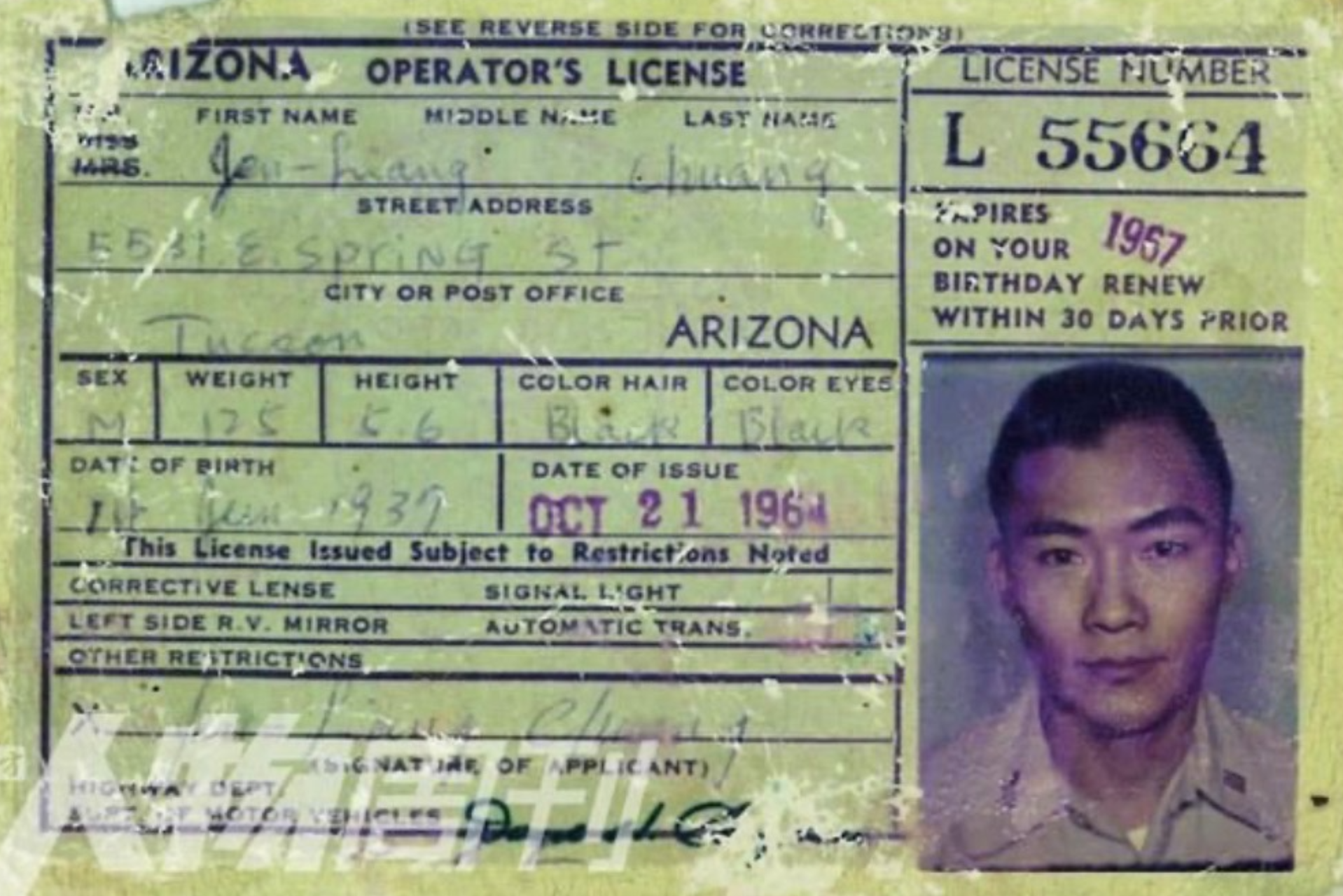
A further surname-convergence detail: among his Air Force Academy classmates was Sheng Shih-li (盛士禮) — himself selected for the same Black Cat Squadron U-2 programme. Sheng twice survived U-2 training accidents in the United States (Idaho, 14 August 1964; Arizona, 19 December 1964), returned to Taiwan after withdrawing from the programme, and died on 12 June 1973 flying an F-104G. That a Chuang (莊) and a Sheng (盛) — the two surnames joined by documented matrimonial and institutional connections from Changzhou through Shanghai — appear side by side in the same academy class and the same elite CIA-partnered reconnaissance unit in Cold War Taiwan is, on its own, only a coincidence; it is recorded here as a documented co-occurrence, not as evidence of kinship.
Sources: ROC Ministry of National Defense official record, mnd.gov.tw/File/17925; MND Office of Historical Compilation and Translation (國防部史政編譯室), Heroes of the High Altitude: An Oral History of the Black Cat Squadron (高空的勇者:黑貓中隊口述歷史) (2010); Black Cat Squadron entries, Chinese and English Wikipedia. Mission-log numbering follows the squadron's cumulative task ordering.
莊銘耀 Chuang Ming-yao 1929–2002 · 41st class, ROC Naval Academy · Taiwan-born
莊銘耀 (Chuang Ming-yao), born 16 November 1929 in Kaohsiung, Japanese-administered Taiwan, was a native Taiwanese naval officer who rose through every level of the ROC Navy to become its commander. He entered the Naval Academy at Qingdao in 1948 and graduated at Zuoying in 1952, subsequently participating in the Battle of Dongshan Island (東山島戰役, 1953) — personally commanding the first wave of the landing operation. His subsequent career spanned every grade of naval command: ship captain (洛陽艦 DD-14 among others), fleet commander, fleet training commandant, Chief of Staff, and Vice Commander. He was also assigned to the MND as Deputy Minister for Armaments. On 1 May 1992 he was appointed Chief of Naval Operations, serving until 16 April 1994 — the first native Taiwanese ever to hold the position and, following 郭宗清, the second native Taiwanese to reach admiral rank in the ROC Navy. He had been promoted to 二級上將 on 1 July 1991.
His post-military career was equally consequential. As ROC Representative to Japan (ambassador-level, de facto embassy) he achieved three concrete results: the restoration of the Osaka airline route in April 1998 (suspended after the 1972 diplomatic break); the passage in May 1998 of a Japanese Diet amendment to the Immigration Control Act that recognised the ROC passport as valid, eliminating the humiliating 渡航証明書 (transit certificate) system imposed after severance; and the restoration of 72-hour transit visa-free status for Taiwanese travellers. In 1999 Japan further relaxed multiple-entry visa rules for Taiwan tourists. Drawing on his personal networks within the Japan Self-Defense Forces, he also arranged for retired JSDF officers to visit Taiwan and advise on mine warfare operations — one of the few substantive military exchanges conducted at this level since 1972.
In 2000, when Chen Shui-bian’s DPP government took office in Taiwan’s first democratic power transfer, 莊銘耀 was appointed the Secretary-General of the National Security Council — the highest security advisory post in the ROC government — until August 2001, and from September 2001 Chairman of the Association of East Asian Relations (亞東關係協會). He died in office as Chairman on 6 January 2002. He was known throughout his career for personal modesty, clean finances, and the unusual loyalty he commanded from subordinates and superiors alike. His Taiwanese background, Japanese colonial education, and institutional distance from the mainlander-led 郝柏村 network made him successively trusted by President Lee Teng-hui and by President Chen Shui-bian — a record of cross-period institutional confidence rare in ROC civil-military relations. [Wikipedia zh — 莊銘耀]
莊徵華 1926–2008 · Nantou County, Taiwan · public-health scholar
Born 1926 in Nantou County, Taiwan; died 2008. Physician and public health specialist. As Director of the Taiwan Provincial Malaria Research Institute (Director, Taiwan Provincial Malaria Research Institute), he led the campaign that made Taiwan the first malaria-free region in Asia — an achievement recognised internationally as a model of post-war tropical disease eradication. He was subsequently recruited by the World Health Organisation and dispatched to Central and South American countries and Saudi Arabia to replicate the programme, contributing to mosquito-vector eradication campaigns across multiple continents. He received the 9th Medical Dedication Award Special Contribution Prize (第9屆醫療奉獻獎特殊貢獻獎) for this record of service. [Wikipedia zh — 莊徵華]
莊碧琴 (1893–1986) was the mother of
Li Ka-shing (李嘉誠), and her brother 莊靜庵 — who founded
the Chung Nam Clock
& Watch Company — provided both the initial capital and
the family shelter that made Li Ka-shing’s early career
possible. The conglomerate he built, CK Hutchison, operated at its
peak 53 ports across 24 countries and 199 berths; in March 2025 an
agreement in principle was reached to sell 43 of these in 23 countries
to a BlackRock-led consortium for US$22.8 billion, excluding Hong Kong
and mainland China holdings, with the transaction stalled and uncompleted
as of March 2026 [Transport Topics, 6 Mar 2026].
莊月明 (Chuang Yuet-ming, 1933–1990),
Li Ka-shing’s wife, held a first-class degree from the
University of Hong Kong, was fluent in English and Japanese, and
served as a core participant in the decision-making structure of Cheung
Kong Holdings at the critical early stages of its development
— a contribution that the public record has not always
accorded its complete due.
Inference from surnames must be held carefully. Surname change in
this period was not solely a matter of Ming loyalism or flight from Qing
persecution. In the Nanyang (南洋) and across East Asia, the
Heaven-Earth Society (天地會) and its affiliated networks —
including the Hongmen (洪門, the Ming Loyalist Brotherhood) — also generated their own patterns
of surname adoption. The surname 洪, for instance,
was taken by initiates of the Hongmen (Ming Loyalist Brotherhood) regardless of birth lineage,
as an act of fraternal and ideological allegiance; similar dynamics
applied to other surnames within these historical fraternal-association networks.
This means that shared surnames in the diaspora do not straightforwardly
imply shared ancestry: two families bearing the same surname may share
a genetic root, a dynastic-flight origin, a society-initiation origin,
or some combination of all three. The historical record is rarely
detailed enough to distinguish between these cases with confidence,
and I note the complexity here precisely to resist the temptation of
overclaiming what the surnames alone can tell us.
Among 莊-surname figures in the United States: Alfred Chuang (莊思浩), a native of Hong Kong educated at Wah Yan College, co-founded BEA Systems in 1995, served as its CEO and Chairman, and led it to its acquisition by Oracle Corporation in 2008; Ben Horowitz of Andreessen Horowitz has described him as “the greatest CEO of my time” [a16z — The CEO’s CEO]. He subsequently founded Race Capital and Magnet Systems. Isaac Chuang holds the Julius A. Stratton Professorship in Electrical Engineering and Physics at MIT, is one of the founding pioneers of quantum computing — his experimental realisations of quantum algorithms provided the first laboratory demonstrations of Shor’s quantum factoring algorithm — and is co-author of Quantum Computation and Quantum Information, the standard graduate textbook in the field. Theodore Chuang, a graduate of Harvard College (summa cum laude, Phi Beta Kappa) and Harvard Law School (magna cum laude, Harvard Law Review), served as Deputy General Counsel of the United States Department of Homeland Security before his nomination by President Obama and confirmation as United States District Judge for the District of Maryland in 2014 — the first Asian American to serve on that bench. He was elected in 2024 to the Harvard University Board of Overseers. Entry in The Political Graveyard.
莊萬里 Ching Ban-lee 1899–1965 · Jinjiang, Fujian · Manila · 莊 surname, Philippines
Ching Ban-lee (莊萬里), born in Jinjiang (晉江), Fujian, emigrated to the Philippines at eighteen and built the family firm into one of the largest Chinese business houses in Manila — vegetable-oil milling, steel, tobacco, and textiles — becoming the wealthiest figure of the Philippine-Chinese community. From the 1950s onward he served successively as supervisor and adviser of the Manila Chinese Chamber of Commerce, chairman of the board of supervisors of the Federation of Filipino-Chinese Chambers of Commerce, and as adviser, director, or board chairman of the Manila Chinese Charitable Association, Chong Ren Hospital, the Chinese Cemetery, Chiang Kai-shek College, the Chinese School, the Philippine Chuang Clan Association, and other economic and cultural organisations. He died in Boston on 19 October 1965 [Baidu Baike]. A devoted collector who grieved the dispersal of Chinese art abroad, he assembled in his Manila studio — the Liangtu Xuan (兩塗軒) — one of Asia's foremost private collections of classical Chinese painting and calligraphy; in 2000 his children, honouring his wish that the works return home intact, donated 233 pieces spanning the Song through Qing dynasties to the Shanghai Museum, which maintains a dedicated Liangtu Xuan gallery in his name. His eldest grandson, the composer Jeffrey Ching (莊祖欣), has built an international career writing orchestral works steeped in classical Chinese sources — a cycle of symphonies named for Chinese dynasties, including one staging a musical dialogue between the Ming music theorist Zhu Zaiyu (朱載堉) and Bach.
莊祖宜 Tzu-i Chuang Mullinax b. 1974, Taipei · 莊 surname, Taiwan · writer & chef
Tzu-i Chuang Mullinax (莊祖宜), born in Taipei in 1974 to a Shanghainese father and the soprano and Soochow University music professor Fan Yu-wen (范宇文), graduated in English from National Taiwan Normal University, took a master's degree in anthropology at Columbia, and entered the doctoral programme in anthropology at the University of Washington — where she met her husband, the American diplomat James Mullinax (林傑偉) — before abandoning the PhD for a diploma at the Cambridge School of Culinary Arts. Her books The Kitchen Anthropologist (廚房裡的人類學家) and Actually, Everyone Wants to Cook (其實,大家都想做菜) made her one of the best-known food writers in the Chinese-speaking world; during her husband's Shanghai posting she filmed 68 short cooking films in the Kitchen Anthropologist (廚房裡的人類學家) series. Her husband served as the last United States Consul General in Chengdu, the post closed by Beijing in July 2020 in retaliation for the American closure of the Chinese consulate in Houston.
Two episodes made her a central target of mainland online opinion. First, when Disney's 2020 Mulan thanked government entities connected to the Xinjiang re-education camps in its closing credits, she criticised the studio publicly and drew mass abuse on her Weibo account. Second, the July 2020 “Nazi remark” affair: in a Weibo post recalling her 48-hour emergency evacuation from Chengdu with her two sons at the outbreak of the pandemic in February 2020, she wrote that the thought had flashed through her mind whether Jews leaving home to escape the Nazis before the Second World War had felt like this — a fleeting simile about the experience of sudden flight that mainland networks recast as her equating China with Nazi Germany. In the months after the consulate closure she was subjected, by her own account, to a campaign of state-amplified rumour, degrading slander, and continuous death threats, portrayed online as a “female special agent using food and music as a front for consular subversion”; friends faced interrogation, account bans, and professional retaliation. She wrote that the Cultural Revolution accounts and Orwellian prophecies she had once merely read had become an embodied fear. Her elder sister publicly defended her in January 2021, calling the “Nazi” framing the product of fake news — the original text plainly compared the virus, not China, to the Nazis — and the rest a campaign of misogynist personal attack by state-aligned commenters. In a 2024 interview with the journalist Chai Jing (柴靜) she disclosed that during the 2020 storm, individuals on both sides of the strait — including well-placed, highly educated accusers in Taiwan — reported her to the U.S. government as a Chinese spy, triggering an investigation of her family; the experience, she said, taught her that evil is a matter of human nature, not of political system [Chinese Wikipedia].
Disambiguation: her elder sister, a Taiwan-born painter and writer resident in Germany, shares the exact Chinese name (莊祖欣) of the composer Jeffrey Ching (grandson of Ching Ban-lee 莊萬里); the two are unrelated individuals who happen to bear identical characters.
莊漢忠 Pattana Juangroongruangkit d. 2002, Bangkok · 莊 lineage, Fujian → Thailand
莊漢忠 (Pattana Juangroongruangkit) was the founder in 1977 of Thai Summit Group (三友集團), which grew to become one of Thailand’s largest manufacturers of parts for automobiles, motorcycles, electrical appliances, and agricultural machinery, with facilities across Thailand and overseas operations in Malaysia, Indonesia, Vietnam, China, India, Japan, and the United States. His family traces its Fujian Province origins through the Hokkien diaspora route to Bangkok; the Thai surname จึงรุ่งเรืองกิจ (RTGS: Chuengrungrueangkit) encodes the Hokkien reading of 莊. Following his death in 2002, his wife Somporn Juangroongruangkit assumed the presidency and CEO role of the group. His son Thanathorn subsequently led the company for sixteen years before entering politics; his brother Suriya entered government as a cabinet minister. The patriarch’s legacy is thus bifurcated across two of Thailand’s most consequential spheres — industrial manufacturing and elected office.
莊 Suriya Juangroongruangkit b. 10 Dec 1954, Bangkok · 莊 lineage, Fujian → Thailand
Suriya Juangroongruangkit (สุริยะ จึงรุ่งเรืองกิจ), brother of the Thai Summit Group founder 莊漢忠, has held cabinet office across several Thai governments. He studied at the University of California, Berkeley, graduating with a BS in manufacturing engineering in 1978, before returning to Thailand to work in the automotive industry. He was first appointed Minister of Transport in October 2002 and served two terms through 2005; he also served as Deputy Prime Minister from August 2005 to September 2006. Under the Pheu Thai government formed in 2023 he returned to both portfolios simultaneously — Minister of Transport from September 2023 and Deputy Prime Minister from April 2024, both until September 2025. From 1 to 3 July 2025 he served as Acting Prime Minister of Thailand. He has also served as Minister of Industry on multiple occasions and was an influential figure (Sam Mitr faction) in the Palang Pracharath Party before returning to Pheu Thai. [Wikipedia — Suriya Juangroongruangkit]
莊 Thanathorn Juangroongruangkit b. 25 Nov 1978, Bangkok · 莊 lineage, Fujian → Thailand
Thanathorn Juangroongruangkit (ธนาธร จึงรุ่งเรืองกิจ), son of 莊漢忠, holds a joint degree in mechanical engineering from Thammasat University and the University of Nottingham, and was an active student socialist during his time in the UK. Following his father’s death in 2002 he assumed leadership of Thai Summit Group at age 23, expanding revenues from ฿16 billion to ฿80 billion and establishing manufacturing in seven countries. In March 2018 he resigned from the group to co-found the Future Forward Party, a progressive anti-junta movement that placed third in the March 2019 general election with over 80 seats — a remarkable debut against an electoral framework designed to favour the military. He was disqualified from his parliamentary seat in November 2019 over a shareholding technicality; the Constitutional Court dissolved Future Forward in February 2020 on grounds of an internal party loan. He has since remained active in civil society, continuing to advocate for democratic reform and civilian oversight of the military. [Wikipedia — Thanathorn Juangroongruangkit]
莊 Pongkawin Jungrungruangkit active 2025 · 莊 lineage, Fujian → Thailand
Pongkawin Jungrungruangkit (พงศ์กวิน จึงรุ่งเรืองกิจ) served as Minister of Labour of Thailand from 30 June to 19 September 2025, appointed under the Pheu Thai government alongside his uncle Suriya. Wikipedia gives his Chinese surname as 莊 (Mandarin: Zhuāng) and traces his family to Fujian Province. On 4 July 2025 he announced five central labour policies focusing on artificial intelligence training and youth employment. Together with his uncle Suriya (Deputy PM and Transport Minister), the family held two cabinet portfolios simultaneously in the Pheu Thai government. [Wikipedia — Pongkawin Jungrungruangkit]
莊文浩 Mike Chong b. 1971, Ontario · 莊 surname, Canada
Mike Chong (莊文浩), born 1971 in Windsor, Ontario, is a Canadian Conservative politician of Hong Kong Chinese descent on his father’s side. First elected to the House of Commons in 2004, he has held the Wellington–Halton Hills seat continuously since. He served as President of the Queen’s Privy Council for Canada (Minister of Intergovernmental Affairs) under Prime Minister Harper in 2006, resigning over a motion recognising Québécois as a nation within a united Canada — a constitutional objection that drew comparisons to John Diefenbaker’s principled stands. He contested the Conservative leadership in 2017 (fifth place), consistently advocating a values-grounded foreign policy and a firmer line on Beijing.
Chong’s confrontation with Beijing unfolded in several stages. On 22 February 2021 he led a successful opposition motion in the House of Commons declaring that the treatment of Uyghurs in Xinjiang constitutes genocide — the first such parliamentary recognition in Canada. He also served as vice-chair of the Standing Committee on Foreign Affairs and International Development (FAAE), whose Subcommittee on International Human Rights issued a report in March 2021 concluding that crimes against humanity and genocide had taken place in Xinjiang. Canada subsequently imposed sanctions on Chinese officials and entities; the PRC responded with counter-sanctions targeting Chong personally and the FAAE subcommittee, which Prime Minister Trudeau and Foreign Affairs Minister Marc Garneau publicly condemned. In March 2022, following Russia’s invasion of Ukraine, Chong published an op-ed calling for Canada to isolate Russia internationally and for RT (Russia Today) to be removed from Canadian broadcast networks; the Russian government subsequently placed him under reciprocal sanctions.
As Shadow Minister of Foreign Affairs (from 2020), Chong became one of Canada’s most prominent parliamentary voices on foreign interference. In May 2023 it was publicly disclosed that CSIS had warned him that a Chinese diplomat — Zhao Wei, then posted at the Toronto consulate — had allegedly tasked intelligence collection on him and his relatives remaining in Hong Kong, in direct retaliation for his human rights advocacy; Canada subsequently expelled Zhao Wei. The Royal Canadian Mounted Police (RCMP) opened a separate investigation into Chinese government electoral interference in Canada. In August 2023, the Department of Foreign Affairs confirmed that Chong and his family had been targeted by a Chinese government disinformation operation. The cumulative record — PRC sanctions, Russian sanctions, an intelligence-collection operation against his Hong Kong relatives, and a state-run disinformation campaign — is documented in the public record. On 9 February 2026, Chong issued a statement on behalf of the Conservative Party calling for the immediate freeing of Jimmy Lai (黎智英), the Hong Kong newspaper publisher convicted and imprisoned under the 2020 National Security Law. [Wikipedia — Michael Chong]
莊小威 Xiaowei Zhuang b. 1972, 如皋, Jiangsu · Chinese-American · Harvard
莊小威 (Xiaowei Zhuang), born in 1972 in Rugao (如皋), Jiangsu, is one of the foremost biophysicists of her generation. She received her BS in physics from the University of Science and Technology of China (USTC) in 1991 and her PhD from the University of California, Berkeley in 1996, before completing a postdoctoral fellowship at Stanford under Steven Chu (later US Secretary of Energy and Nobel laureate). She joined Harvard in 2001 and currently holds joint appointments as the David B. Arnold Jr. Professor of Science in Chemistry and Chemical Biology and in Physics. She is also an Investigator of the Howard Hughes Medical Institute, elected to the National Academy of Sciences, and a Fellow of the American Academy of Arts and Sciences. She founded the Zhuang Lab (莊小威實驗室) at Harvard.
Her principal scientific contributions are two: STORM (Stochastic Optical Reconstruction Microscopy), a super-resolution fluorescence microscopy technique that circumvents the optical diffraction limit to image biological structures at nanometre scale; and MERFISH (Multiplexed Error-Robust Fluorescence In Situ Hybridisation), a method for imaging the transcriptome of individual cells in intact tissue, enabling spatial mapping of gene expression at single-cell resolution across whole organs. She received a MacArthur Fellowship in 2003, the Breakthrough Prize in Life Sciences in 2019 (for the STORM technique), and the Vilcek Prize in 2020. [Wikipedia — Xiaowei Zhuang]
莊順連 Shun Lien Chuang 1954–2014 · 旗津, Kaohsiung · Taiwanese-American physicist
Born 10 September 1954 in Qijin (旗津中洲漁村), Kaohsiung; died 26 March 2014. He lost his father early in childhood. He graduated from National Taiwan University (NTU) in electrical engineering in 1976, then pursued graduate study at MIT, earning a master’s degree in 1980, the Electrical Engineer degree in 1981, and a doctorate in 1983. That same year he joined the Department of Electrical and Computer Engineering at the University of Illinois Urbana-Champaign, where he spent the remainder of his career. He is best known for two foundational textbooks in semiconductor optoelectronics: Physics of Optoelectronic Devices (Wiley, 1st ed. 1995; 2nd ed. 2009) and Physics of Photonic Devices (Wiley, 2009), which became standard references in the field across multiple generations of students and researchers. [Wikipedia zh — 莊順連]
莊永桓 JP Chong Wing-wun · Fujian → Hong Kong · HK civil servant
莊永桓 (Chong Wing-wun), JP, arrived in Hong Kong at age sixteen from Fujian Province, PRC, enrolling in Form 3. When his secondary school closed he lost his place and became an apprentice in a goldsmith workshop. A year later he enrolled in night school to sit the Hong Kong Certificate of Education Examination (HKCEE), studying while working — and at Form 5 switched to courier delivery work, resigning three months before the exam to concentrate on revision. His HKCEE results were exceptional by night-school standards; encouraged by his night-school principal, he transferred to a day school for his A-levels, working part-time at a video-disc rental shop and using the premises' equipment to watch English-language programmes as a self-directed supplement. He was subsequently admitted to the University of Hong Kong and graduated with a First Class Honours degree. He has since built a career in the Hong Kong civil service, now serving as Deputy Secretary of the Labour and Welfare Bureau, and holds the title of Justice of the Peace (JP). His trajectory — Fujian origin, mid-teenage arrival, workshop apprenticeship, night-school HKCEE, First Class Honours at HKU, senior civil service posting — is among the more compressed meritocratic arcs documented for a 莊-surname figure in the post-1997 SAR framework. [Wikipedia zh — 莊永桓]
莊月 Zhuang Yue mainland political scholar · quoted 14 May 2019
On 13 May 2019, three days after the United States raised tariffs on approximately US$200 billion of Chinese goods, the PRC Ministry of Finance announced additional duties of up to 25% on roughly US$60 billion of US-origin imports, effective 1 June. That evening the Global Times applied the Maoist formula of people's war to the tariff dispute, calling it a genuine people's war. Radio Free Asia reported that media outside a designated set of central state outlets were prohibited from commenting on the dispute and were directed to carry the approved commentary instead. [RFA, 14 May 2019]
莊月, identified by RFA as a mainland political scholar, assessed the campaign in opposite terms. On this account the mobilisation language served to coerce the population into a conflict in which it held no stake and to hold it hostage there; no enmity existed between Chinese and American citizens; and the core interests invoked to justify the campaign were the interests of a privileged stratum and its hold on power, which the interview treats as separate from the interest of the population. [F — attributed interview]
Why the date registers. May 2019 fixes in the dated record the point at which a tariff dispute was recast in wartime mobilisation vocabulary — six months before the first documented COVID-19 cases. What the record establishes is that vocabulary and its date: the commentary sets no casualty figure and identifies no population as a target. Readings that merge it with the speech attributed to 遲浩田 in 2003 on biological weapons and American casualty numbers combine sources of incompatible standing — the Global Times text is dated, archived and attributable [F], whereas the 遲浩田 text appears only in overseas publication from 2005 and remains unauthenticated [I — unverified provenance; not relied on here]. The 莊 surname places this entry within this study's surname survey; no lineage relation to other figures in this study is asserted [D].
Treating the surname survey as a family tree; bearers of a common surname are presumed unrelated unless a record shows otherwise (Postulate 2).
Take-away: the survey records where 莊 appears in public life; kinship is asserted only where a genealogy or record documents it.
Timeline · every named person in one sequence
What this part is for: to index every person named in this study in a single chronological sequence.
- Why one sequence? Because grouping by family or place hides simultaneity that a single chronology makes visible.
- How should the grades be read here? As carried over from the cards; a timeline row is never stronger than the card it summarises.
Appendix · Timeline
All named persons in this page · single chronological sequence · excluding 莊桓山 · ~ = estimate
Undated / no evidence: 李馥蓀 · 王曉賚 (both SCSB founding directors alongside 莊得之) · 莊適 · 莊鼎彝 (Commercial Press, Changzhou group alongside 莊俞) · 莊逢辰 (CAS, sibling of 莊逢甘). All evidence grades as documented in the main text above. ~ = single-source estimate; treat as [D] unless otherwise noted.
This page contains facts, and analysis or research results derived from those facts. It does not contain, and should not be read as containing, a left-or-right political position. The layer this page operates at — surname networks, institutional genealogy, documented financial and family connections across centuries — has no left or right. That division belongs to a different layer entirely: contemporary partisan politics. Sorting everything into two teams is itself a choice, and a costly one. It is also, historically, a preferred adversary strategy: a population split into two large factions can still recognize itself as one population with shared interests against a higher echelon. "Higher" and "lower" echelon here are defined by power and money — concentrated financial sponsorship and its accumulated influence — not by ideology, party, or any left-right axis. A population split into hundreds of factions — hundreds of television channels, hundreds of YouTube channels, each commanding a fraction of a limited number of hours in a single evening, such that almost no two households in the same neighborhood watched the same programming the night before — cannot recognize a shared interest at all, because it no longer shares a common set of facts to recognize one from. Fragmentation at that scale is not a byproduct of choice and abundance; it is also, when deliberately cultivated, a mechanism that keeps a lower echelon in social status restricted to conflict with its own or adjacent lower echelons — whoever happens to be on the opposite side — so that it can be divided, conquered, and led, rather than organizing toward regimes such as the CCP, leaving the upper echelon safe in its leadership. The point of naming this is not to manufacture a new conflict between echelons, or between the two sides of any two-party arrangement. It is the opposite: a two-large-faction system, whatever its flaws, still leaves each side able to recognize the other as a fellow citizen with overlapping interests, and still leaves room for unity, for peace, and for the ordinary business of governing together. That capacity for recognition and unity is the advantage a two-party system retains and hundreds of fragments do not — and it is precisely that intact capacity, on both sides together, that is best positioned to audit and study the root of regimes such as the CCP: not the ideology, but the power-and-money network underneath it, in the sense already stated above. Naming the mechanism is an argument for preserving that advantage and turning it toward that audit, and toward the new laws and policy that such an audit could inform, not for adding a new front to the conflict. This page does not take a side in that fragmentation. It reports what is documented and grades its confidence in each claim.
When CCP is named on this page, it does not refer to communism or Leninist vanguardism as abstract theory in political science — that is a separate subject, and this page takes no position on it. It refers to the documented network of the Party's cadres, its internal conventions and organizational mechanisms, and — where the historical or financial record permits — its early and long-term financial investors and sponsors, insofar as those figures and mechanisms sustain an exclusive society and network operating under that name. The same discipline applies to every other named organization, order, company, or family network on this page: the object under study is the network and its documented conduct, not an abstract ideology imputed to it.
A surname cannot be used to predict descent, affiliation, or anything else about an individual. Doing so would be non-professional: under standard intelligence-analysis tradecraft (ICD 203 discipline), a hypothesis reaches higher confidence only when corroborated by at least three independent sources. A shared surname is, at most, one weak indicator that nominates a possible genealogical lineage for further testing — never a conclusion.
The arithmetic makes the point. From the Southern Ming to the present is roughly 400 years — at 20 years per generation, about 20 generations. Even if each generation left only two heirs, a single root could by now have on the order of 220 ≈ 1,048,576 descendants sharing both bloodline and surname from the same node of the tree. Against ~1.4 billion bearers of Chinese surnames that is still a small fraction (≈0.0007, i.e. 0.07% — roughly seven persons in every 10,000 randomly selected Chinese or Taiwanese individuals). Common enough that surname coincidence alone proves nothing; rare enough that the hypothesis is worth testing when independent factors converge.
Applied to the diaspora, the same base rate yields rough expected counts: the Chinese-American population of 5,465,428 (華裔美國人) implies on the order of ~4,000 persons within this group of lineages in the United States, and the roughly 502,189 ethnic-Chinese residents of the United Kingdom (per the UK 2021 census) imply on the order of ~400 in the UK. These are base-rate expectations only — order-of-magnitude estimates, not identifications.
The surname sets — {莊、嚴、蔣、石、朱}, {莊、李、陳、吳} (two sets with a nonempty intersection), together with 盛, {夏、萬、陶}, and 洪 (appearing in either the given name or the surname) — therefore function only as hypothesis generators. Note also that after the fall of the Southern Ming (永曆帝, d. 1662), families bearing the 朱 surname — the surname of the Ming royal house — faced systematic Qing persecution; it is hypothesised [I] that some 朱-surname families adopted 莊 as a protective surname, carrying the Ming royal lineage inside the 莊嚴蔣石朱 cluster without the overt 朱; this possible channel (朱 ↔ 莊) is tested against the Hongmen phonetic tradition discussed elsewhere in this study. Independent discriminating factors must be sought alongside the surname indicators, for example:
- Whether, within the last three or four generations, the family still lived in the ancestral house (祖厝);
- Whether one's father, grandfather, and the lines above were first sons (primogeniture continuity);
- Whether the family kept the Catholic faith continuously — a strengthening indicator, not a requirement. Faith retention is not necessary for identification of lineage; descendants may have lost the faith across generations while retaining the bloodlines.
- Whether the family held an unusually large amount of land, since the Ming practice of 分封諸侯 granted territory to the emperor's brothers across China, making landholding an additional indicator;
- Whether one has or had a structured network of sworn loyalties and brotherhood — such as Hongmen (洪門) affiliation — whose affiliates collaborated to shelter, finance, and mutually sustain one another across generations; such a network is both a marker of Ming-restoration continuity and an independent corroborating factor distinct from surname or land.
Only when several independent lines converge does a lineage hypothesis rise above conjecture. Absent that convergence, a surname match remains only a possible lineage nominated for testing, not a finding.
Prospective Validation · 朱鎔基 [I]
朱鎔基 (b. 1 October 1928, Changsha, Hunan) — 14th and 15th CCP Politburo Standing Committee (第十四、十五屆中共中央政治局常委), Vice Premier of the State Council (國務院副總理), and Premier of the State Council (國務院總理, 1998–2003) — is reported (from clan genealogy) to be a descendant of 朱元璋 (the Hongwu Emperor, founder of the Ming dynasty) through 朱元璋's 18th son, 岷莊王 朱楩 (1387–1444), with both parents lost in early childhood. In the public record: [Wikipedia zh — 朱鎔基] [Wikipedia zh — 朱楩 岷莊王]
「朱鎔基出生於湖南長沙,是明太祖朱元璋十八子岷莊王朱楩後裔,自幼父母雙亡。」
Note the enfeoffment title: 岷莊王 — parsed as two components: 岷 (the geographic designation, referring to 封地甘肅岷州, today 岷縣, Dingxi, Gansu — a remote borderland fief on the upper Min River corridor, now surrounded on three sides by 藏族自治州: 甘南藏族自治州 to the south and 臨夏回族自治州 to the northwest, placing the original Ming royal domain squarely in the ethnically complex Sino-Tibetan frontier zone) and 莊 (the posthumous epithet — the character bestowed upon 朱楩 at death to characterise his reign, meaning "dignified" or "grave" — the same character that gives the 莊嚴蔣石朱 cluster its leading surname and that encodes the Ming royal lineage inside the Hongmen phonetic tradition discussed elsewhere in this study [I]). The 莊 is therefore not incidental: it is the specific character through which 朱鎔基's 朱 lineage connects directly to the 莊 character at the Ming royal generation. The 莊嚴蔣石朱 cluster hypothesis of shared ancestry is thus consistent with the reported lineage of a PRC Premier [I].
Ordinary individuals do not have access to a national records apparatus capable of verifying such genealogical claims across centuries. The fact that this lineage is reported in the public record for 朱鎔基 — and that it is consistent with the surname-network hypothesis formulated on this page prior to the confirmation — is the relevant evidentiary point. It does not prove that every 朱-surname figure in this page shares the same root; it demonstrates that the hypothesis is capable of generating confirmable predictions.
Reading adjacency in the timeline as connection; two rows side by side share a date, not a relationship.
Take-away: use the timeline as an index to the cards; its rows inherit the evidence grades of the cards they summarise.
References
What this section is for: to list every source cited on the cards, grouped by publisher, so that each claim can be traced.
zh.wikipedia.org (35)
- Wikipedia zh — 上海商業儲蓄銀行
- Wikipedia zh — 盛宣懷
- Wikipedia zh — 莊正中
- Wikipedia zh — 莊姓
- Wikipedia zh — 開封猶太人
- Wikipedia zh — 石姓
- Wikipedia zh — 蔣姓
- Wikipedia zh — 朱姓
- Wikipedia zh — 莊起元
- Wikipedia zh — 七克
- Wikipedia zh — 龐迪我
- Wikipedia zh — 中華
- Wikipedia zh — 盛宣懷
- Wikipedia — 青幫
- Wikipedia — 中華
- Wikipedia — 盛康
- Wikipedia — 盛愛頤
- Wikipedia — 洪述祖
- Wikipedia — 洪金寶
- Wikipedia zh — 莊漢傑家族
- Wikipedia zh — 莊松林 (1910年)
- Wikipedia zh — 莊守經
- Wikipedia zh — 莊詩美
- Wikipedia zh — 莊長恭
- Wikipedia zh — 莊逢甘
- Wikipedia zh — 莊逢辰
- Wikipedia zh — 莊銘耀
- Wikipedia zh — 莊徵華
- Chinese Wikipedia
- Wikipedia zh — 莊順連
- Wikipedia zh — 莊永桓
- Wikipedia zh — 莊蘊寬
- Wikipedia zh — 李宗仁
- Wikipedia zh — 朱鎔基
- Wikipedia zh — 朱楩 岷莊王
en.wikipedia.org (15)
- Wikipedia — Imperial Bank of China
- Wikipedia — CDFC (T.V. Soong + Monnet)
- Wikipedia — BOC (Hong Kong)
- Wikipedia — Hutchison Whampoa
- Wikipedia — BOC Group
- Wikipedia — Reginald Johnston
- Wikipedia — Malta Summit
- Wikipedia — Johnston Road 莊士敦道
- Wikipedia — Zhu Chenghu
- Wikipedia — Suriya Juangroongruangkit
- Wikipedia — Thanathorn Juangroongruangkit
- Wikipedia — Pongkawin Jungrungruangkit
- Wikipedia — Michael Chong
- Wikipedia — Xiaowei Zhuang
- Wikipedia — Susan Zhuang
baike.baidu.com (2)
dpm.org.cn (2)
dswxyjy.org.cn (2)
- Central Party History and Literature Institute — Changsha organization and Cultural Book Society
- Central Party History and Literature Institute — Soviet/Comintern organizations and early financial assistance